Showing posts with label armchair travels. Show all posts

January 19, 2026

Heard any Good Books Lately?

I have recently discovered the joy of audiobooks. I still read a lot of paper books, but it can be hard to read them while on a walk or while cooking or working on a puzzle, and last week I dropped my copy of  To See Every Bird on Earth by Dan Koeppel in the bathtub while I was reading it. Audiobooks are hands free. All you need are listening ears, an attention span of sorts, and a subscription to Libby (free through your public library - amazing), or Audible, or Spotify, or any other platform you might find audiobooks on. A few clicks and you're off to the races.

My mother often read to my brother and me when we were little and sharing a room, and when I was in Elementary school teachers read books to the class. My grade five teacher read us The Borrowers by Mary Norton. Those hours became my favourite among the many I had to spend in school. As soon as my teacher began to read I was immersed in the world of those tiny house guests and their adventures. My imagination was captured and I was carried along by my teacher's voice, which was quite pleasant as I remember it now. Being read to is something I had forgotten as an adult, and I am enjoying it. As long as the voice on the audiobook is expressive (without being overly so) and pleasant, and the story or subject is interesting to me, I am happy to listen for as long as my attention or circumstances allow.

The most recent audiobook I listened to was The Third Gilmore Girl by Kelly Bishop. This wonderful autobiography, read by the author, hooked me from the first to the last page. Kelly Bishop played the matriarch of the Gilmore family on a comedy/drama show called Gilmore Girls, which is a series I have watched several times through, first, when it originally came out on the WB network in the early 2000's, and then years later with my girls when Netflix aired it. The show has gained a new and dedicated audience by being on Netflix, which produced a four episode reunion of sorts in 2016. The snappy and clever dialogue and quirky characters written by Amy Sherman-Palladino and her husband, Daniel Palladino, the detailed sets, pop-culture references and complex family dynamic tick fans' boxes for quality entertainment. I admire and respect how Kelly Bishop plays her complex character Emily Gilmore so convincingly as the sharp-tongued yet vulnerable mother desperate to have a better relationship with her daughter Lorelei without really knowing how to go about it. When I found out Kelly Bishop had written a book about her life and her role on one of my favourite shows, of course I wanted to read it. Or listen to it.

Kelly Bishop's autobiography is, to my mind, best heard in her deep, distinctive voice. I would have enjoyed reading a paper copy, but somehow, hearing her tell the story was like sitting down with a beloved aunt who has lived an amazing life and wants to share it with you. From her first days as a ballet dancer, to her Tony-award winning role as one of the original cast members of A Chorus Line on Broadway, to her memorable parts in movies and television, her story is fascinating and encouraging to anyone who has a similar dream. She shares the ups and downs, and through it all the reader/listener is impressed by her grit and determination, and also her lucky breaks, which occur often just when she needs them most. Now in her eighties, she is still working as an actress. The end of her book brought me to tears as I walked with my headphones on, listening in the cold sunshine. She is such a trouper. And she thanks her mom, who was also a trouper, for everything. I like when they thank their moms.

I tried out a new audiobook yesterday. I got about ten percent into the second chapter before I knew it wasn't for me. The reader's voice grated on my nerves. I also could not relate to the story. That's okay, there are plenty of other books to choose from. I went on the Libby app and requested another book I have been meaning to read, A Pocketful of Happiness by one of my favourite actors,  Richard E. Grant. I hope it's read by the author, too. The app said there was a six week wait for a copy to become available. Just like at the brick and mortar library, there are waits for popular books on the Libby app. I will have to find another book to listen to in the meantime. Any recommendations? 

'til next time, 

Rebecca

October 24, 2022

Let's Talk about TV


I am the youngest of six children. My mother was, no doubt, a little weary by the time I came along. I remember that even though our family's TV received only two channels, CBC and CTV, I watched quite a bit of both channels. When I was small, nearly every morning I was not in school I spent on the living room sofa being gently entertained by Mr. Dressup, The Friendly Giant, and Sesame Street. Halfway through Sesame Street, one of our metal TV trays would be set up and my mother would deliver me lunch, usually a grilled cheese sandwich with a side of ketchup. Sometimes a bowl of soup, too. Lunch would be followed by quiet time on my bed with a book. I presume I was sent outside to play after that, because I remember being outside a lot, too. On school days I would often watch Happy Days with my elder siblings. Sunday evenings we all watched The Magical World of Disney and The Beachcombers. The Irish Rovers also, but I can't remember which night they were on.

 In the days before home video a movie might be shown on TV about three years after its release, and always with commercials. On the commercial breaks my mom would call out, "Okay, go get your pyjamas on!" and we would race to be back before the movie or TV show resumed. On the next break she would say, "Go brush your teeth and wash your face!" In summer, she would add "Go wash your feet!". The stakes were high during Primetime, especially with only one bathroom in the house. Every show not a rerun was like a live performance. None of your 'pauses' and 'plays' of today's streaming services and PVRs. My parents were big fans of The Smothers Brothers and Wayne and Shuster, but the humour often flew over my head. I tried so hard to get the jokes, and laughed along as if I did. We weren't allowed to watch soap operas in our house, but when I was sick and nothing was on, I was allowed to watch Coronation Street. It bored me to tears. I'm sure my mom knew it would, and that I would eventually turn it off and read. I remember her often reading while we watched TV, but like most moms she could keep an eye on everything even when she was reading. She was super critical of advertising and marketing. She would argue out loud against the claims of toothpaste and cigarette commercials, trying to detox our sponge-like little minds from the poisons of capitalism. I can still hear her voice even now when I encounter a commercial which makes elaborate claims over a product's efficacy or promotes the 'luxury lifestyle'.

I slept over at my friend Antonia's house nearly every Friday night when we were preteens. Her family had cable and thus Saturday morning cartoons. Wonderfriends and Scooby-Doo were my favourites. As I transitioned into the teenage years and started babysitting I took advantage of the bounty of Cable TV. Once the kids were in bed and my homework done, I sat glued to Knight Rider, Magnum PI, Rockford Files, and the 'must see TV' of NBC: The Cosby Show (I know, I know), Family Ties, and Fresh Prince of Belair were among my favourites. Some time when I was in high school reruns of those three sitcoms made their way over to CTV. When I didn't have extra-curricular activities after school, or planned hangouts with my friends, I would come home, make a big bowl of popcorn and unwind in front of our little black and white portable.

As VHS's became common my friends and I discovered Monty Python and movie nights which involved a trip to the video store and the choosing of one to three films to rent for the evening (but this is a post about television, not movies, so I will stick to that topic). My newly acquired brother-in-law introduced my family to some great British comedy shows on video, too, like Blackadder and Mr. Bean. As I developed academically I became interested in news stories. I followed Terry Fox and Rick Hansen, Election nights, and the Calgary Olympics, feeling a part of something great in my own country. Growing up in a small town nowhere near a big city, TV for me was a link to the big possibilities of life. I became a devotee of music shows like VideoHits and Good Rockin' Tonight 'with Terry David Mulligan' (That rolls off the tongue, doesn't it?), and the National Ballet's performances filmed for CBC.

When I was in college and still living at home, CBC borrowed a mystery series from the BBC called Inspector Morse. My parents soon became hooked on it. Up until that point my experience with murder mysteries was limited to plays like Agatha Christie's The Mousetrap, which I absolutely loved, and some exposure to Sherlock Holmes stories. Inspector Morse was something new and different, each episode one and a half hours of puzzle solving poised against a backdrop of beautiful English countryside and the hallowed halls of Oxford University, accompanied by a gorgeous classical music soundtrack. Needless to say, I joined my parents for most episodes of the show and I have been a fan of the murder mystery genre ever since, although, in my opinion, Inspector Morse has not really stood the test of time. 

When I moved out, got married and had children of my own, watching TV was the main activity my brain-dead self engaged in once the kids were in bed. I loved shows chock-a-block with quirky characters and clever, snappy dialogue like Northern Exposure and Gilmore Girls. Period Dramas such as Jane Austen adaptations were also high on my list. As the kids got older we watched TV as a family, but please don't ask me for a detailed list of what we watched. That part of my life is a blur. America's Funniest Home Videos and Saturday Night Live were in there somewhere. My eldest horse-crazy daughter and I watched Heartland for a couple of seasons. We also rented a lot of movies and borrowed videos from our local library.

In the modern world of streaming services we have way too much choice of shows to watch on our televisions. My household has basic cable, Netflix, and Amazon Prime with Acorn added on. I could spend twenty-four hours per day watching TV and still not even put a tiny dent in all that is on offer - a far cry from my two-channel childhood. I probably still watch a bit too much TV, but honestly, I find it as I have always found it: relaxing and often transporting. When my husband is home he enjoys watching sports and 'surviving in the wilderness' shows like Mountain Men and Alone, which is generally when I read a book. He also likes mysteries a lot, so we watch those together when we can. Our neutral ground on days when we are tired, or when the weather is bad, is HGTV and the like. Boring, yet satisfying, predictable yet somehow addictive, renovation and house-hunting shows are the ultimate 'Veg TV'. (So are Hallmark movies, but that's a topic for another day.) 

I have always read a lot - my mother was a champion of reading - but I was, and always will be, like many of my Generation X, a TV kid, even if I never once set eyes on Captain Kangaroo.


May 20, 2022

Engines and Fuel

I just finished reading the short novel What Strange Paradise by Canadian journalist and author Omar El Akkad. In Chapter 20 the smuggler's apprentice Mohamed says something simply awful and cynical to the passengers on the ancient run-down fishing boat that carries them across the Mediterranean to a shore they hope will provide a better life than the war-torn places they left behind:

        "You sad, stupid people," he said. "Look what you've done to yourselves. The West you talk about doesn't exist. It's a fairy tale, a fantasy you sell yourself because the alternative is to admit that you're the least important character in your own story. You invent an entire world because your conscience demands it, you invent good people and bad people and you draw a neat line between them because your simplistic morality demands it. But the two kinds of people in this world aren't good and bad -- they're engines and fuel. Go ahead, change your country, change your name, change your accent, pull the skin right off your bones, but in their eyes they will always be engines and you will always, always be fuel."

The irony of the smuggler's apprentice spewing the above as he is facilitating the migrants' journey to the West, making money off it, no less, seems lost on him. I definitely do not pretend to know much about the Middle East's history of troubles, but the fact that the leaders of much of those lands promote a deep mistrust of the West is well-known (and in some cases well founded). Still, people flock by the thousands in leaky boats and rafts in uncertain waters, wearing poor quality pdf's, risking life and life-savings in search of what the West seems to stand for. 

I have always been interested in origin stories. I enjoy learning how people got to where they are now. If I meet someone from a foreign country I often ask what brought them to Canada. I remember one woman who is now a friend answered that question with "Amnesty International and the Catholic Church. My dad was a wanted man for speaking out against the dictator of our country". Having lived a comparatively sheltered and privileged life, I acknowledge how out of touch I can be with the true, lived struggles of people who leave everything behind, often including the graves of many loved ones killed in armed conflicts or raids, to come to a country like Canada. I have to read books like What Strange Paradise to try and internalize some of what these immigrants experience. Or, I ask my hairstylist who was a Vietnamese boat person. He, too, got on a boat with his brother and father not knowing if they would live or die on the crossing to a new land. He is proud of the life he and his family have built here, and he and his wife, like many immigrants, work very hard. He has told me more than once that Canadians don't know how good we've got it. 

When I was working at my friend's tulip festival this past April I was reminded of how much it resembles an international airport during holiday times, or perhaps the UN. Every possible skin colour, ethnicity, and accent is represented (okay, a slight exaggeration, but you get the picture) Languages flow around me like bubbling streams. I love it. This year I worked in the farm shop where we sell potted and cut flowers, souvenirs, treats and drinks. As I greeted each customer I took the opportunity to be as welcoming as possible. I made short conversation with each of them and found my smiles returned. Each customer has an origin story. Each customer has as much right to be on this earth as I do, no matter where they were born. Many of them have earned that right much more than I have by the risks they have taken and the sacrifices they have made to leave all that is familiar. I am grateful not to think like the smuggler's apprentice, dividing humans into engines and fuel, and I need to continue to work in my small way to make Canada a place that gives equal opportunity to all. 

We can all be engines and fuel for each other. 

Until next time, 

Rebecca

April 1, 2022

Recommended Reading

For the last couple of months I've been immersed in my own personal version of the Canadian Broadcasting Corporation's annual Can-lit contest Canada Reads. One of my goals for the New Year was to read more books from diverse cultural perspectives. I could read British murder mysteries by the likes of Ann Cleeves and P.D. James until the cows come home, and in fact I have. The cows are in the building as we speak, and it is time to let them rest awhile before putting them back out to pasture once again while I indulge my penchant for dead bodies found by hyper-intuitive sleuths (who have issues of their own to solve or merely live with) in ancient castles or on dreary, windswept Atlantic beaches. Additionally, mystery novels are glorified puzzles that are solved at the end. Very tidy. Not terribly realistic, but great and satisfying reading.

The last time I read a culturally diverse book, and that was just before the pandemic, was when I gasped my way through Life of Pi. I was traumatized by it, just as I was traumatized by Rohinton Mistry's A Fine Balance years ago. Both books were beautifully written and valuable to literature in general, but I had a hard time getting over them. I am the sort of person who travels alongside the characters in a book I am reading. The things that happen to the characters affect me in a way that is hard to describe. When I read an engaging book I also enter it for the duration. I witness the good, the bad, and the ugly and carry it around with me. When I was a teenager a book could affect my entire mood. I am better at separating real life and fiction now - perhaps my skull is just thicker, but my heart is still quite sensitive. If I have a deeply sad or disturbing book on the go I read it during the day, and read another, lighter book before I go to sleep at night, so with this strategy in mind I decided I needed to open myself up to some more challenging, educational reading once again. If I want to be a good citizen of the world, my country, and my community, I need to learn from the writers who wish to teach us how to be that through their stories.

So, what is on my cuturally diverse list this season, you ask?  The first book I read this year was Washington Black by Esi Edugyan. Wahington Black is a sweeping, transatlantic epic of a novel about a young Caribbean slave boy with a very special talent. The story is full of eccentric characters and the barbarism of slavery, and it was defended in this year's Canada Reads, so at least I had read one of the books on their list. The second book on my personal list was All the Quiet Places by Brian Thomas Isaac. Now, this book entered my soul and gave me heavy dreams. If you want to learn about the lasting impact of colonialism on Indigenous peoples and their communities on a personal level, I highly recommend All the Quiet Places. The author is so good at describing and setting a scene I felt I was right there with the characters, not viewing them from a platform far away. The third book I read was Diamond Grill by Fred Wah. Diamond Grill was published in the mid-nineties, but appeared on my radar a few months ago. The poetic prose of this book perfectly captures the nuances and complexities of growing up bi-racial in mid-century small-town Canada. Yet again, I was transported, this time to the Chinese-Canadian restaurant that closed in my hometown when I was seven years old. The fourth book on my list is Three Day Road by Joseph Boyden. I was hooked by this book immediately. Boyden is a legendary author. Three Day Road is expertly written from the perspective of two people, an elderly aunt recounting her past as a 'bush Indian' in northern Ontario and her nephew who has returned, haunted and maimed, from the battlefront of the First World War. As the elderly aunt paddles her nephew back home she tells him stories from her life, and he silently re-lives his horrifying experiences as a talented sniper in the trenches and bombed out landscape of France. I learned so much from this book and look forward to reading his other novels, when I recover from Three Day Road, that is. 

I have more books on my list, including a few currently on hold at my local public library. I am so grateful to the many authors who tell stories from their own unique perspective. My life is richer because of them, and I hope I can translate what I learn from these stories into action as a more sensitive and aware citizen and friend.  

October 15, 2017

A Slow Burn(out)

Everywhere you look there are young people trying to change the world. They are starting their own businesses while raising young children, achieving advanced degrees, inventing new and improved stuff, working to save the environment, running for office, and renovating crumbling houses (at least on TV). While their energetic output is encouraging and inspiring, and their earnestness is heartwarming it also sets off some alarm bells, at least in me. I used to be one of those people. My goal was to make people in my former small community appreciate and value the role of the arts in their everyday lives, and I worked hard volunteering my time to help make that happen. I also worked from home to make some extra income and volunteered at my church.  I did all this while raising four active children, running to stay fit, and cooking like mad. My thirties were a whirlwind of gratifying, caffeine-fueled community involvement and motherly ambition. My early forties were a slow decline into burnout. Let this post serve as a gentle warning to my young friends.

Burnout is real and, in my experience, happens when you begin to be unable to separate your 'self' from your 'work'. We are so busy in this Western Hemisphere trying to become so many things. Much of this ambition is good. We should aspire to grow, to learn, to strive for a better world, but we also need to simply be ourselves sometimes. We need to protect our peace of mind from too much intrusion, which is difficult in this age of social media and subsequent addiction. Social media nags us continually to DO SOMETHING. Yes, the world has needs, but they are endless. We can all do our bit but none of us can do everything - the treadmill was once a form of punishment for a reason. Gone are the days when simply enjoying oneself was a worthwhile goal, and I am sad about that, for enjoying oneself with the simple pleasures of life can reap great rewards, fend off depression, and spread ripples of good feeling around us. I recently read (for probably the fifth time) Peter Mayle's A Year in Provence. My aunt loaned me the DVD of the televised version and I am making my way through the series now. A Year in Provence is a funny, delightful account of Peter and his wife retiring from successful, but high stress careers in London and moving to the South of France where they restore a two-hundred year old stone farmhouse and spend their days eating, drinking, walking their dogs and getting to know the local culture and characters in the Luberon Valley. Not everything is ideal at all times for the couple, but they embrace their new life and Peter continues to write popular books for the great enjoyment of others around the world. His books exude a sense of having time for others without agenda, of experiencing life with all the five senses, of not taking oneself too seriously, and of laughter being, in fact, the best medicine. The point I am trying to make is Peter Mayle is an educated man and a gifted writer but he doesn't produce his beloved stories by beating himself over the head for not 'doing enough' and being miserable. Quite the opposite.

We all have gifts and most of us must work to pay the bills. Fully recognizing how to use those gifts and figuring out what work to do is sometimes a long road. Many of us learn by trial and error. In my own case,  and living in a city with a large homeless population, I recognize my desire to help the less fortunate, especially the homeless. Some days I honestly feel like the homeless are my sole responsibility, but I am wrong and must guard against these feelings because I know they stem from personal guilt that I have a nice place to live and my fellow citizens pushing those laden shopping carts do not. The desire to help others should never come from guilt. It should come from a more positive feeling of wanting to share. Guilt may be the impetus but it should not be the reason. The amazing helpers such as the Union Gospel Mission, Covenant House and others in the Downtown Eastside of Vancouver are not able to carry on doing what they do simply out of guilt. They do it out of love, and that is what keeps them going. They have a special kind of grace to do the work they do and I would hope their work makes them happy and fulfilled and energized most days, not drained and left feeling perpetually vulnerable and raw. At this stage in my life, guarded against burnout, and recovering from some heavy personal stuff, I give my homeless neighbours spare change, smiles, greetings and hopefully some dignity. For now, that is all the emotional energy I can spare, and recognizing this is no small thing.

I leave this post with one prevailing thought:


August 30, 2017

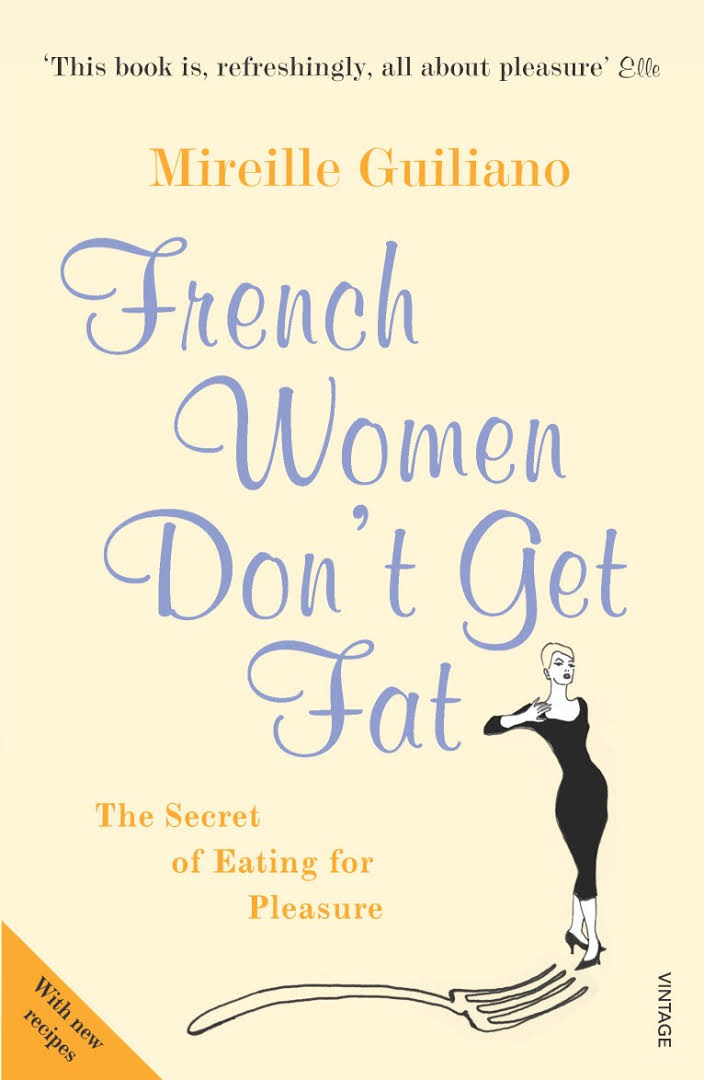
French Women Don't Get Fat - or, I wish I were French


Recently, I was given the book French Women Don't Get Fat by Mireille Guiliano, a Franco- American. I was happy to get a copy of this book (even though it may have been a hint) after wanting to read it ever since I saw the author interviewed on Oprah way back in the mid-2000's. I was nearly finished reading a novel called My Brilliant Friend written by Italian author Elena Ferrante and thought perhaps a transition from one European sensibility to another might be natural. I am anything by willy-nilly in my choices of what to read and when. I did find Guiliano's 'non-diet' book easy to get into, but to stay with? That is another matter, and fitting don't you think?

After explaining the French woman's loving relationship with food and pleasure in a delightedly light-handed way Guiliano launches into a series of meal plans and recipes that further illustrate her philosophy. Light, varied but satisfying and delicious meals seem to fill her life, with a glass of wine at supper each and every night. She grew up in France fairly privileged (with a nanny and a gardener) and food preparation and mealtimes were  near-sacred ceremonies, especially lunch, which was the main meal of the day as it is in many countries. Her mother seems to have been a wonderful cook who got the family involved in the harvesting and preserving of the fruits of their orchards and gardens. The main bits of wisdom I take from the book so far are the following: if you are going to have dessert - and dessert is very important - skip the bread at dinner (although bread is also very important, so skip the dessert if that makes you happier), set the table beautifully and present small portions with panache, eat what is in season when it tastes its best, and enjoy a hearty, healthy breakfast containing yogurt because that will start your day off right and prevent over-eating later in the day. Try not to snack, but if you are stuck in the airport waiting for a delayed flight, keep a handful of nuts in your Hermes handbag. Moreover, enjoy every bite of your precious food, simply take fewer. In any case the pleasure of food is tasted only in the first few bites.

Guiliano's way of living and eating is admirable and enviable. There is something beautiful and classic about her approach. To our North American way of thinking the French woman's philosophy may seem elitist. We immediately shout at her, "I can't afford halibut and lamb chops and all that wine and fancy cheese!" In France, however, food and wine ARE the center of everything, and she explains how life works there. Markets exist in every town and shopping is done daily on foot, not by car, so you get some exercise, too. One purchases for ultimate freshness and quality. I think the anecdote which impressed me the most was when she writes about going to the melon seller and him asking when she wanted to eat the melon. When she replies "In two days when my husband arrives from America - these melons are his favourite," the seller carefully chooses a melon that will ripen perfectly by then. Her husband arrives in Paris, enters the apartment and his nostrils are filled with the perfectly ripened aroma from the melon. "Wow!" is all he can say. French people would rather eat an ounce of good, what we would call 'artisan', cheese than a pound of  American cheese from the 'hypermarche'. The difference between North America and France is defined by how the poor eat as well. In North America, she observes, the poor eat low quality carbs and junk food because that is what is immediately available to their budgets. In France, however, their culture has shown them how to buy food in season when it is at its most plentiful and cheapest, and since less is more they fare better than North Americans health-wise. Eating well seems to be written into the French person's DNA. How lucky they are! We seem to live a lifetime learning how and what to eat.

Living in New York half the time, Guiliano has access to year-round European style markets selling everything from asparagus to fresh caught fish and seafood. Most of us are lucky to live in a town with a farmer's market open once per week in the summer months only. The 'hypermarche' is the reality for most of us. We've all heard the advice, "Shop the outside aisles only" because that is where the fresh food is. Everything else in the center aisles is bottled, packaged, and processed. Well, I shop the center aisles, too. Where else can I find pasta, oats, jam, peanut butter, crackers, coffee, tea, those mint Oreos my kid loves, and the juice my husband needs to survive? In France, perhaps, all of this is available freshly produced at the market, apart from the Oreos (but then, who needs Oreos when you have macarons?). I know from experience that my area's local farmers produce oats and even jam, and I can access these by a bit of extra leg work, but I don't always have the time. I do stop at the pepper farm once a week for a bag of bell peppers in season, and visit farm stands often for berries, eggs, and fresh corn, for these are all on my way home from work. I have always made it a priority to feed myself and my family the way I need to for our health and my peace of mind. That being said, I could stand to lose a few pounds.

So, what can I learn from Guiliano's book? I think I can take her principles and apply them realistically to my own life. I do many of the things she suggests - eat a good breakfast, eat what's in season, make most of our food at home, drink a lot of water, move my body, etc. I do not refrain enough from snacking, especially at work where I am surrounded by food. I do not set the table every night with nice dishes and cloth napkins, sipping wine while I chew slowly and thoughtfully. Perhaps that is the ticket. When all my children lived at home and my husband came home every night we sat at the supper table most nights of the week.  Most nights now, I and my youngest kid, the only one still living at home, eat sitting in front of the TV watching an episode or two of our latest favourite show. Our supper hour is a routine for the two of us and we both enjoy it.

The other night I served myself smaller portions of supper, sat as usual in front of the TV for an episode of Father Ted, and took smaller bites, trying to savour them slowly in between hoots of laughter. Life is all about compromise. Oui, oui!

January 29, 2015

How Much do I Love Camping?


I have been thinking a great deal about going back this coming summer to a favourite spot of our family's. We used to go there every summer for a family camping trip, but with all our children working and growing up and dispersing, the last time we were able to go to the spot in question was late in the summer of 2010. Below is my post written shortly after our last trip there. I do hope, if we go this year that the sun will shine more warmly upon those of us able to make the trip and, most of all, that we will be allowed to have a campfire. It really does make all the difference in the cool evenings. Even without a fire, however, our spot is beautiful almost beyond belief. There is a sense of being on the edge of the world there without it taking more than a day's travel from our home. The ocean seems bigger there and the shoreline wilder than any spot near here. I love the ocean and have been missing it as of late. The waves are calling me in the dead of winter and I long to answer their call - when summer comes.


I believe I am now completely thawed after camping for five days on the southwest coast of Vancouver Island with a complete campfire ban in effect.  We are experienced coastal campers but nothing could have prepared me for camping in damp windy conditions without the benefit of a fire in the evenings.  I wore all the wool I brought and went for many walks on the beaches dressed like it was January.

My husband and children did not seem to feel the cold nearly as much as I did.  They dressed warmly, but were not desperate about it.  One day found me pacing around our campsite with a wool blanket tied around my waist like a sarong.  My husband took to calling me 'Nanuk', but by the end of the week, even he said next time we camp at French Beach we should come earlier in the summer, when the possibility of a campfire ban has not yet taken effect.   The forest floor of the campground was littered in gold and brown leaves from the overnight fall-like temperatures, but we were mercifully cozy in our tents and sleeping bags at night, and slept well, looking forward to hot chocolate and coffee made on the Coleman stove in the morning.  We had glorious days on the beaches, hunting for tidal life, scanning the horizon for dolphins (we saw a group of three) and whales (we were blessed with a visit by a grey whale feeding in the kelp beds just off shore at Botanical Beach near Port Renfrew), and warming up on the sunbaked stones littering French Beach and China Beach.  At one point I sat on French Beach, picking up warm stone after warm stone to hold in my frigid hands.


We played round after round of badminton and tossed the football, and no one complained about taking their turn to do the dishes after every meal in a pan of hot water.  We were gratefully distracted from the wind on our second afternoon with a visit from my brother, his family and a couple of nephews, and enjoyed showing them around China Beach - a long stretch of fine sandy beach accessible only by boat or by a short hike through a forest of huge arrow-straight Sitka Spruce trees once used for masts on tallships  - which they thought was truly beautiful.  We had brought a gas lamp with us and after we found it emitted a generous amount of heat we joked about it being our impromptu campfire, placed it on the fire grate and gathered around it every evening just to stay somewhat warm while we sat and talked about the day and shared stories and favourite scenes from well-loved comedy programs.

The last day we hiked into Mystic Beach and enjoyed the sheltered bay there.  We lingered in the warmth, exploring the caves created in the cliffs by the tide, and visited the waterfalls.  I was clicking away with my camera when a fellow hiker offered to take a family photo, and I think it will make a great Christmas card this year.  Soon after, our daughter Emma stood on a rock near the shore.  The tide was coming in then and my boys thoroughly enjoyed watching their sister get soaked by a large rogue wave that hit her at chest height.  Good thing I had packed an extra jacket.


New wooden steps down to Mystic Beach

The last evening after supper was cleared away we walked on French Beach and remarked on the darkness of the clouds heading toward us.  We decided to string up a tarp over the picnic table in case of rain, so at least we would have somewhere dry to cook and eat in the morning.  We were so glad we thought of it, because it rained fairly hard all night long.  After breakfast we packed up the wet tents cheerfully, anticipating the dry warmth we would return to here at home. 

Do I love camping?  Not necessarily in the aforesaid conditions.  But what I do appreciate about camping is the unobstructed family time, the simplicity of choosing meals suitable for cooking over a two burner camp stove,  the 24/7 outdoor living by the briny fresh sea, the inaccessibility of technological gadgets, my husband being well out of cell phone range so he can't be bothered with work, and the appreciation it gives me for the simple things of everyday life - like a hot bath and a solid roof overhead.

The painting above of the large piece of driftwood on French Beach is called 'West Coast Wanderer' by Victoria, B.C. artist Jeffrey J. Boron.  More of his work can be found here.  

August 22, 2014

Reading Material


Although I never actually heard my parents say, "You are what you read", I do think they believe that to be true in most cases. My mom read virtually every book we children brought into the house just to be sure of what we were putting into our heads. A book brought home often disappeared during the night and was replaced on the bedside table before we woke up in the morning. Mom would usually tell us what she thought of the book, too, especially if she didn't like it.

When I was in grade seven I made bi-weekly trips to the local library and soon became fascinated with stories about troubled young girls lacking parental support. I distinctly remember one about an overweight girl who ran away from her miserable family, and somehow got trapped on an island where she had to survive by killing and eating raccoons and such. The experience changed her, of course, and she lost a great deal of weight, which seemed to solve all her problems. While against censorship in general, my mom finally appealed to me to stop bringing home such depressing novels. I suppose they were dragging her down.

I spent many hours as a pre-teen brushing my mom's long, dark brown hair while she read to me. We made our way through several Noel Streatfield novels (my favourite), the Little House on the Prairie series and The Von Trappe family stories. When I was bored I merely had to say, "Mom, I need a book to read, and she would lead me to the floor-to-ceiling book shelves which lined the entire length of the front hall : "Here's a good one," or " You'd love the Anne books," or "How about The Lion the Witch and the Wardrobe?" Mom took volume after volume off the shelf, and having read each of the books herself gave me a concise librarian's description of it. After dismissing most of the books with "Nah," I finally made my choice. My literary education then continued as I lay on the couch calling out for the meaning of this word or that, as most of the books I read were written before I was born.

Another memory lives in my mind like a short film. One afternoon I was sitting in the living room reading a magazine. My father was in the chair opposite, also reading. I soon became bored and began rifling through the rack beside my chair. Lo and behold I discovered an unfamiliar magazine: an edition of True Confessions. I picked it up and started reading a story about a young woman who goes off with a married man to a cabin in the woods...you can guess the rest. I think my fascination stemmed largely from my surprise that such smut could even get through the doors of our house, and here it was found lying cover to cover with National Geographic World and a Sharon, Lois and Bram songbook. As I soaked up the explicit descriptions of events in the story, as only a ten year old can do, I began to feel a distinct, steady sensation like a laser beam crossing the room. I looked up to meet my dad's over-the-glasses gaze which, having been a teacher and parent for many years, was a look he had perfected. He lowered his eyes slowly down to the title of my chosen literature, and then up again at me. "Don't you have anything better to read?" he asked quietly, but oh, so effectively in his deep, sonorous voice. Without a single noise from my lips, I replaced True Confessions in the rack and took up a copy of National Geographic World. "That's better," he said with the trace of a smile. The next time I went to choose a magazine, True Confessions was gone. I never saw it or its kind in the house again.

After I moved out my parents turned my bedroom into a study/library and transferred all the books into it from the front hall. The study has a lovely view of the back garden where the cherry tree of my childhood bloomed until it rotted and had to be taken down. On a recent visit I had forgotten to bring a book, and asked to borrow one. My mom brought me a thick novel - a one volume edition of Robertson Davies' Salterton Trilogy. I settled down into the pullout couch for the night and began my transport into the wickedly funny world of Kingston, Ontario's intellectual society of the 1950's... Mom let me take the book home to finish.

The photo above, while not an actual photo of one of my childhood bookshelves, greatly resembles it. 

July 29, 2014

Books for the Armchair Traveller

I have not travelled to many places far from home in my life. I have not been off the North American continent, in fact. Most of my exotic travel has taken place in my imagination through the writings of gifted authors who can bring the very dust alive of a country where I have never set foot. Most of these authors are transplants from North America or England and their stories are relatable, often funny, and full of love for their adopted homeland.

Peter Mayle and his A Year in Provence books was the first transplanted author to really get my attention. He and his wife, Jenny, vacationed in the Provence region in the south of France in the early 1980's. In 1986 they moved to the area and began renovating an old stone farmhouse. Mayle's lighthearted and often comic descriptions of the food and wine, the Provencal characters, the landscape and the lifestyle opened up the world of armchair travelling to me and I happily return to Provence at least once every couple of years.


American Chef, Julia Child wrote a beautiful memoir, My Life in France about the years she and her husband, an American diplomat, spent living in Paris and Marseille. Needing something to do in a strange country, Julia took cooking lessons and discovered she had an aptitude for the art. With her trademark candid style, Julia describes with delight all the sights, sounds and smells of her adventures in France. She absolutely fell for Paris, fell for cooking, and fell for the French people.


An artist friend loaned me a couple of books by Hungarian-Canadian cum Tuscan author Ferenc Mate. The Hills of Tuscany and A Vineyard in Tuscany lept to mind when I was viewing the Facebook photos of a friend who is presently travelling in that part of Italy. Mate, a true Renaissance man, and his wife Candace, a painter, moved to Tuscany from New York (although I am happy to say they met by chance in Vancouver) to make a life there. Mate writes with a great deal of warmth, love, humour and self-deprecation. Between the lines one can sense his innate talent at making lifelong friends and succeeding at anything he turns his hand to. In the second book, he and his wife and their young son Peter, buy a former convent and turn it into a beautifully stunning, award-winning winery in the Montalcino region of Tuscany. Reading his books was like making a new friend, one for whom you feel an immediate appreciation and look forward to visiting again. I have a feeling I will be rereading Mate's sun-drenched memoirs this winter when the coastal weather here is particularly dreary.


I must confess that non-fiction has not always been my thing. I am a fairly dedicated reader of novels and short stories, but if a writer can entice me with true stories, I become a life-long fan. I can do plenty of armchair travelling through novels: Rumer Godden wrote exquisitely of India, Mary Stewart of Greece, Michael Ondaatje of pretty much anywhere, but there is something unmistakably wonderful about a writer who can write truly engaging non-fiction. Gerald Durrell and his My Family and other Animals, about growing up a junior naturalist in Greece, M.Wylie Blanchet and her The Curve of Time in which she takes us along with her family on their adventures by boat in and along the fjords and coastline of Vancouver Island and the Sunshine Coast are two such books. Their stories have an immediacy to them which scoops up the reader and takes them along as a guest on the journey, and I have a true appreciation for that quality in a book. Especially when long-flight travel is not on my real-life agenda any time soon.


Have you any recommendations of similar type books for me? Let me know in the comments, please!? Thank you.