Showing posts with label good books. Show all posts

January 19, 2026

Heard any Good Books Lately?

I have recently discovered the joy of audiobooks. I still read a lot of paper books, but it can be hard to read them while on a walk or while cooking or working on a puzzle, and last week I dropped my copy of  To See Every Bird on Earth by Dan Koeppel in the bathtub while I was reading it. Audiobooks are hands free. All you need are listening ears, an attention span of sorts, and a subscription to Libby (free through your public library - amazing), or Audible, or Spotify, or any other platform you might find audiobooks on. A few clicks and you're off to the races.

My mother often read to my brother and me when we were little and sharing a room, and when I was in Elementary school teachers read books to the class. My grade five teacher read us The Borrowers by Mary Norton. Those hours became my favourite among the many I had to spend in school. As soon as my teacher began to read I was immersed in the world of those tiny house guests and their adventures. My imagination was captured and I was carried along by my teacher's voice, which was quite pleasant as I remember it now. Being read to is something I had forgotten as an adult, and I am enjoying it. As long as the voice on the audiobook is expressive (without being overly so) and pleasant, and the story or subject is interesting to me, I am happy to listen for as long as my attention or circumstances allow.

The most recent audiobook I listened to was The Third Gilmore Girl by Kelly Bishop. This wonderful autobiography, read by the author, hooked me from the first to the last page. Kelly Bishop played the matriarch of the Gilmore family on a comedy/drama show called Gilmore Girls, which is a series I have watched several times through, first, when it originally came out on the WB network in the early 2000's, and then years later with my girls when Netflix aired it. The show has gained a new and dedicated audience by being on Netflix, which produced a four episode reunion of sorts in 2016. The snappy and clever dialogue and quirky characters written by Amy Sherman-Palladino and her husband, Daniel Palladino, the detailed sets, pop-culture references and complex family dynamic tick fans' boxes for quality entertainment. I admire and respect how Kelly Bishop plays her complex character Emily Gilmore so convincingly as the sharp-tongued yet vulnerable mother desperate to have a better relationship with her daughter Lorelei without really knowing how to go about it. When I found out Kelly Bishop had written a book about her life and her role on one of my favourite shows, of course I wanted to read it. Or listen to it.

Kelly Bishop's autobiography is, to my mind, best heard in her deep, distinctive voice. I would have enjoyed reading a paper copy, but somehow, hearing her tell the story was like sitting down with a beloved aunt who has lived an amazing life and wants to share it with you. From her first days as a ballet dancer, to her Tony-award winning role as one of the original cast members of A Chorus Line on Broadway, to her memorable parts in movies and television, her story is fascinating and encouraging to anyone who has a similar dream. She shares the ups and downs, and through it all the reader/listener is impressed by her grit and determination, and also her lucky breaks, which occur often just when she needs them most. Now in her eighties, she is still working as an actress. The end of her book brought me to tears as I walked with my headphones on, listening in the cold sunshine. She is such a trouper. And she thanks her mom, who was also a trouper, for everything. I like when they thank their moms.

I tried out a new audiobook yesterday. I got about ten percent into the second chapter before I knew it wasn't for me. The reader's voice grated on my nerves. I also could not relate to the story. That's okay, there are plenty of other books to choose from. I went on the Libby app and requested another book I have been meaning to read, A Pocketful of Happiness by one of my favourite actors,  Richard E. Grant. I hope it's read by the author, too. The app said there was a six week wait for a copy to become available. Just like at the brick and mortar library, there are waits for popular books on the Libby app. I will have to find another book to listen to in the meantime. Any recommendations? 

'til next time, 

Rebecca

May 20, 2022

Engines and Fuel

I just finished reading the short novel What Strange Paradise by Canadian journalist and author Omar El Akkad. In Chapter 20 the smuggler's apprentice Mohamed says something simply awful and cynical to the passengers on the ancient run-down fishing boat that carries them across the Mediterranean to a shore they hope will provide a better life than the war-torn places they left behind:

        "You sad, stupid people," he said. "Look what you've done to yourselves. The West you talk about doesn't exist. It's a fairy tale, a fantasy you sell yourself because the alternative is to admit that you're the least important character in your own story. You invent an entire world because your conscience demands it, you invent good people and bad people and you draw a neat line between them because your simplistic morality demands it. But the two kinds of people in this world aren't good and bad -- they're engines and fuel. Go ahead, change your country, change your name, change your accent, pull the skin right off your bones, but in their eyes they will always be engines and you will always, always be fuel."

The irony of the smuggler's apprentice spewing the above as he is facilitating the migrants' journey to the West, making money off it, no less, seems lost on him. I definitely do not pretend to know much about the Middle East's history of troubles, but the fact that the leaders of much of those lands promote a deep mistrust of the West is well-known (and in some cases well founded). Still, people flock by the thousands in leaky boats and rafts in uncertain waters, wearing poor quality pdf's, risking life and life-savings in search of what the West seems to stand for. 

I have always been interested in origin stories. I enjoy learning how people got to where they are now. If I meet someone from a foreign country I often ask what brought them to Canada. I remember one woman who is now a friend answered that question with "Amnesty International and the Catholic Church. My dad was a wanted man for speaking out against the dictator of our country". Having lived a comparatively sheltered and privileged life, I acknowledge how out of touch I can be with the true, lived struggles of people who leave everything behind, often including the graves of many loved ones killed in armed conflicts or raids, to come to a country like Canada. I have to read books like What Strange Paradise to try and internalize some of what these immigrants experience. Or, I ask my hairstylist who was a Vietnamese boat person. He, too, got on a boat with his brother and father not knowing if they would live or die on the crossing to a new land. He is proud of the life he and his family have built here, and he and his wife, like many immigrants, work very hard. He has told me more than once that Canadians don't know how good we've got it. 

When I was working at my friend's tulip festival this past April I was reminded of how much it resembles an international airport during holiday times, or perhaps the UN. Every possible skin colour, ethnicity, and accent is represented (okay, a slight exaggeration, but you get the picture) Languages flow around me like bubbling streams. I love it. This year I worked in the farm shop where we sell potted and cut flowers, souvenirs, treats and drinks. As I greeted each customer I took the opportunity to be as welcoming as possible. I made short conversation with each of them and found my smiles returned. Each customer has an origin story. Each customer has as much right to be on this earth as I do, no matter where they were born. Many of them have earned that right much more than I have by the risks they have taken and the sacrifices they have made to leave all that is familiar. I am grateful not to think like the smuggler's apprentice, dividing humans into engines and fuel, and I need to continue to work in my small way to make Canada a place that gives equal opportunity to all. 

We can all be engines and fuel for each other. 

Until next time, 

Rebecca

April 1, 2022

Recommended Reading

For the last couple of months I've been immersed in my own personal version of the Canadian Broadcasting Corporation's annual Can-lit contest Canada Reads. One of my goals for the New Year was to read more books from diverse cultural perspectives. I could read British murder mysteries by the likes of Ann Cleeves and P.D. James until the cows come home, and in fact I have. The cows are in the building as we speak, and it is time to let them rest awhile before putting them back out to pasture once again while I indulge my penchant for dead bodies found by hyper-intuitive sleuths (who have issues of their own to solve or merely live with) in ancient castles or on dreary, windswept Atlantic beaches. Additionally, mystery novels are glorified puzzles that are solved at the end. Very tidy. Not terribly realistic, but great and satisfying reading.

The last time I read a culturally diverse book, and that was just before the pandemic, was when I gasped my way through Life of Pi. I was traumatized by it, just as I was traumatized by Rohinton Mistry's A Fine Balance years ago. Both books were beautifully written and valuable to literature in general, but I had a hard time getting over them. I am the sort of person who travels alongside the characters in a book I am reading. The things that happen to the characters affect me in a way that is hard to describe. When I read an engaging book I also enter it for the duration. I witness the good, the bad, and the ugly and carry it around with me. When I was a teenager a book could affect my entire mood. I am better at separating real life and fiction now - perhaps my skull is just thicker, but my heart is still quite sensitive. If I have a deeply sad or disturbing book on the go I read it during the day, and read another, lighter book before I go to sleep at night, so with this strategy in mind I decided I needed to open myself up to some more challenging, educational reading once again. If I want to be a good citizen of the world, my country, and my community, I need to learn from the writers who wish to teach us how to be that through their stories.

So, what is on my cuturally diverse list this season, you ask?  The first book I read this year was Washington Black by Esi Edugyan. Wahington Black is a sweeping, transatlantic epic of a novel about a young Caribbean slave boy with a very special talent. The story is full of eccentric characters and the barbarism of slavery, and it was defended in this year's Canada Reads, so at least I had read one of the books on their list. The second book on my personal list was All the Quiet Places by Brian Thomas Isaac. Now, this book entered my soul and gave me heavy dreams. If you want to learn about the lasting impact of colonialism on Indigenous peoples and their communities on a personal level, I highly recommend All the Quiet Places. The author is so good at describing and setting a scene I felt I was right there with the characters, not viewing them from a platform far away. The third book I read was Diamond Grill by Fred Wah. Diamond Grill was published in the mid-nineties, but appeared on my radar a few months ago. The poetic prose of this book perfectly captures the nuances and complexities of growing up bi-racial in mid-century small-town Canada. Yet again, I was transported, this time to the Chinese-Canadian restaurant that closed in my hometown when I was seven years old. The fourth book on my list is Three Day Road by Joseph Boyden. I was hooked by this book immediately. Boyden is a legendary author. Three Day Road is expertly written from the perspective of two people, an elderly aunt recounting her past as a 'bush Indian' in northern Ontario and her nephew who has returned, haunted and maimed, from the battlefront of the First World War. As the elderly aunt paddles her nephew back home she tells him stories from her life, and he silently re-lives his horrifying experiences as a talented sniper in the trenches and bombed out landscape of France. I learned so much from this book and look forward to reading his other novels, when I recover from Three Day Road, that is. 

I have more books on my list, including a few currently on hold at my local public library. I am so grateful to the many authors who tell stories from their own unique perspective. My life is richer because of them, and I hope I can translate what I learn from these stories into action as a more sensitive and aware citizen and friend.  

November 28, 2017

Holiday Preparations


I've had a busy month. I left my job at the cafe and started another at a bakery much closer to home. My brother-in-law accepted a position at the resort where my husband is employed and he's been staying with us on his days off. My sister and their younger daughter will be moving here this week, so I've been assisting with advice and house-finding and moral support and everything I can do from here, three provinces away. I knew, somewhere in the periphery, Christmas was beginning to creep into view in shop windows and in people's windows as well, the ones who put their tree up in mid-November, but I had yet to allow my consciousness any tangible participation in the gradual and intentional takeover of the city scenery. The only Christmas-related things I had been doing were paying attention to the price of Brazil nuts for my Christmas cakes which have to be baked by the end of November each year, and hoping the price would go down (It did not), and practicing carols with the choir I am a member of for our upcoming concerts

For many of us, the Holidays mean family coming home, decorating, baking, cooking, cleaning, list making, shopping for and/or making gifts, in other words, a fair amount of work. Add to the list the fact I must have everything ready to transport up to the resort where we will spend Christmas again this year. I enjoy hosting my family at Christmas and feeding them and all that, but I honestly had not even begun to think about it. Last Saturday, while we were having our usual Saturday afternoon beer together, my brother-in-law, Brent and I chatted as I began to prepare supper. Having him around a couple of days per week has been fun. As my daughter says, 'he is so mellow and easy to talk to'. I lived with him and my sister many years ago when I was in university, and we had always been good friends. Brent was impressed I still had the mixed tape he made me for my birthday in 1988. He sent a photo of the cover with all the songs listed to his older daughter who is away at college, and she made a Spotify playlist of all the songs for herself. Some of those old songs wear well - I still listen to my tape from time to time. Anyway, we were chatting, which can make it hard for me to concentrate on cooking, when he said, out of the blue, "Do you like Dylan Thomas?" I said, of course, A Child's Christmas in Wales is my favourite Christmas story. He clicked a key on his laptop and Dylan Thomas' deep, whiskey-soaked voice filled the room. I smiled as I spoke along with the words,

I can never remember whether it snowed for six days and six nights when I was twelve 
or if it snowed for twelve days and twelve nights when I was six.

I let the author tell the rest of his story alone as I made supper. It was at the moment when Dylan Thomas sang Good King Wenceslas in the hesitant voice of himself as a small boy when I felt the magic and the possibilities of the coming season. I rather suddenly began to look forward to making the Christmas cakes, despite the price of Brazil nuts. As Brent, my daughter and I sat down to eat we talked about our favourite Christmas music and I put Charlie Brown's Christmas on the stereo and said it was the only Christmas album my kids could all agree on. Brent told us about a jazz album his family had bought at their local variety store in the small town in Manitoba they are leaving behind and how it had become their family's trademark Christmas album. We had a festive evening listening to music and chatting away happily about traditions and families and such.

The next day, after Brent had left to go back up to the resort, I gathered up the necessary energy to drive in the pouring November rain to the local Christmas craft market where I started my shopping in earnest. I bought some handcrafted gifts and talked to vendors, some of whom I knew from other annual markets I attend. I entered the door prizes, voted on my favourite Holiday themed flower arrangement and tasted all the free samples I was offered. I missed my husband, who usually shops there with me and helps me navigate the maze of stalls with his keen sense of direction (I am admittedly geographically challenged) but somehow I found my way out of the massive building without him after circling it a few times.

The next evening I took out some Seasonal piano music and played carols and songs for half an hour missing the resonance of our old upright piano we had to give away, but grateful for the digital one our son decided to leave with us. My husband, home for his days off, came over and put his hands on my shoulders. The twenty-five Christmases we had celebrated as a family fell like cascading notes from my memory onto the piano keys. I played those Christmases with the halting style of a musician who rarely practices but enjoys it all the same.


For anyone who would like to be told a wonderful story, here it is, A Child's Christmas in Wales


September 9, 2017

A Library Tale


I was on Facebook the other day when I came across yet another news post about the high cost of living in my province of British Columbia. Ever interested in the topic I began to read some of the comments below the article, something I don't often do because some people say such ignorant things on social media platforms. Reading those comments is one sure way to lower my hope for humanity. Anyway, a woman had posted about her family's struggles to make ends meet even with both she and her husband working. In fact, with the overwhelming costs of daycare, food and rent the family was going into debt. She asked for any suggestions on how to make do with less. I attempted to help her by sharing some of my own experiences from my days as a stay-at-home mom of four. Among other cost-saving measures I mentioned how I used the local library a lot, as a place to borrow videos, books and as an outing that did not cost a dime (unless our books were late, of course). I ended the comment by commiserating about the cost of groceries and wished her the very best of luck.

That night I slept poorly. The forest fire smoke hung over our city trapping in humidity and heat, and my back was bothering me. As I lay awake I thought about my comment on Facebook and hoped my suggestions had been friendly and helpful ones. One thought led to another and I began to think gratefully about all the times spent at libraries with my children. When my boys were very little we lived in a lovely little mountain town called Kimberley. I have always been a walker, and I went out with the boys every single day, no matter the weather. If the weather was decent I pushed them in the double stroller to the park down the road. We would play there to run off any potentially cranky energy (pushing the stroller down the hill had already eliminated mine) and then walk/ride back up the hill to the town center to make our usual rounds. The town of Kimberley is incredibly charming. The businesses border a central European-style plaza where a large cuckoo clock yodels the hours - at least it still did on our last visit there several years ago.  One of our stops, at least once a week, was the library. After choosing carefully and reading several, we could check out a large stack of books, which I would put in the undercarriage of the stroller along with everything else I had gathered on our travels that day - groceries for dinner, thrift store finds, interesting pine cones or rocks the boys found, etc. I believe I counted my lucky stars each time I left the library - I walked out of there with over a hundred dollars worth of books and I could keep them all for weeks, provided no one else had requested them. We were usually done with the books after a week and would take our stack back to the library along with any Mighty Machines or Little Bear videos we had borrowed in order to get an entirely new selection - for free! Oh, I know full well we all pay for libraries through our city taxes and such, but for a young family such as ours, I cannot thank The System enough.

When my husband was transferred to Vancouver Island we again sought out the local library. There we discovered more new books and authors to add to our growing list of favourites. I greatly appreciated the way in which the library staff would place a selection of books and videos on display. I have often found a new book or author for myself in these displays as well. With the kids in tow, I did not often have time to search for items for myself but if a cover called to me from the display racks I would throw it (gently) on the pile and take it home. On our annual trips to my hometown to visit family we would visit a favourite bookstore. Our kids would get to pick one book each as a present. The book would often be a shiny new copy of one they had come to love at the library.

When we moved to the Fraser Valley we lucked out completely. The small town, almost village in size, where we were to make our home for the next thirteen and a half years, was the proud owner of a brand new library. Not only was the library beautiful, open and brightly lit with natural light, it was, despite it being on the small side, part of a wonderful regional library system like our Island libraries. Any item in the vast and seemingly endless system was available to we small-towners at the touch of a keyboard. Our three older children were all school age, and our youngest was eighteen months when we moved to the Valley. Within three months of moving I found myself doing daycare for a couple of teachers from our elementary school. My method of child care involved much walking and playing at the park, but it also involved frequent visits to the library for outings, especially for Friday morning Storytime. Storytime at the library was looked forward to by many parents and caregivers in our town. The fifteen minute walk from our house was a good way to work out the ya-yas in my charges before they were to sit and listen to the head librarian entertain them with puppetry, fun stories, and activities. I personally loved our librarian because she spoke my language, so to speak. We both revelled in nonsense and word play, and mildly politically incorrect humour. She and her dry-witted Scottish workmate would also make delicious coffee for the adults and serve cookies for the kids. Those Friday morning cups of coffee, company and stories forever endeared me to those two amazing women.

I have not visited my new library branch much since moving to the city where we now make our home. I am too occupied by trying to make use of all the trading credit I amassed at a local second-hand bookstore when downsizing this past autumn. When I do make another visit to the library here I know I will smile at all the young families making use of the wonderful services there. I also know I will enjoy the immediate sense of community a library offers to all who enter its doors. A library is a rare place of equality. A wealthy person is treated the same as a low-income person, for they can each borrow the same amount regardless of income. Access to computers and internet, newspapers, magazines, audio-books, CD's and DVD's, reference books, not to mention author readings, seminars and workshops allow an extension to everyone's education. We only have to take advantage of them.

Long live the local library, truly one of the very best institutions in the world. I know full well my life as a young mother, and the lives of my children, would have suffered greatly without it.

August 30, 2017

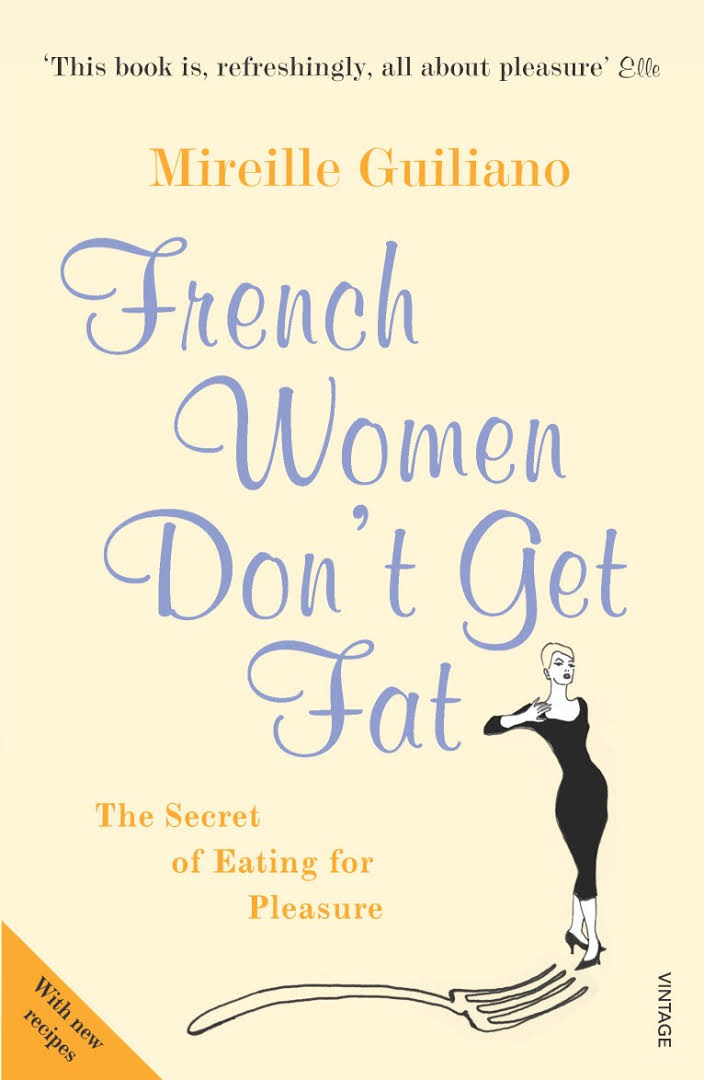
French Women Don't Get Fat - or, I wish I were French


Recently, I was given the book French Women Don't Get Fat by Mireille Guiliano, a Franco- American. I was happy to get a copy of this book (even though it may have been a hint) after wanting to read it ever since I saw the author interviewed on Oprah way back in the mid-2000's. I was nearly finished reading a novel called My Brilliant Friend written by Italian author Elena Ferrante and thought perhaps a transition from one European sensibility to another might be natural. I am anything by willy-nilly in my choices of what to read and when. I did find Guiliano's 'non-diet' book easy to get into, but to stay with? That is another matter, and fitting don't you think?

After explaining the French woman's loving relationship with food and pleasure in a delightedly light-handed way Guiliano launches into a series of meal plans and recipes that further illustrate her philosophy. Light, varied but satisfying and delicious meals seem to fill her life, with a glass of wine at supper each and every night. She grew up in France fairly privileged (with a nanny and a gardener) and food preparation and mealtimes were  near-sacred ceremonies, especially lunch, which was the main meal of the day as it is in many countries. Her mother seems to have been a wonderful cook who got the family involved in the harvesting and preserving of the fruits of their orchards and gardens. The main bits of wisdom I take from the book so far are the following: if you are going to have dessert - and dessert is very important - skip the bread at dinner (although bread is also very important, so skip the dessert if that makes you happier), set the table beautifully and present small portions with panache, eat what is in season when it tastes its best, and enjoy a hearty, healthy breakfast containing yogurt because that will start your day off right and prevent over-eating later in the day. Try not to snack, but if you are stuck in the airport waiting for a delayed flight, keep a handful of nuts in your Hermes handbag. Moreover, enjoy every bite of your precious food, simply take fewer. In any case the pleasure of food is tasted only in the first few bites.

Guiliano's way of living and eating is admirable and enviable. There is something beautiful and classic about her approach. To our North American way of thinking the French woman's philosophy may seem elitist. We immediately shout at her, "I can't afford halibut and lamb chops and all that wine and fancy cheese!" In France, however, food and wine ARE the center of everything, and she explains how life works there. Markets exist in every town and shopping is done daily on foot, not by car, so you get some exercise, too. One purchases for ultimate freshness and quality. I think the anecdote which impressed me the most was when she writes about going to the melon seller and him asking when she wanted to eat the melon. When she replies "In two days when my husband arrives from America - these melons are his favourite," the seller carefully chooses a melon that will ripen perfectly by then. Her husband arrives in Paris, enters the apartment and his nostrils are filled with the perfectly ripened aroma from the melon. "Wow!" is all he can say. French people would rather eat an ounce of good, what we would call 'artisan', cheese than a pound of  American cheese from the 'hypermarche'. The difference between North America and France is defined by how the poor eat as well. In North America, she observes, the poor eat low quality carbs and junk food because that is what is immediately available to their budgets. In France, however, their culture has shown them how to buy food in season when it is at its most plentiful and cheapest, and since less is more they fare better than North Americans health-wise. Eating well seems to be written into the French person's DNA. How lucky they are! We seem to live a lifetime learning how and what to eat.

Living in New York half the time, Guiliano has access to year-round European style markets selling everything from asparagus to fresh caught fish and seafood. Most of us are lucky to live in a town with a farmer's market open once per week in the summer months only. The 'hypermarche' is the reality for most of us. We've all heard the advice, "Shop the outside aisles only" because that is where the fresh food is. Everything else in the center aisles is bottled, packaged, and processed. Well, I shop the center aisles, too. Where else can I find pasta, oats, jam, peanut butter, crackers, coffee, tea, those mint Oreos my kid loves, and the juice my husband needs to survive? In France, perhaps, all of this is available freshly produced at the market, apart from the Oreos (but then, who needs Oreos when you have macarons?). I know from experience that my area's local farmers produce oats and even jam, and I can access these by a bit of extra leg work, but I don't always have the time. I do stop at the pepper farm once a week for a bag of bell peppers in season, and visit farm stands often for berries, eggs, and fresh corn, for these are all on my way home from work. I have always made it a priority to feed myself and my family the way I need to for our health and my peace of mind. That being said, I could stand to lose a few pounds.

So, what can I learn from Guiliano's book? I think I can take her principles and apply them realistically to my own life. I do many of the things she suggests - eat a good breakfast, eat what's in season, make most of our food at home, drink a lot of water, move my body, etc. I do not refrain enough from snacking, especially at work where I am surrounded by food. I do not set the table every night with nice dishes and cloth napkins, sipping wine while I chew slowly and thoughtfully. Perhaps that is the ticket. When all my children lived at home and my husband came home every night we sat at the supper table most nights of the week.  Most nights now, I and my youngest kid, the only one still living at home, eat sitting in front of the TV watching an episode or two of our latest favourite show. Our supper hour is a routine for the two of us and we both enjoy it.

The other night I served myself smaller portions of supper, sat as usual in front of the TV for an episode of Father Ted, and took smaller bites, trying to savour them slowly in between hoots of laughter. Life is all about compromise. Oui, oui!

August 22, 2014

Reading Material


Although I never actually heard my parents say, "You are what you read", I do think they believe that to be true in most cases. My mom read virtually every book we children brought into the house just to be sure of what we were putting into our heads. A book brought home often disappeared during the night and was replaced on the bedside table before we woke up in the morning. Mom would usually tell us what she thought of the book, too, especially if she didn't like it.

When I was in grade seven I made bi-weekly trips to the local library and soon became fascinated with stories about troubled young girls lacking parental support. I distinctly remember one about an overweight girl who ran away from her miserable family, and somehow got trapped on an island where she had to survive by killing and eating raccoons and such. The experience changed her, of course, and she lost a great deal of weight, which seemed to solve all her problems. While against censorship in general, my mom finally appealed to me to stop bringing home such depressing novels. I suppose they were dragging her down.

I spent many hours as a pre-teen brushing my mom's long, dark brown hair while she read to me. We made our way through several Noel Streatfield novels (my favourite), the Little House on the Prairie series and The Von Trappe family stories. When I was bored I merely had to say, "Mom, I need a book to read, and she would lead me to the floor-to-ceiling book shelves which lined the entire length of the front hall : "Here's a good one," or " You'd love the Anne books," or "How about The Lion the Witch and the Wardrobe?" Mom took volume after volume off the shelf, and having read each of the books herself gave me a concise librarian's description of it. After dismissing most of the books with "Nah," I finally made my choice. My literary education then continued as I lay on the couch calling out for the meaning of this word or that, as most of the books I read were written before I was born.

Another memory lives in my mind like a short film. One afternoon I was sitting in the living room reading a magazine. My father was in the chair opposite, also reading. I soon became bored and began rifling through the rack beside my chair. Lo and behold I discovered an unfamiliar magazine: an edition of True Confessions. I picked it up and started reading a story about a young woman who goes off with a married man to a cabin in the woods...you can guess the rest. I think my fascination stemmed largely from my surprise that such smut could even get through the doors of our house, and here it was found lying cover to cover with National Geographic World and a Sharon, Lois and Bram songbook. As I soaked up the explicit descriptions of events in the story, as only a ten year old can do, I began to feel a distinct, steady sensation like a laser beam crossing the room. I looked up to meet my dad's over-the-glasses gaze which, having been a teacher and parent for many years, was a look he had perfected. He lowered his eyes slowly down to the title of my chosen literature, and then up again at me. "Don't you have anything better to read?" he asked quietly, but oh, so effectively in his deep, sonorous voice. Without a single noise from my lips, I replaced True Confessions in the rack and took up a copy of National Geographic World. "That's better," he said with the trace of a smile. The next time I went to choose a magazine, True Confessions was gone. I never saw it or its kind in the house again.

After I moved out my parents turned my bedroom into a study/library and transferred all the books into it from the front hall. The study has a lovely view of the back garden where the cherry tree of my childhood bloomed until it rotted and had to be taken down. On a recent visit I had forgotten to bring a book, and asked to borrow one. My mom brought me a thick novel - a one volume edition of Robertson Davies' Salterton Trilogy. I settled down into the pullout couch for the night and began my transport into the wickedly funny world of Kingston, Ontario's intellectual society of the 1950's... Mom let me take the book home to finish.

The photo above, while not an actual photo of one of my childhood bookshelves, greatly resembles it. 

July 29, 2014

Books for the Armchair Traveller

I have not travelled to many places far from home in my life. I have not been off the North American continent, in fact. Most of my exotic travel has taken place in my imagination through the writings of gifted authors who can bring the very dust alive of a country where I have never set foot. Most of these authors are transplants from North America or England and their stories are relatable, often funny, and full of love for their adopted homeland.

Peter Mayle and his A Year in Provence books was the first transplanted author to really get my attention. He and his wife, Jenny, vacationed in the Provence region in the south of France in the early 1980's. In 1986 they moved to the area and began renovating an old stone farmhouse. Mayle's lighthearted and often comic descriptions of the food and wine, the Provencal characters, the landscape and the lifestyle opened up the world of armchair travelling to me and I happily return to Provence at least once every couple of years.


American Chef, Julia Child wrote a beautiful memoir, My Life in France about the years she and her husband, an American diplomat, spent living in Paris and Marseille. Needing something to do in a strange country, Julia took cooking lessons and discovered she had an aptitude for the art. With her trademark candid style, Julia describes with delight all the sights, sounds and smells of her adventures in France. She absolutely fell for Paris, fell for cooking, and fell for the French people.


An artist friend loaned me a couple of books by Hungarian-Canadian cum Tuscan author Ferenc Mate. The Hills of Tuscany and A Vineyard in Tuscany lept to mind when I was viewing the Facebook photos of a friend who is presently travelling in that part of Italy. Mate, a true Renaissance man, and his wife Candace, a painter, moved to Tuscany from New York (although I am happy to say they met by chance in Vancouver) to make a life there. Mate writes with a great deal of warmth, love, humour and self-deprecation. Between the lines one can sense his innate talent at making lifelong friends and succeeding at anything he turns his hand to. In the second book, he and his wife and their young son Peter, buy a former convent and turn it into a beautifully stunning, award-winning winery in the Montalcino region of Tuscany. Reading his books was like making a new friend, one for whom you feel an immediate appreciation and look forward to visiting again. I have a feeling I will be rereading Mate's sun-drenched memoirs this winter when the coastal weather here is particularly dreary.


I must confess that non-fiction has not always been my thing. I am a fairly dedicated reader of novels and short stories, but if a writer can entice me with true stories, I become a life-long fan. I can do plenty of armchair travelling through novels: Rumer Godden wrote exquisitely of India, Mary Stewart of Greece, Michael Ondaatje of pretty much anywhere, but there is something unmistakably wonderful about a writer who can write truly engaging non-fiction. Gerald Durrell and his My Family and other Animals, about growing up a junior naturalist in Greece, M.Wylie Blanchet and her The Curve of Time in which she takes us along with her family on their adventures by boat in and along the fjords and coastline of Vancouver Island and the Sunshine Coast are two such books. Their stories have an immediacy to them which scoops up the reader and takes them along as a guest on the journey, and I have a true appreciation for that quality in a book. Especially when long-flight travel is not on my real-life agenda any time soon.


Have you any recommendations of similar type books for me? Let me know in the comments, please!? Thank you. 

February 19, 2014

L.M. Montgomery - a First Love in Literature


In my early years as a dedicated reader of novels, when it came to authors, I tended toward serial monogomy. Noel Streatfield, the author of Ballet Shoes, The Painted Garden, White Boots, and several others was my first real love as a reader, but when the time came for me to move on from her delightful books for children I was at a bit of a loss.

Every time I would talk about needing something to read my family would suggest Anne of Green Gables. "You'll love it," my sisters insisted, and because they insisted I resisted. I finally gave in when I was fifteen - my sisters had all moved out by then - and tentatively began the book that would change my life. I was not prepared to enjoy it, but by the first chapter I was hooked and would remain an Anne fan for life. And not just an Anne fan, but a fan of the writing of her creator Lucy Maud Montgomery. I would spend the next several years scouring second hand book stores for copies of her many books, building up my collection which I read over and over until Jane Austen became my new obsession in my mid-twenties. I credit L.M. Montgomery for helping me greatly through my teen years, for giving me another world to inhabit in my imagination, adding much light to the very real world I lived in every day.

I did not identify with the character of Anne as much as with the general tone, humour and background wisdom of the books themselves. Anne, with her red-haired temper, her heedless ways and her enormous scholarly discipline was not a mirror image of myself, but I did admire her goodness, her loyalty and her literary gifts. I was encouraged by her strength of character and desired to emulate at least some of what she represented. The first few times I read the books I read them for the plot alone. L.M. Montgomery is known for her descriptive passages of the land she loved so well, but I will admit I skipped over many of them to find out what happened next to the people in the books. A good book has that quality, even when you read it for the second or third time and know what ultimately happens, you still want to have the satisfaction of finding out, again, exactly how it happens. By the time I was in my early twenties I still read the books once a year, but by then I was revelling in the descriptions which painted such a beautiful picture of the land, sea and sky of Prince Edward Island and other Maritime provinces. The Blue Castle is set in Muskoka, Ontario and I still read it every few years for its pictures painted so masterfully in words by the author who had moved to Ontario after her marriage.

My mother often said that she liked Montgomery's Emily books even better than the sunny Anne ones. She felt the Emily books were deeper and more reflective of the author's own life as a burgeoning writer. I read the three Emily books immediately after I had read the eight Anne novels, and I could see what my mother meant. I imagined that a lot of authors identified with them, especially those who had known they were writers from a young age. The road to authorship is not easy for the character of Emily; the literary colours in the novels are in various shades of light and darkness, intimating the depth of emotion lived in real life by Montgomery. The happy ending is there, but it is hard won.

When I get into something, I really get into it, so when L.M. Montgomery's journals were published I read them. Her selected journals filled five large volumes and I expected them to reflect the light and happy endings of her novels. What I discovered was that Montgomery's life was a complex blend of light and dark, of longing for the freedom of an intuitive and highly spiritual artist while 'keeping up appearances' in Canadian WASP (White Anglo-Saxon Protestant) society of the early part of the twentieth century. I read them during a particularly hard time in my own young life, which perhaps was not fair to either myself or to Montgomery whom I admired so much. Her journals sent me spiralling downwards into a blue funk. I was disappointed in her for some of her choices in life and in love (as disappointed as I was in myself at that time for some of my own choices), and I had a hard time reconciling the author of my favourite books with the author of journals which suggested so much personal disappointment and emotional trauma.

I think, after giving it another twenty-odd years, I might read the journals again. I will probably read them with a more open mind and with much more compassion and empathy this time. In 2008 Montgomery's family came out with an admission that Lucy Maud suffered from depression and had, in the end, taken her own life. Her family revealed the truth in hopes that it would help to remove the stigma surrounding mental illness in our society. And while that news about her death made me sad beyond words, I have a bookshelf full of proof that inside Lucy Maud Montgomery's often troubled heart and mind was also a mystical land of humour, insight, love, and joy of the greatest kind which she shared with her readers through her writing, a refuge for her and for all of those who feel deeply and attempt to live sensitively on this earth.


A mature L.M. Montgomery


For those of you who read the end of my previous post I have an update: My dad was able to go home from the hospital yesterday. Such good news for him and for all my family! Many thanks for your kind wishes and prayers.

December 30, 2013

What's in a Signature?


A few years ago I was with my kids in a music store which sold new and used equipment and sheet music, and smelled of musty basements, when I came across a paper-bound 1950 copy of The Trapp Family Book of Christmas Songs. I looked through it, noticing a signature on the inside front cover.


I asked the price of the book and the proprietor said I could have it for free. Surprised, I gladly took the book with me when we left the store. I was not convinced the signature was Maria von Trapp's but I rarely turn down a free book, especially one with beautiful arrangements of old European Christmas carols. Some years, I rarely sit down at the piano except at Christmas time when I pull out all the books of carols I have been collecting for the past twenty years.

A few months after I found the book, my mom, a historian and archivist, came down for a visit. She found it by the piano and began looking through it. She thought the signature might be geniune, but I still did not have a way of finding out - the internet had turned up nothing - short of researching and contacting hard-to-find experts. As far as I knew, the Antiques Road Show was not going to be visiting my area any time soon. As is common with me, after a short time I completely forgot about the whole thing until I was reminded of it this week. My fellow blogger Lucille posted about finding the English comedic novelist Barbara Pym's signature in a cook book she had acquired, and I thought perhaps I should try looking up the official signature of Maria von Trapp. Obviously, this time I had more luck. The signature was identical to the one in my copy of the book.


I then went on to see how much a signed paperback copy might be worth. I found one example selling for eighty-three dollars. Not bad, especially considering my initial investment of zero dollars.

The monetary value of the book is one thing, but the tangible fact of the flowing signature in plain blue ink of such a personality as Maria von Trapp of The Sound of Music fame is quite another. When I was a young girl my mom read me Maria von Trapp's autobiographies while I brushed her hair. When The Sound of Music was re-shown on the big screen in our town, she took my brother and me to see it. Every year between Christmas and New Year's when the film came on TV, my group of teenage friends and I would gather at one of our homes and have our own 'sing-along Sound of Music'. The character of Maria von Trapp has been part of my stock pile of childhood heroes for almost as long as I can remember. When examining the signature once again, I thought of the hand and the spirit that pressed pen to the paper in my posession. I read The Trapp Family Singers again, recently, and watched a biography of her on television. As an adult able to read between the lines, I realized that Maria von Trapp was not an easy person to live with. She drove her children very hard and had outrageous flares of temper - unlike the film, the captain von Trapp seems to have been the mild one who kept the family at peace. The von Trapps were immigrants to America after escaping the Nazi plans for the good captain to fight for their side - that part of the Rodgers and Hammerstein musical and film is true. Like many immigrants, they were determined to succeed and make a life in their new country - and Maria was their driving force. I cannot say I blame her. Immigrants must have felt a great deal of pressure in those days, and they must have also felt a good deal of fear at being aliens in a new country. One of her more sensitive children did run away and ended up having shock therapy - a favourite treatment in the 1950's and 60's to treat mental breakdown. The family made a living as a successful touring choir. The book I have would probably have been sold at one of their concerts. They also had a cottage industry in their home and everyone in the family used their considerable artistic talents to make objects for sale when they were not touring. The family carries on with their cottage industry today at their Vermont mountain resort Trapp Family Lodge.

My son Galen, a collector who frequents garage sales in summer came home with a DVD special edition of The Sound of Music and gave it to me last year to replace our old VHS cassette copy. Last summer, my youngest daughter wanted to watch it, so I watched part of it with her. Afterwards, she watched the special interview with all the grown up actors who played the von Trapp children, but when I said I was going to watch the biography of Maria von Trapp, my daughter asked me to please wait until she was either not at home or in bed. She said she was not ready to know the truth about the story and about the Maria von Trapp beyond Julie Andrews just yet. Perhaps she knew instinctively what is said about meeting your heroes -that you shouldn't, at least until you know more about the world and human nature, can look past your hero's faults and celebrate their successes and their contributions to human history.

April 12, 2013

Why I Keep on Writing


Once every fifth post or so, I feel encouraged about my progress as a writer. I see the development in my ability to express my feelings in words and in keeping to a train of thought. I sense something new and improved in my post as a whole and am happy and satisfied for a time.

And then I read a book by a writer who blows my socks off with their insight, their incredibly knowing way of describing human emotion and motivation, and I begin to think, "Why bother writing when it has already been done this well?" I have been reading one of those 'Collected Works', an awkwardly heavy hard-cover tome containing seven novels by D.H. Lawrence. He, of course, is one of the most gifted writers of the twentieth century, and one of the most famous. Lawrence writes with a clarity, originality and depth that is astonishing to me. I find myself reading a passage and thinking, "How on earth does he do that?" and then wonder if I could manage anything in that league - ever.

I remember when I was in my late teens and my English Literature teacher told me I was a good writer. He was the first to say that to me of any of my teachers and my parents were beginning to encourage me in writing as well. I found out that the best way to learn about writing was to read well, so I started reading all kinds of classic literature and I became a little overwhelmed by the skill with which these masters framed and filled in their stories. When I expressed frustration with my own fledgling efforts, especially in comparison with the sheer craftsmanship of the novels I was gobbling up by the dozen, my mother said something very simple, yet wise, which has stuck with me always: "They do what they do, and you do what you do." Comparisons were futile and unproductive when it came to any of the arts.

I remembered my mother's words the other day when I was reading and exclaiming over D.H. Lawrence's awe-inspiring prose, and I found myself thinking about writing in a whole new way. Stopping writing just because I could not write as well as the authors I so admire was like stopping running just because I am not a 90 pound Kenyan finishing marathons in just over two hours. Or stopping cooking just because I don't have my own cooking show and a ten-book contract like Jamie Oliver or one of those types. I love to run, I love to cook and bake, and I love to write, so I do, but I will strive to improve always. I will challenge myself with long distances when my body says yes, I will continue to seek out new recipes and techniques for the pleasure and satisfaction I get out of tasting and sharing something nourishing and delicious, and I will write, write, write because not to do so creates an emotional and creative dam in me that just begs to be cleared so the thoughts and words can flow how they will. I will do what makes me happy and fulfilled, healthy in mind and body, and although for many that seems obviously the way to think about life, it has been a long journey for me to separate what and how I do things from what and how others do things.

A couple of weeks ago, I wondered if I should carry on with this blog, but after the thought processes that have come about while reading an author who inspires me, I know that for now, I must. Not in order to be a 'great' writer, but to become a better one, which is all I can continue to hope for, whether five or 500 people read my ramblings.

Thank you for reading.


August 28, 2012

The Writer's Ego

Yesterday, at our public library's annual book sale, an older acquaintance and I happened to meet at one of the many tables. "So I see you're on my Facebook," she said.

"Oh, well yes," I said, a little confused because it was she who had sent me a friend request.

She went on to say how the whole thing disgusted her, and how from her point of view, it was all a big ego trip, a way to say "Look at me, everyone, look at my pictures and see my great life." Although I know she was talking about the site in general, and could not deny at least some truth in her opinion, I began to feel sensitive about how much I share on the site.

I told her how I have a lot of family and friends spread half way across the country and Facebook is a great way to share photos and jokes and little things about our lives with each other. I also joked that I was fairly careful not to brag about my children too much, because I know that can be irritating to some people.

"Oh, I don't mean you," said my acquaintance. "I'm only joking." And she walked away fairly quickly.

As I continued my search for gems hiding somewhere between the pulp fiction and the self-help books, I tried to shake off the discomfort I was feeling as a result of the exchange with my acquaintance; perhaps she did mean me and didn't want to tell me point-blank to my face. Suddenly my Facebook life flashed before my eyes. Every photo, every quip, every opinion, every link to my two blogs I had shared over the past few weeks passed through my mind like the pages of a flip book.  I decided not to spend any more time (just then) worrying about what had just passed and concentrate on finding some books with my youngest daughter who had accompanied me to the sale.

The experience at the book sale brought to mind something a friend had said to me when we lived in the  Campbell River region of Vancouver Island. Campbell River had been home to a writer named Roderick Haig-Brown who had become nationally and internationally famous for his beautifully written books on fly-fishing, on nature and the adventure of living and working on the West Coast, and for his stories for young readers. Haig-Brown, while well respected by local environmentalists, outdoors people and literary types, was somewhat scoffed at by others in the region, my friend being one of them. "That guy?" she said, "He couldn't wait to die so everyone could hear the eulogy he wrote about himself." Poor Haig-Brown. I will admit that my friend is something of a philistine, but then, I didn't know the England born Haig-Brown personally, only visited his house which was a Provincial Heritage Property now run as a B&B by a live-in caretaker and read a few of his books - the ones not about fishing - so I was not in a position to argue. In addition to being a prolific published writer Haig-Brown was a magistrate in Campbell River and drove around in his sleek Jaguar. He died in 1976. As usual, I thought of something to say to my friend in reply much later. (They call that 'carriage wit', as in, you think of your witty retort in the carriage on the way home from the party.) I thought perhaps my friend did not understand the personality of a great writer like Haig-Brown, of their need to communicate their thoughts, to bounce them off, well, somebody; the great pleasure they take in something they have written to their satisfaction after mulling over it first in their minds until it has the right aura, and then getting that intangible glowing thing down on paper in words, glorious jumblings of letters on the page which culminate into something like art, if not art itself.

I knew my friend was mocking Haig-Brown for his ego because she had said as much, so I decided to look up the word. In my tattered copy of Webster's New World Dictionary the word 'ego' has three meanings. 1. the individual as aware of himself; the self  2. conceit  3. psychoanalysis the part of the psyche which governs action rationally. The first two meanings interested me the most because people generally think of ego as being conceit. When it comes to a writer, however, I tend to think most writers are individuals incredibly aware of themselves, and this, while doubly a blessing (because it enables them to be incredibly aware of others) and a curse (because all that awareness can be exhausting) for a writer, appears to others, especially those not terribly understanding of the artist's ways, as conceit and self-absorption and even exhibitionism.

I grew up with writers and learned to recognize the signs of productivity, and the signs of despondency in them. The constant juggling of the exterior and interior life of a writer makes for a rewarding but, at times, difficult path which is understood by few. This lack of understanding is both humbling and frustrating, and the writer must simply carry on doing what he must do. For his sanity, and for his art.

So, in the end and despite my annoying sensitivity to the opinions of others, I will carry on sharing my writing on Facebook, along with anything else I please. I have realized that it is communication and expression of ideas which make me tick - dare I call myself a writer - and if Facebook is one of the formats for that expression then so be it.

June 21, 2012

On the First Day of Summer I....


...took some photos and spent as much time out of doors as I could manage. Our June has been a rainy one with the sunny days few and far between. We are nearing the end of a vast stretch of two in a row and I know the plants are enjoying reaching up to a sun that is free enough of cloud to reach equally down to them. Despite the rains we have growth, particularly of the lawn and weeds, and blossoms. The roses and chives have been quite happy, the heat loving basil not so much.


A rainy June is typical for this part of the country, and preferable, to me anyway, to the scorching temperatures and horrible humidity presently suffered by friends in Ontario. One such friend is pregnant and due in September. On Facebook the other day, she asked the question: "Highly pregnant + heat wave = a dress made of ice packs. C'mon wardrobe folk, anyone got one?" Several suggestions from the sublime to the ridiculous ensued and, as usual, my friend provided comedic relief for all her many connections, while on this side of the country I was serving warm soup for supper and wondering if my shorts and sundresses would see the light of day anytime soon.

As it happens, it was warm enough for shorts by late afternoon yesterday as I wandered around the garden looking for subjects. The bees were busy as, well, bees in the raspberries, which love a wet spring followed by a sunny stretch in which to ripen. I'm crossing my fingers...


What they say about roses loving garlic seems to be true, and I look forward to harvesting our little crop in July. For now, there is some new garlic available at the farmer's market which takes place in a downtown parking lot every Thursday afternoon from June through September.


When I had finished wandering around the garden taking photos, I decided to do some 'small g' gardening. Of course, being a blogger, I had to take some photos of my equipment:

The knee pad really makes weeding and planting more comfortable

This bucket fills quickly with weeds and clippings and has to be
emptied into the green waste compost at the back of the yard often.

 
When I was done my hour of weeding and trimming, I went back into the house to serve a supper of blessed leftovers. I retired early to bed with my chosen novel. I believe the bulk of my summer reading should be light and escapist, the kind of stories in which the sun shines on the Grecian pines and white sand beaches, and where the rain only happens in suitably romantic moments. This section of my bookshelf fits the bill. Guess which one I'm on? 


Happy Summer!

September 2, 2011

A Time to Ponder, then carry on.

Her nametag read 'Senior Accounts Manager'. She wore a soft, ruffled pink and cream floral blouse with a light cardigan, and her dark curls were pulled off her face but let fall on her shoulders. She came out to greet us in the bank's main hall, and with a soft, kind voice, invited us in to her office. Two of us had arrived on time, the third member of our party was running late. As we began to fill out the paperwork for our non-profit arts organization, the accounts manager helped us along, explaining her familiarity with non-profits by her own involvement on the board of a local women's transition house society. Part of the paperwork involved listing the occupations of all our board's directors. One of us is a full time artist and art instructor and one of us is a general manager for an arts festival. One of us is a tax accountant, another is an administrative assistant in a training facility for the Royal Canadian Mounted Police. We are a small board of directors and it was soon time to state my occupation. I said what has been my answer to this official question for the past twenty years: homemaker. As we waited for our third member to arrive, we chatted some more. It turned out the senior accounts manager is also a silversmith (she makes jewellery) and something of a painter.

I rarely meet such a kindred spirit in a bank setting, and it proves, once again, that people are often so much more than the label on their nametag. Late that night, as I tossed and turned, trying to get back to sleep after a spell of wakefulness, I pondered the whole classification of occupation, particularly mine of 'homemaker'. I know that many women are content with cleaning, organizing, sewing, baking and cooking, and gardening as their job description. If only I were, it would make life a whole lot easier. It is not that I don't enjoy making a home for my family, I honestly do. I consider myself lucky to be home for my kids when they come home from school, and usually have some fresh baking for them, just as my mother had for us. I know how important it is to provide a welcoming place for my hard working husband to 'land' after a day of problem solving, trouble shooting, and human resources issues at the hotel where he is a manager. It does my heart good to see him look up from his dinner plate with a weary smile and say to me, "This is really good." The thing is, homemaking is not quite enough for me; I am compelled, like many other women, including my mother before me, to reach out to the world beyond my little home sphere. So, while for official purposes I must write 'homemaker' on the dotted line, I, like the senior accounts manager at the bank, am occupied with much more than my title would suggest.

In addition to heading two volunteer-run organizations, I also have begun to sing with an acapella quartet of women - we have performed once already, and have begun to rehearse for an event in October. I also hold an on-call paid postion, work I welcome because money is sometimes tight. As if I weren't busy enough, there is also a sort of underground stream of consciousness running in my brain, which is constant and demands attention as well. This stream is my creative self. When I heed its demands and work with it, it does what a stream does, refreshes me and conquers this constant thirst I have to make sense of things by putting them into words. I am beginning to think I need to let that stream widen and flow with more assurance, but how? There is always so much else to do.

I have been reading the autobiography of a favourite writer, Rumer Godden. I have read several of her books, some of which I think brilliant in depicting the emotional landscape of sensitive souls. Godden was more than a writer, she was an artist in every sense of the word. Writing was her life's blood, not just a stream running through her other pursuits. Her life was often difficult, but she was propelled forward by the need to be true to her great gift as a writer. Sometimes she made decisions which required her to, in her own words, 'harden (her) heart.' A single mother (until she married the capable, solid and supportive James Haynes-Dixon) whose children often kept her sane, Godden placed her girls in boarding school when they were old enough so she could concentrate on her writing, although her children desired strongly to stay with her. She, of course, had to make a living as she received no child support, and this fact was also an impetus. Unskilled in the kitchen and lacking in household management skills, Godden hired help. She became highly successful and fulfilled, but she worked, and worked, and worked at her writing. As with other successful artists, the right people came into her life at the right time, and helped her carry on, often when she believed all hope was lost.

While not in Rumer Godden's class, I understand and appreciate much of what she says in her autobiography. It is clear she knew what she was meant to do on this earth, and did it to the exclusion of most other things - although for a time she supported her family as a dance teacher, and during the Second World War while she and her children were exiled in Kashmir, India, she and a friend earned money by growing and collecting herbs for tisanes and herbal remedies. While Godden genuinely loved children, enjoyed teaching, being a mother, and making herbal remedies for a time, she always knew in her core that writing was the piper she must follow. When her children were very young, she rose at 4:30 a.m. and wrote in the cold. Stories often just came to her, their characters growing almost of their own accord, and by the end of her long life, Godden had produced an impressive list of works, many of which can be found in the Classics section of quality book stores. Most wise people say, 'choose one thing to do, and do that one thing well.' I envy people who can operate that way. When I think of devoting myself entirely to writing, I know I would find it hard to figure out which of my other occupations to give up. They all seem important and worth doing, so for now, I do them all.

September is particularly taxing with grant applications to write, programs to start up, kids to help adjust to new teachers and courses in school, but I muddle along and somehow everything gets done. I live in hope that one day I will be struck by some defining idea of the one thing I should do, and do well, and I will know how to proceed. Until then, I suppose I will continue to marvel at those who have already been struck and been brave enough to act on that inspiration. Or perhaps I am just one of those people whose many occupations serve to make a whole person with a wider view of the world, much like the lovely senior accounts manager who surprised me and brightened my day. Time, and my evolving life, will tell.

July 22, 2011

I'm Sending a Book to...


...the winner of my summer giveaway. My daughters put the names of the entries in a hat and pulled out...Brian Miller of Waystationone!


Brian, you will find my email link on my profile page, so you can send me your mailing address. Congratulations! I think you'll really enjoy Antonia Banyard's novel Never Going Back.

Brian Miller is a super-talented, gritty, tender and prolific poet, so please check out his blog! His group, One Stop Poetry, recently won a Shorty Award for art. They travelled to New York City to attend the gala, but I think Brian became somewhat distracted from the accolades after his disarming tour of the ten floors of the NYC Macy's department store. Read his great poem about it here.

I will be writing a post soon. We've been getting ready to send our eldest off to Europe on Monday. Even though I am not going with him, I feel like I may as well be after all the mental/spiritual/physical preparations. I'll be living vicariously through him with him in spirit.

Cheers!

July 15, 2011

A Summer Giveaway

For the past week my family and I have been taking in as many events at our local Festival of the Arts as we can manage. We all volunteer for the festival, which gains us passes for free entry into every event. Over seventy volunteers make the festival possible and are sometimes the most enthusiastic members of the audience.

This particular festival is in its thirty-third year and runs like a well-oiled machine. The weather has not been ideal, but the sun shone for a few days over the weekend and I found myself, one warm, breezy evening, lying on the grass above the lakeshore listening to live music, and looking up at the umbrella of branches of a sprawling willow tree - a blissful occupation. The band frontman introduced each of the six band members and told us where they were born. Each of them was from a different country: Cuba, Mexico, El Salvador, Phillippines, Canada, and Trinidad. Our festival highlights world music and by the time the ten-day festival is over we will have attended concerts given by artists from Africa, Ireland, Spain, Louisiana, Vienna, Hawaii and Haiti. The festival is always a wonderful time, and I become a bit of a mental sponge, absorbing it all. I find I am overwhelmed by the talent and passion of all these artists and their stories and the event tends to be a time of intense music appreciation for me. I suppose every creative person needs her own well refilled now and again, and the festival is one of those times. Music is not the only art form represented at the festival. We attended a play on Tuesday evening, and spend hours (and dollars) visiting the art market which forms a long, colourful row of tents along the beach walk on the weekends.


One of the colourful vendors at the art market
(The backdrop isn't bad either)


This evening we are all rather tired and will give the evening concert a miss. I, for one, need to get to bed before midnight at least one night this week. My husband has been dividing his time between the festival concerts, work, and Le Tour de France on T.V. On Sunday, he will take our eldest to Vancouver where Ian will perform in the young songwriters circle at the Vancouver Folk Music Festival, a much larger event than the one we attend in the nearby resort village. I wish I could go too, but I will be volunteering with our youngest at the local festival and enjoying, hopefully, some more music in the warm sunshine (please?).


The willow tree by the beach stage


So, since I am somewhat preoccupied with the Festival, I thought this would be a good time to have a bit of fun on this blog. Last week I received a parcel in the mail from a blogger friend, Tracey in California. I had won her giveaway of a sampler tin of Jelly Belly jellybeans. What a pleasant surprise! Earlier in the year, I won another giveaway, a beautiful photograph, from Ireland's Ciara of Milkmoon. I began to think perhaps it might be my turn to return the favour...but what would I give away?

One of my daughters helping herself to a Jelly Belly.
I decided I would order a copy of my friend Antonia Banyard's novel Never Going Back, and offer it as a gift to one lucky friend. Antonia Banyard and I have been friends since we were six years old. I have written two blog posts about the impression her family had on me, and about our friendship and her career as a writer/editor. Never Going Back is her first novel. The following is a description of the story,

Four days, five friends, a birth, a death, a suicide.

Evan, Siobhan, Lance, Lea, and Mandy were once inseperable, but in the tenyears since high school, they have barely spoken. When a memorial finds themreunited in their hometown of Nelson, BC, a small town with a big reputation,each friend is forced to confront secrets from the past. If they don't face themselves, each other, and the central trauma of their lives, they'll never be able to move on.


I have read the book a few times and enjoy it more each time. Of course, there is so much in it that is familiar to me, the setting (my hometown of Nelson), the types of characters, the humour of the writer, but the story stands alone very well as an engaging read for anyone who ever negotiated their way through the challenges of the inevitable changes in friendships that endure after high school is over.

So, if you would like to enter for a chance to win the book, just leave a comment on this post telling me you would like the book, and next week I will put all the names in a hat and draw a name. You also have to be willing, if your name is drawn, to email me your full name and mailing address so I can send you the book!

Good luck! (Now back to the festival)