Showing posts with label Mothering. Show all posts

April 16, 2018

A Touch of Spring Fever


Ah, Spring. The time of renewal. The time to realize you've put on a few pounds over the winter thanks to your forgiving clothes and all that comfort food in front of the TV. I saw a couple of pictures of myself recently, ones taken candidly and without me posing/sucking in my gut and standing tall. I thought I was a bit past caring how I look but no. I was up in the middle of that night with those images circulating technicolour-style in my brain. I passed a cringe-full night and woke up the next morning thinking about the best way to lose fifteen pounds. Food is my work these days, food is my hobby, food is almost my first love. As I slide down the hill towards 50 I know that something must be done. Either I break up with food or I fall in love with Cross-fit. Nah, not going to happen. What I probably need is a couple of running partners - for motivation more than anything. I've always wanted to run a half marathon. I could have in my thirties, no problem, but going out for a slogging 5 km jog once a week, which is all I'm managing these days, is not going to do it.

My body is not the only thing morphing into shapelessness. My psyche could also use a tune-up. Like I said. I'm approaching 50 and I think I need to bring my life into focus. My kids are virtually independent, and my last one at home is going to gain it quickly. At the moment I have no idea what I am going to do when she leaves home. At the moment I am savouring all our time together. We are two peas in a pod, and The Three Musketeers when we get to be with her dad. Her presence in our home gives me a title, a focus, a plan. The time will come, all too quickly, when I will need to fill her absence. My husband thinks I need to do more things I enjoy doing. It's all too easy for me to be that mom/servant role and give all my energy to other people. I don't really mind being a supporter, and I'm fairly good at it (my husband got a promotion recently) but there is a growing dissatisfaction in the pit of my stomach. I can't define it exactly, but I believe it has something to do with formlessness, or blurred lines around my sense of self. Am I having a mid-life crisis? Maybe, but crisis implies a great deal of energy directed at finding out the meaning of one's own life. I'm not about to start out on some kind of massive quest or anything. Although a trip to Europe would be nice.

I wish I knew what I was supposed to do. I'm sure it will come to me eventually. In general I'm a cheerful sort, but I can't help thinking I lack the essential quality I value most - discipline. I know darn well I won't get anywhere without discipline. Leo Baubata, the author of the famous blog Zen Habits, says this: Much of the stress that people feel doesn't come from having too much to do. It comes from not finishing what they've started. That's the great thing about cooking. I always finish what I started, with a little help from the oven. As the Little Mermaid sang, however, I want more. Yesterday, while talking with my sister, I heard myself say that I lacked intellectual stimulation - I'm not using my brain much. I'm using my heart and hands an awful lot, and that's fine and good for the most part, but my brain is getting a little mushy. My sister thinks I should go back to school and finish my degree, teach ESL or adult education. Maybe. There's no point thinking about this until my daughter leaves home. In the meantime, what to do? Like I said, it will come to me eventually. Maybe it will come to me while running. Good ideas usually do. Yes, let's start with that.

Happy Spring!


September 9, 2017

A Library Tale


I was on Facebook the other day when I came across yet another news post about the high cost of living in my province of British Columbia. Ever interested in the topic I began to read some of the comments below the article, something I don't often do because some people say such ignorant things on social media platforms. Reading those comments is one sure way to lower my hope for humanity. Anyway, a woman had posted about her family's struggles to make ends meet even with both she and her husband working. In fact, with the overwhelming costs of daycare, food and rent the family was going into debt. She asked for any suggestions on how to make do with less. I attempted to help her by sharing some of my own experiences from my days as a stay-at-home mom of four. Among other cost-saving measures I mentioned how I used the local library a lot, as a place to borrow videos, books and as an outing that did not cost a dime (unless our books were late, of course). I ended the comment by commiserating about the cost of groceries and wished her the very best of luck.

That night I slept poorly. The forest fire smoke hung over our city trapping in humidity and heat, and my back was bothering me. As I lay awake I thought about my comment on Facebook and hoped my suggestions had been friendly and helpful ones. One thought led to another and I began to think gratefully about all the times spent at libraries with my children. When my boys were very little we lived in a lovely little mountain town called Kimberley. I have always been a walker, and I went out with the boys every single day, no matter the weather. If the weather was decent I pushed them in the double stroller to the park down the road. We would play there to run off any potentially cranky energy (pushing the stroller down the hill had already eliminated mine) and then walk/ride back up the hill to the town center to make our usual rounds. The town of Kimberley is incredibly charming. The businesses border a central European-style plaza where a large cuckoo clock yodels the hours - at least it still did on our last visit there several years ago.  One of our stops, at least once a week, was the library. After choosing carefully and reading several, we could check out a large stack of books, which I would put in the undercarriage of the stroller along with everything else I had gathered on our travels that day - groceries for dinner, thrift store finds, interesting pine cones or rocks the boys found, etc. I believe I counted my lucky stars each time I left the library - I walked out of there with over a hundred dollars worth of books and I could keep them all for weeks, provided no one else had requested them. We were usually done with the books after a week and would take our stack back to the library along with any Mighty Machines or Little Bear videos we had borrowed in order to get an entirely new selection - for free! Oh, I know full well we all pay for libraries through our city taxes and such, but for a young family such as ours, I cannot thank The System enough.

When my husband was transferred to Vancouver Island we again sought out the local library. There we discovered more new books and authors to add to our growing list of favourites. I greatly appreciated the way in which the library staff would place a selection of books and videos on display. I have often found a new book or author for myself in these displays as well. With the kids in tow, I did not often have time to search for items for myself but if a cover called to me from the display racks I would throw it (gently) on the pile and take it home. On our annual trips to my hometown to visit family we would visit a favourite bookstore. Our kids would get to pick one book each as a present. The book would often be a shiny new copy of one they had come to love at the library.

When we moved to the Fraser Valley we lucked out completely. The small town, almost village in size, where we were to make our home for the next thirteen and a half years, was the proud owner of a brand new library. Not only was the library beautiful, open and brightly lit with natural light, it was, despite it being on the small side, part of a wonderful regional library system like our Island libraries. Any item in the vast and seemingly endless system was available to we small-towners at the touch of a keyboard. Our three older children were all school age, and our youngest was eighteen months when we moved to the Valley. Within three months of moving I found myself doing daycare for a couple of teachers from our elementary school. My method of child care involved much walking and playing at the park, but it also involved frequent visits to the library for outings, especially for Friday morning Storytime. Storytime at the library was looked forward to by many parents and caregivers in our town. The fifteen minute walk from our house was a good way to work out the ya-yas in my charges before they were to sit and listen to the head librarian entertain them with puppetry, fun stories, and activities. I personally loved our librarian because she spoke my language, so to speak. We both revelled in nonsense and word play, and mildly politically incorrect humour. She and her dry-witted Scottish workmate would also make delicious coffee for the adults and serve cookies for the kids. Those Friday morning cups of coffee, company and stories forever endeared me to those two amazing women.

I have not visited my new library branch much since moving to the city where we now make our home. I am too occupied by trying to make use of all the trading credit I amassed at a local second-hand bookstore when downsizing this past autumn. When I do make another visit to the library here I know I will smile at all the young families making use of the wonderful services there. I also know I will enjoy the immediate sense of community a library offers to all who enter its doors. A library is a rare place of equality. A wealthy person is treated the same as a low-income person, for they can each borrow the same amount regardless of income. Access to computers and internet, newspapers, magazines, audio-books, CD's and DVD's, reference books, not to mention author readings, seminars and workshops allow an extension to everyone's education. We only have to take advantage of them.

Long live the local library, truly one of the very best institutions in the world. I know full well my life as a young mother, and the lives of my children, would have suffered greatly without it.

August 30, 2017

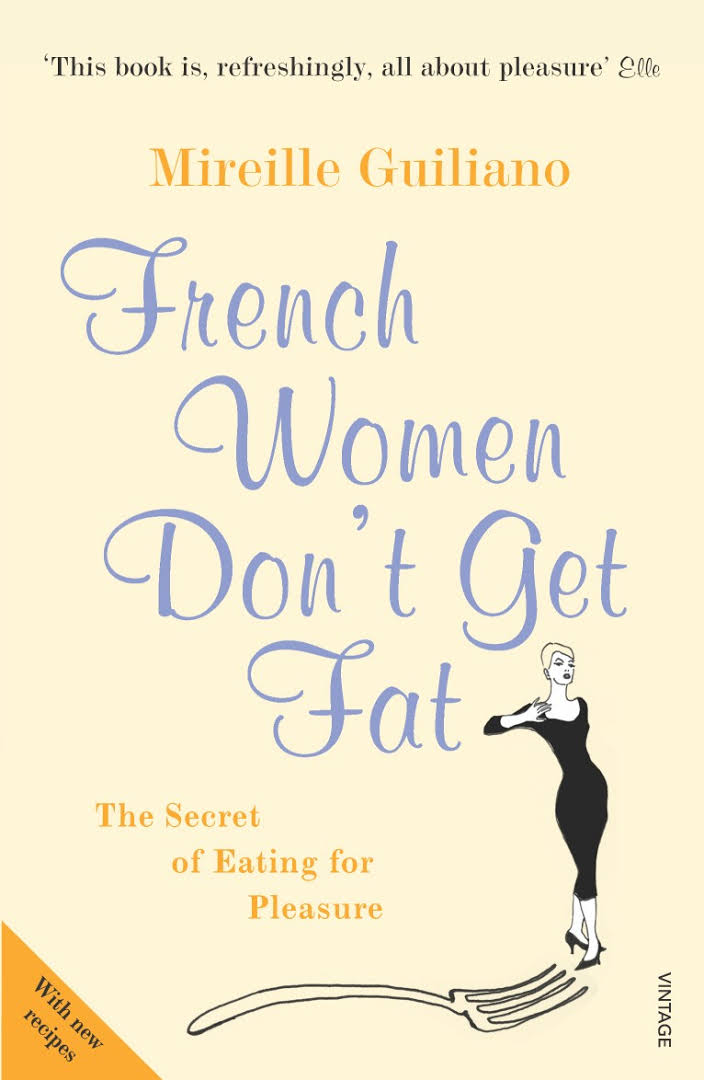
French Women Don't Get Fat - or, I wish I were French


Recently, I was given the book French Women Don't Get Fat by Mireille Guiliano, a Franco- American. I was happy to get a copy of this book (even though it may have been a hint) after wanting to read it ever since I saw the author interviewed on Oprah way back in the mid-2000's. I was nearly finished reading a novel called My Brilliant Friend written by Italian author Elena Ferrante and thought perhaps a transition from one European sensibility to another might be natural. I am anything by willy-nilly in my choices of what to read and when. I did find Guiliano's 'non-diet' book easy to get into, but to stay with? That is another matter, and fitting don't you think?

After explaining the French woman's loving relationship with food and pleasure in a delightedly light-handed way Guiliano launches into a series of meal plans and recipes that further illustrate her philosophy. Light, varied but satisfying and delicious meals seem to fill her life, with a glass of wine at supper each and every night. She grew up in France fairly privileged (with a nanny and a gardener) and food preparation and mealtimes were  near-sacred ceremonies, especially lunch, which was the main meal of the day as it is in many countries. Her mother seems to have been a wonderful cook who got the family involved in the harvesting and preserving of the fruits of their orchards and gardens. The main bits of wisdom I take from the book so far are the following: if you are going to have dessert - and dessert is very important - skip the bread at dinner (although bread is also very important, so skip the dessert if that makes you happier), set the table beautifully and present small portions with panache, eat what is in season when it tastes its best, and enjoy a hearty, healthy breakfast containing yogurt because that will start your day off right and prevent over-eating later in the day. Try not to snack, but if you are stuck in the airport waiting for a delayed flight, keep a handful of nuts in your Hermes handbag. Moreover, enjoy every bite of your precious food, simply take fewer. In any case the pleasure of food is tasted only in the first few bites.

Guiliano's way of living and eating is admirable and enviable. There is something beautiful and classic about her approach. To our North American way of thinking the French woman's philosophy may seem elitist. We immediately shout at her, "I can't afford halibut and lamb chops and all that wine and fancy cheese!" In France, however, food and wine ARE the center of everything, and she explains how life works there. Markets exist in every town and shopping is done daily on foot, not by car, so you get some exercise, too. One purchases for ultimate freshness and quality. I think the anecdote which impressed me the most was when she writes about going to the melon seller and him asking when she wanted to eat the melon. When she replies "In two days when my husband arrives from America - these melons are his favourite," the seller carefully chooses a melon that will ripen perfectly by then. Her husband arrives in Paris, enters the apartment and his nostrils are filled with the perfectly ripened aroma from the melon. "Wow!" is all he can say. French people would rather eat an ounce of good, what we would call 'artisan', cheese than a pound of  American cheese from the 'hypermarche'. The difference between North America and France is defined by how the poor eat as well. In North America, she observes, the poor eat low quality carbs and junk food because that is what is immediately available to their budgets. In France, however, their culture has shown them how to buy food in season when it is at its most plentiful and cheapest, and since less is more they fare better than North Americans health-wise. Eating well seems to be written into the French person's DNA. How lucky they are! We seem to live a lifetime learning how and what to eat.

Living in New York half the time, Guiliano has access to year-round European style markets selling everything from asparagus to fresh caught fish and seafood. Most of us are lucky to live in a town with a farmer's market open once per week in the summer months only. The 'hypermarche' is the reality for most of us. We've all heard the advice, "Shop the outside aisles only" because that is where the fresh food is. Everything else in the center aisles is bottled, packaged, and processed. Well, I shop the center aisles, too. Where else can I find pasta, oats, jam, peanut butter, crackers, coffee, tea, those mint Oreos my kid loves, and the juice my husband needs to survive? In France, perhaps, all of this is available freshly produced at the market, apart from the Oreos (but then, who needs Oreos when you have macarons?). I know from experience that my area's local farmers produce oats and even jam, and I can access these by a bit of extra leg work, but I don't always have the time. I do stop at the pepper farm once a week for a bag of bell peppers in season, and visit farm stands often for berries, eggs, and fresh corn, for these are all on my way home from work. I have always made it a priority to feed myself and my family the way I need to for our health and my peace of mind. That being said, I could stand to lose a few pounds.

So, what can I learn from Guiliano's book? I think I can take her principles and apply them realistically to my own life. I do many of the things she suggests - eat a good breakfast, eat what's in season, make most of our food at home, drink a lot of water, move my body, etc. I do not refrain enough from snacking, especially at work where I am surrounded by food. I do not set the table every night with nice dishes and cloth napkins, sipping wine while I chew slowly and thoughtfully. Perhaps that is the ticket. When all my children lived at home and my husband came home every night we sat at the supper table most nights of the week.  Most nights now, I and my youngest kid, the only one still living at home, eat sitting in front of the TV watching an episode or two of our latest favourite show. Our supper hour is a routine for the two of us and we both enjoy it.

The other night I served myself smaller portions of supper, sat as usual in front of the TV for an episode of Father Ted, and took smaller bites, trying to savour them slowly in between hoots of laughter. Life is all about compromise. Oui, oui!

January 21, 2015

Neighbourhood Games

I was reading a post by one of my very favourite blogger friends, Lucille over at Useful or Beautiful, when I was struck with an idea for a little post of my own. She was writing about all the shoes she wore when she was a child growing up in England. She mentioned a pair of fabric party shoes that became worn out in one wearing due to the energetic nature of the party games: Squeak Piggy Squeak, Blind Man's Bluff, Oranges and Lemons, Musical Chairs and Musical Statues. I am old enough, and Anglified enough, to be familiar with a couple of the games she mentions playing in childhood. I am not going to write about my girlhood shoes, which, besides one pair of super-trendy white canvas Nike runners with the blue swoosh and my first pair of platform sandals, were unremarkable. I am going to write about the games we played in my neighbourhood because, friends, those were some very good times.

My neighbourhood on Silica Street was a lot like many other neighbourhoods in the world at that time in the century, I am sure; it was full of families. On a good night we could have fifteen kids playing outside after supper. The only reason to stay inside on a non-rainy night was a case of the flu or too much homework. The other kids we played with on those nights did not have to be necessarily approved of/interviewed by our parents. We did not even have to like each other all that much. The games we played demanded numbers to be successful and fun, and numbers we could provide simply by showing up. The sheer joy and enthusiasm we had for the games was generally enough to carry us through any personal conflicts with other kids.

In summer we played Hide and Seek or Sardines. In Hide and Seek, boundaries for hiding were agreed upon and one person who was 'it' counted to fifty before beginning to seek for the rest of us. The boundaries included anywhere within our block, including the alley. In Sardines, only one person hid somewhere within the boundaries and everyone else separated to look for them after counting to fifty. The hiding spot had to be large enough to accommodate each 'finder' who would join the 'hider' once he/she was found. We would be packed into the hiding space like sardines in a can, trying not to make any noise whatsoever, and the last person to find the 'hider' was 'it'. We also played a game called War, which involved painting a chalk circle on the street and planning various manouvers to take over portions of the circle. When fewer of us were available to play we relied upon Four Square, Hop Scotch and various skipping games. On summer days we played in the shady public wooded area on the north side of our street. We built treeforts which were taken down by the city only to be rebuilt by us at the first opportunity. During the fall we collected glossy brown horse chestnuts from the same wooded area and kept them in paper bags. Someone among us convinced her dad to drill holes in her chestnuts so she could make a necklace, but other than that, chestnuts were greatly averse to being made into things. We often threw them at each other instead, used them for made-up games, or when some of us were really bad, we threw them at passing cars from up in the canopy of the trees that overhung the street.

In winter, when the snow fell fast and deep the city closed Cedar Street, which was so steep drivers had to put their cars in the lowest gear to make the descent. Then, word would spread quickly and we would all jump into our snowsuits, boots, mittens and touques, grab our Crazy Carpets and go. Cedar Street was long and if we did not bail off our Crazy Carpets after the first long block we would have to climb up an extra-long way. By the end of the night, discarded, snow encrusted mittens and touques littered the sides of the street while we, red cheeked, hot and sweaty, climbed up the hill to race back down once more before we were called in by our parents to get ready for bed. When we got older we went further afield for tobogganing. Queen Elizabeth Park and Trafalgar Junior High had grassy slopes on which to sail down into the sports fields. The golf course way up at the top of town provided perfect tubing - people, including my elder teenaged siblings, drove up there with inner tubes and made wide tracks on the rolling slopes that seemed to go on for miles in the moonlight.

While my own children enjoyed playing outside daily with other children when they were small and we lived in a small resort community with other like-minded families, it took a little while before they found children to play with in our own neighbourhood in the town we currently live in. While we did see children riding bikes around our neighbourhood and were heartened when we saw groups playing road hockey or basketball in the park up the street, we could not help but wonder why our neighbourhood was not teeming with kids playing games of all sorts outside together. My children, however, played outside our house all the time and soon attracted a few others from the neighbourhood to play road hockey, ride around on bikes and skateboards, and play various games as well. Now that my children are grown, I still wonder, when I am out and about why I do not see more children out playing - school and organized sports are not the only places to learn social skills and fair play. A few years ago our neighbourhood school built a hill in the center of the fields and also more recently installed brand new playground equipment thanks to a large donation from NHL hockey players Henrik and Daniel Sedin. The Sedin twins have set up a fund to encourage families in small communities to play and exercise more. The hill and equipment both get a fair bit of use from young neighbourhood families, which is encouraging. Various movements, such as Bring Back Play, encouraging healthy, unscheduled play for kids are happening in Canada as well. We forty-somethings know what our nation's kids are missing in modern life and are trying to reinstate some kind of desire in families to get outside and play on a regular basis.

A friend of my sister's recently posted a photo on Facebook of their high school senior band enjoying a summer picnic at someone's lakeshore property some time around 1980. The photo included about twenty students. Not one teenager in the group lacked the appearance of great health and physical fitness. In fact, they looked like a bunch of young movie stars or professional athletes by today's standards. Unlike the kids of today, they had no Starbucks White Chocolate Mochas, Tim Horton's Ice Capps or Monster Energy Drinks to pile on empty calories back then. A sedentary lifestyle was unusual for a teenager and engaging in some risk-taking behaviours like cliff-jumping was the norm - at least where I grew up. Parents are fed so much fear these days about what 'could' happen to our children we are afraid to let them out of our sight. I am not saying it is easy for me to let my thirteen year old waif of a daughter walk downtown by herself, or ride her bike to the swimming pool alone. I have been fed the same fears for her safety, but I make myself let her go because she is learning to trust her instincts, to discover her own boundaries and get some exercise in the process. As a forty-something mom who values the outdoorsy, independent childhood of my own generation and the good seeds it sowed for a healthy adulthood, mentally, emotionally and physically, I owe her that much.


This is not my sister's band class. It is the cast of Freaks and Geeks, a
show my kids and I have watched and enjoyed. It is set in the 1980's and honestly
represents high school at that time, and to some extent modern times, with uncanny accuracy. 


October 21, 2013

A Beautiful Time of Friendship


A multitude of platitudes and cliches exist about friendship. Just look in your nearest gift shop where these truths grace everything from coffee mugs to calendars. I happen to like John Lennon's simple words on the subject: "I get by with a little help from my friends." I have been thinking a lot about a particular friend, lately, for whom that quote certainly applied when we were both living in the same small resort community. As my mind turns toward the Holidays, ie., Thanksgiving, now passed here in Canada, and Christmas so does my heart toward those who figure largely in my memories of Seasons past. We shared several Holidays with this dear friend and her family, and as she shopped and planned and cooked and decorated her home for the various feasts she pulled me into her world of Polish-style celebration and hospitality, and I loved every minute of it. Halloween was new to her, but she embraced it in the name of 'something else to get excited about' and never looked back.

Agnieszka came to the Lodge a few years before my family and I did. While I had moved to the lakeside wilderness location from a small city about 90 kilometers down the road on Vancouver Island, she had immigrated there directly from Poland after meeting and marrying her German-Canadian husband. They had met at the home of her husband's brother, for whom she worked as a nanny in Germany. While I was mourning the loss of my convenient town life and feeling quite sorry for myself, she was mourning the loss of her life among family, friends, and familiar surroundings not to mention a familiar language. Agnieszka's husband had built a three storey cabin on a property next to the Lodge with a beautiful view of the lake, a garden in front and back, and fitted it with the basic necessities. Agnieszka set about decorating it with cheerful curtains and pictures. My husband and I, with a little help from our new friends, renovated a rather decrepit cabin on the Lodge site. It also had a lovely view from the deck, and I began to settle in with my three small children.

Agnieszka's English was not well-developed when I first met her, but we could carry on a basic conversation. She mainly spoke German with her husband, Ralf, but she had recently been engaged as a nanny for the first daughter of the Lodge's owners. The first daughter was soon followed by a second, and both of us surrounded by little children day in and day out, Agnieszka and I soon pooled our resources and became fast friends. I made many other good friends at the Lodge, but Nieszi, whom we all called her, became like a sister to me. We knew a kindred spirit when we saw one and saw each other nearly every day. Her English got better and better. I, having been an English as a Second Language tutor in my college days, could not refrain from helping her along by obnoxiously and continuously correcting her grammar and usage.

I love to hear people's stories and I asked Nieszi so many questions about her life in Europe. She missed Poland and Germany very badly, and missed her family very badly, but we, along with other parents at the Lodge formed a good little supportive community. I had begun homeschooling my first-born and we formed a sort of communal pre-school where each parent - and Agnieszka - took a turn providing a story and a creative activity for a morning session each week. We held these sessions in the Lodge library, and when the session was over we would go outside and play in the rain, snow or sunshine depending on the season. Our children enjoyed a healthy lifestyle exploring every pathway and beach, every tree and berry bush in that beautiful place.

Countless days, however, were spent in Nieszi's tiny kitchen, sitting across from her at her table drinking coffee and nibbling European cookies and other delicacies which she was overjoyed to be able to find in the town nearest the Lodge. The children would play happily with her Lego collection, her dolls, and her pail full of Kinder Surprise prizes, and try to climb the fireman's pole which led up from the middle floor to an opening in the floor of the upstairs bedroom. Nieszi was a wonderful nanny. She treated the kids like her own. She loved them and spoiled them, solved their little problems, broke up their quarrels, and handled nearly every situation with humour and tickles. Spending so much time with her made me a better mother, too. I thought that if she could treat those children who were not her own as beautifully as she did, I could surely treat my children with at least as much positivity and care. Many good friends have come into my life over the years, but Nieszi is one of the most generous friends I have ever known - generous materially, but much more importantly, generous in spirit and in love. I was humbled by her friendship and her faith in me and I still am.

Agnieszka and Ralf, after a good pregancy but a very difficult birth, had a son whom they named Jan. Jan was born eight months after my fourth and youngest child came along. Jan became one of the pack, as had a third daughter for the Lodge's owners, and three more children belonging to another family that recently had moved to the Lodge. Before long we had enough school aged children for the school district to assign us a teacher three days per week. My older three along with five of the Lodge children began their studies with Kim, a wonderful teacher. Nieszi and I and our two babies enjoyed some quieter times together. Our friendship deepened with our shared experiences. Her first year as a mother was very hard work, but also full of joy, and I was happy to give back some of the support she had so generously given me.

Sadly, like all good things, my own family's life at the Lodge came to an end. After five years years of significant growth and rich experiences it was time for us to move on. Our children were growing up and my husband was offered another job on the Mainland. We would be closer to our families and be able to enjoy the conveniences of town life once again. I went alone to break the news to Nieszi. She made us some coffee and we sat down to talk it over. It was very hard to leave my beautiful friend, but she and Ralf understood why we needed to go.

Agnieszka, Ralf and Jan came to visit us in our new home a couple of times, and we went back to the Lodge several times and had wonderful visits, my daughter Emma erupting into tears each time we had to say goodbye. We kept in steady contact over the years, sending messages and cards and letters. The need for a nanny at the Lodge gradually waned as the children there grew older and were able to be more independent. Nieszi's life began to revolve around Jan and his soccer and swimming and schooling. Last year, she decided to take Jan back to Europe for an extended stay. For all the years she had been in Canada she had only seen her family for two, maybe three weeks at a time every year or two. I am not sure when I will see her again, but in the meantime I know that we will always have those memories of spending time together in her cozy well-kept home at the Lodge. Of new curtains made just for Christmas-time, of almond cookies and Polish coffee. Of Ralf filling the wood stove and heating the house to be warm enough for bare feet in winter, of Jan sleeping in his swing hung from a beam in the ceiling and the swarm of children heaped on Nieszi's bed watching Tom and Jerry cartoons or parts of The Sound of Music. Of family meals shared and the sparkle of small crystal glasses of sweet Reisling. Of love and sweet friendship and enough laughter to echo down the years.

September 26, 2013

A Change of Seasons


'To everything there is a season, (turn, turn, turn)' goes the song sung by Pete Seeger and also by The Byrds. I know it is a verse from Ecclesiastes set to music, and because I am musical I cannot quote it without singing Pete's version. And I quote it often, for I tend to see my life and the lives of the people around me as a series of chapters or seasons, now as much as ever.

Last week was 'a time to refrain'. Every once in a while I have one of those low energy, bordering on hibernation weeks, one that involves early nights and afternoon naps, careful caffeine consumption and plenty of reading. I have learned over the years that these weeks are often my body's way of either fighting a virus or conserving energy just after or before a spell of intense productivity. Often, I spend a few weak moments during one of these low times wondering if I am doing enough with my life, but nearly every time I entertain these thoughts something occurs, usually in the form of someone I know contracting a terrible virus or infection after they have spent an extended period of time burning the proverbial candle at both ends, to remind me of the importance of taking time regularly to relax and rejuvenate.

I have always had a body that talks to me through little signs like sore ears or a headache wherever my glasses meet my face. If I listen and act accordingly I can almost always fight off the virus by slowing down for a few days if possible. When I do not listen to my body telling me it is feeling overwhelmed, it tends to shut down in the form of intense fatigue or illness as a form of payback. My body's messaging system has been a blessing and a curse from day one, but mainly a blessing. From a young age I knew I had to regulate my energy. I had quite a bit of energy, but it certainly was not endless. In high school I would often take on too many roles, too many projects and inevitably through tears and figuring things out with my mom I would have to let one or two activities go. Eventually I learned how much I could realistically take on and realized that saying 'no' once in a while was being my own best friend. Admittedly, in my twenties, I would sometimes take on too little for fear of losing my precious life balance, but life, in the form of three children born in three and a half years, had an undeniably effective way of rectifying those phases of excessive self-preservation.

In my thirties, and once I had school-aged children I began to have more energy. I also discovered I could suddenly tolerate coffee, something I could not when my children were very little and I was chronically sleep-deprived. When I was still a daycare provider, I was the arts council secretary and the children's day coordinator for our local Festival of the Arts. I cooked and baked from scratch daily for my growing family, I tried to stay fit by running, I helped my kids with their homework and music practise, counseled them, and volunteered at their school, taught catechism and acted as chauffeur. I wrote when inspired and joined a book club.The Supermom gig was actually great while it lasted, and it taught me how to organize my time and focus on the task at hand. I enjoyed the flexibility of my homemaker role, but I think I was trying a bit too hard to prove to the world, and to myself, that there was much more to me than baking cupcakes and mopping floors.

Turning forty was a pivotal point in my life, and marked the beginning of a new pattern for me. I began to take my writing much more seriously. In my fifth year of coordinating children's day I developed a sinus infection. I took it as the final sign of many indications that I needed to give up my position. I was simply trying to be too many things to too many people. I knew that I needed to stop doing so much and concentrate on the parts of my life that really mattered to my soul: writing, promoting the arts and looking after myself and my family. As I took steps to simplify my life I noticed that I performed each of my fewer roles better than before. With less clutter in my brain I could think things through and come up with increasingly creative solutions to problems. I developed more patience and deeper focus. And I liked it. I was still busy, but in a healthier way for me and for my family.

Lately it seems like 'the stripped down life' is the plan for me. Several of my outside activities have ceased by the mere fact of my children moving on or moving out as they grow up and rely less on me (and my car). The singing group I was with for a year disbanded recently and the on-call secretarial work I enjoyed has dried up as well. Almost entirely without my orchestration, it seems the winds of change have blown with gusto through my life in order to de-clutter my days and free me up mentally and physically, not to mention creatively. In some ways I feel like an innocent bystander watching all of this busy-making stuff in my life melt away. I find it fascinating, and wonder what it all means in the short and the long term.

I do know two things: 1) that I have rarely been ill in the last few years, and 2) I have begun writing a novel that I am cautiously optomistic about. The rest, as they say, is mystery.

Photo thanks to aliciadaniel.com

July 29, 2013

Fumbling Toward Independence


In some of the older books I have read like Little Women and Anne of Green Gables, young characters of talent who did not come from a family of means would have to go without a formal education once they reached a certain age, unless some wealthy aunt chose to take them abroad to study art or died and left them a bequest, which usually happened in a moment of crisis for the main character. Before the days of student loans, the future of young people was basically determined by their situation in life and whether their parents needed them to help provide for the family by going out into the world and finding suitable work. Now, whatever our social demographic our children generally live with us until they are finished high school, and in some cases, a local college course, and university is open to anyone with decent grades and the ability to apply for a loan.

When the student loan program was introduced in Canada in 1964 it provided thousands of young people from families of modest means, like myself, the opportunity to pursue their educational dreams. Most students lived as frugally as possible in sparse accommodations using milk crates as furniture and eating tuna and peanut butter to get by until their next care package from home arrived. They found jobs in summer, which rarely paid enough to fund another complete year of education, but they saved as much as possible and supplemented their savings with another loan. When the four years or more were over, they found work in their field and began their careers, paying off their loans month by month and gradually saving up for that first car that wasn't a rusty Datsun 210 or first home which was often their last home until they retired. Student life was simple and a bit of a struggle, but it was also fun and didn't seem to carry quite the financial weight that it seems to now. Paying for one's education provided an excellent transition into adult life and its inherent responsibilities.

If the television commercials of the past decade or so are to be believed, the onus is now on parents to save for their children's post-secondary education. One such ad depicts a man running and jumping over financial obstacles. A narrator says, "At fifty I didn't think I could ever retire. I had a mortgage, a struggling business to keep afloat and kids to put through university. But with the help of (insert financial institution here) I finally did it."  Apparently, it is no longer perceived to be enough to house, clothe and feed one's children until they reach the age of majority, we are expected to provide for them beyond that in order to save them from accruing massive debts of their own. Here is where I hold up my hand and say, 'Wait a minute,' because unless I win the lottery, my kids are paying their own way through life, and I should not have to feel guilty about that.

I advised my boys to begin saving for college in Grade eleven, putting half of their income from their jobs in a savings account. After his high school graduation, my eldest son, Ian had the wonderful opportunity to spend five weeks in Europe. The invitation came quite suddenly from a friend and he decided to spend his savings to go on the trip of a lifetime. We contributed what we could afford, which wasn't much, but he appreciated us helping him with the cost of his food. The trip was a life-changing experience for him and he came home not quite sure what to do next. He very much wanted to move to the city before too long, so, taking my advice he decided to take a year off, stay home and work to save again for college. He managed to find work in a local coffee place and by the following September he only had to take out a small loan to help fund his first term. He found a part time job at a music store in the city to help with his living expenses, but then was unfortunately laid off from his job in the low season. Through friends, we found him a good temporary job, and on a trip to visit him, we treated him to supper at a favourite Italian pizza place. He informed us that he had decided not to return to the college after Christmas. He resented the idea of borrowing more money for another term of college courses he felt he was just taking for the experience of it. He told us that unless he knew exactly why he was taking courses he didn't see the point in going into more debt. The news was a bit tough for me to swallow, but his dad and I understood his reasons for his decision. He wanted to work and be free to pursue his musical ambitions in the city. He knew what college was like, believed it had provided him with a good introduction to life on his own, and could go back at some point if he knew it would benefit him in a real way. When he came home for Christmas he received a call from his former workplace, the music store. He was offered a full time job. He took the job and has since been very active and happy doing what he is doing at this stage of his life.

Our second son will be off with his prized violin to study orchestral performance at a university in Vancouver this fall. Between the scholarships and bursaries he earned in high school and all the savings he has accrued working at a local cafe during his year off, he will be able to fund his first year. After that, he will most likely have to rely on student loans. Each year it will cost him many thousands of dollars and I know he will apply for whatever scholarships become available. He will also work in the summers and save as much as possible. It will certainly not be easy. The average summer job earns a student ten to twelve dollars per hour, and they are lucky to save enough over the summers to cover their tuition and books. Living expenses in Vancouver are high and I certainly feel the pressure to help our son in any way I can.

Admittedly, sometimes I wish my husband and I could afford to put our kids through school, to give them a financial headstart, but I know such a plan is unrealistic for us and the way we have chosen to live and support each other. Furthermore, and at the risk of appearing callous, I ask why we parents keep extending the rights of our children to claim us as their source of funding when they are adults?  If we truly have the means to fund their educations, pay for their fancy weddings and give them a down payment on their first home, then perhaps we should, but if we do not, then I would argue against the belief that we should feel obligated to sacrifice our own happiness to do so. My husband I have done and are doing our best to live good quality lives with our children - putting them in sports, music and drama lessons, feeding them nutritious homemade food, spending time with them and supporting them emotionally - while putting away a little for our own retirement. I had to make my way through school and make decisions in my young adult life based on the reality of my own financial situation, so why should not my children? My husband agrees. He started working in high school to pay room and board to his single mother, worked his way up into a successful retail career and then finally went to college at the age of twenty-seven.

As parents of moderate means we will support our children in the following ways as they enter the realm of adulthood: we will deliver the occasional care package to our sons, and if they run short of money for reasons other than they have spent too much on unnecessary things, we will do our best to help them. We will attend as many of their concerts and events as we can and cheer them on unobtrusively from our seats. We will let them know it is lovely to have them home for the Christmas holidays and will cook their favourite things. We will let them live at home rent-free in the summer if they choose to come home to work and save for the next year of college or university. We will be here for them if they need to call home and talk out a problem or give us some good news. In other words, we will continue to be their mom and dad who love them.

Yes, life is hard for kids in these days of pricey educations and an uncertain job market, but it was a lot harder before social programs, student loans, and flexible course schedules came along. My kids, like many others out there, are smart, creative and full of energy. They can do this! And I'm going to let them.

May 28, 2013

The Ins and Outs of Volunteering

I grew up in a house where giving of one's time was the norm. My parents gave a lot of their time to various community organizations and passed this volunteer bug on to their children. I spent a lot of time helping my mother fold programs for arts events, and got into many fabulous concerts for free in exchange for handing out those programs. Volunteering at the local old age hospital was practically part of the curriculum at my elementary school and in high school I ran for student council and gave countless hours to school events and initiatives. Attending college, university and then caring for small children made it difficult to volunteer for several years, but once my children were more independent, I could not wait to get started again, and three months after moving to my present community I joined the local arts council. The following year I began teaching catechism at my local parish and volunteering at my children's school when I could.

Volunteering has always been a way for me to give of my time, use my brain, and challenge my organizational skills. I like the freedom of volunteering. I can give as much as I want to, but maintain a great deal of freedom and flexibility within my various roles, which allows me to be the wife and mother I need to be. Unlike a lot of paid work, I can set my own schedule and give myself a break on occasion because 'I'm only a volunteer.' I can work mainly from home, but enjoy the social aspect of working with others in a group setting as well. I can gain skills and knowledge, but I am seldom under pressure to do so. In my role within the arts council I have been able to fine tune my writing skills just by creating articles for the newspaper, applying for government grants, and penning official letters. In my role as coordinator for the after school program at my church, I have been able to work with children, whom I love, and improve my communication and organizational skills.

Without volunteers, much of the good work which is accomplished in our world today simply could not be done, and people who volunteer for organizations have to feel appreciated at some level. Volunteering also has to have an element of fun or levity, or working for free becomes a drag fairly quickly. All too often, volunteers experience 'burnout' from working too hard for too long without enough thanks and without that much needed levity, and organizations would do well to remember that. Most volunteers are happy to have a place to give of their time and energy, but none of us wants to be taken for granted or be treated as if we were low paid, entry level staff.

Most volunteer positions tend to have an expiry date in my opinion, especially the ones which require the most energy, and when a person begins to lose their zest and enthusiasm for their position it may be time for them to step aside and allow someone else to take over. I happen to be at that point with one of my volunteer positions. This year of teaching for and coordinating our church's after school program has not been a bad one. I have enjoyed the children as always and done my job with dedication, however, I believe in this and all situations, I would prefer to go out on a high note rather than wait until I am so exhausted that people, particularly the children, start noticing my waning enthusiasm. For, I am exhausted. When someone like myself who has dedicated nearly ten years to a program begins to have serious difficulty gearing herself up for another day on the job, it is someone else's turn to step up to the plate.

So, what will I do with all that extra time? For the past several years, and as noted by readers of this blog, I have been writing. I want to dedicate more time to that. I am at a point where writing has become this 'thing of great importance' to me. The arts council, too, is becoming more and more of a professional organization, and that professionalism takes time, energy and constant focus. My eldest daughter will graduate from high school next year and will need my time and energy, too. I know this because I have been through two graduations before, with my boys. My youngest daughter is becoming more involved in her musical theater program next year and I am finding myself morphing into that persona of 'stage mother' (but no, not that kind of stage mother, I hope). This year I have searched second hand shops for costume pieces and props, painted set pieces, and have thoroughly enjoyed doing so. And, after witnessing my daughter act in her first show with the performing arts school she attends, I'm in for it! She threw herself into her role with wild, but disciplined abandon, and was so exhausted afterwards, but oh, so elated, too. Clearly, my personal and family situations are 'moving on' and I need to move with them.

This morning at 4 a.m. I lay awake composing my letter of resignation to our parish priest. It was a good one. I wish I could remember it. For the moment, however, I will just say, in the words of Porky Pig, "That's all, Folks!" 

Thanks to all my blogger friends for your patience. I will get to reading your posts soon. Our family dealt with some very sad news this week - the sudden death of a friend. This post was started mid last week and just finished today when I could finally turn my mind to it. I will have a new post up on my Stella blog soon, too, so please check back for that. 

May 3, 2013

The Audition

The Violinist by Thomas Eakins


As we sat on one of the many sofas in the music building's lobby, or stood, or walked around the campus, I observed the other parents who had brought their talented children to audition for the university's music program. Our boy had put a year of his life into preparing for this audition, taking music theory, history and harmony courses, studying tutorials online and wrestling to conquer a difficult Bach Fugue and a Mendelssohn concerto until he could play them upside down and backwards, or so it seemed. Our family, just like all the other families in the room, had found the money for private lessons and supported our child from his first days of drawing a scratchy bow across his quarter-sized violin strings, and I wondered how the other parents were feeling that day as they also waited. I was not nervous because I knew in my heart that even if he was not accepted into the orchestral performance program, he would be able to say that he could not have done more to prepare for his chance to show the department what he could do. At the end of the day of theory tests and a private audition with the heads of both the strings department and the orchestral department, our boy came out smiling, giving us the thumbs up. Everything had gone according to plan for him.

Our son began with the Suzuki method, which encourages children and parents to practice together. I had taken years of piano lessons and so downstairs we would go after supper each night to practice. We went through five levels of Suzuki before the piano accompaniment became too complicated for me, but I also think it was time for the two of us to go our separate ways. I was often tired after a busy day of working and mothering, and I confess my patience was a little on the thin side. We sometimes argued about a passage and how to get it right. I'll admit that I pushed him fairly hard in those days, recognizing his talent and wanting him to strive to be the best he could be. Somehow I just knew I could not let him give up on himself, and I hoped to teach him that hard work, perseverance and steady progress would overcome his frustrations, which seemed to be as regular as his many victories. He could be very difficult sometimes, and emotional, but over the years he learned to regulate and harness those emotions to feed his technical talent and make it into something beautiful.  Once the piano parts were beyond me I decided it was time to step back and let him figure out if he wanted to continue on without me holding, or squeezing, his hand, so to speak, through every practice. He had a short crisis, but got through it and committed to his music on his own terms. He was thirteen. Since then he has developed an excellent work ethic which has crossed over to other areas of his life. He also knows how to relax, and when it is important to do so.

I was not pushed as a child. I was the sixth of six children, so that may have had something to do with it. I practiced my piano, but was never made to take an exam. I never once passed a set of swimming lessons due to the fact that I could not float or swim on my back. I did not need pushing to do well at school, and I was challenged plenty by my parents' way of living and bringing up their children, which was fairly strict and scrupulously honest. Nobody, however, hovered over me like a helicopter at any time in my memory, nor did they inflict their agenda on any of my 'talents', dubious as they were.

I have often wondered if I could have done with some more pushing. I have this sense that I sort of floated through childhood. Apparently, I resisted being organized into any activity such as Brownies (girl scouts) or sports before the age of ten. I remember a lot of playing and a lot of reading, always piano and some ballet lessons, and a lot of teasing from my brothers, whom I loved after all. Nor have I pushed my other three children. Sure, I made them all take music lessons, at least for a few years, and insisted they do their best in school, but besides my violinist, I have sort of sat back while they all excelled far beyond my expectations. I have stepped in when necessary and been their main cheerleader and psychologist, but after asking my daughter last night if she ever felt I pushed her and having her respond 'No' with a laugh, I am confident that my approach has been appropriate.  Their dad and I have striven to help them learn to discipline themselves so that they gain satisfaction in their various accomplishments. I want the best for them, of course, but it is not my best. It is their best.

One hears from time to time of children who were pushed relentlessly by their parents to excel, and grew up to hate them. As I looked around the lobby of the university music building I wondered if any of the parents there had done so. I hoped not. I also reflected that perhaps my lack of skill at the piano had saved our situation. For once, I was glad I had not been more proficient.

Our son waited for a couple of weeks for news from the university. I was in the kitchen one morning when he came in saying, "Guess what!" He didn't wait for me to answer. "I got accepted into the program." I gave him a hug and phoned his dad at work - he was ecstatic and so proud.

We have a lovely new spring recipe over at Stella's Virtual Cafe: Roasted beet and Spinach Salad with Citrus Vinaigrette.   Have a lovely weekend! It's going to be positively summery here. 

February 23, 2013

A Study in Parenting


The other evening I stopped in at Starbucks for a cup of tea while I was killing some time before I had to pick up my son. I saw a woman I know a little and like, who was doing the same thing. I said hi and then sat down opposite her and we started to chat. Like me, she has four children - two young teenagers and two small children, all boys. She told me she was supposed to be doing homework, but she was reading a novel on her i-phone instead. I asked her what she was studying and then she told me she was finishing up a bachelor's degree she has been working away at for ten years. She told me she had been accepted to a Master's program for next year. She and her husband are also building a house on their lakefront property and running a small business. She told me of her ambitious long-term plans for her career, which sounded perfectly reasonable to me given her passion, enthusiasm, intelligence, and energy.

Soon, it was time for both of us to go and pick up our sons from their respective activities. As I walked to my car which was parked in the nearby lot in front of Pricesmart Foods I processed and pondered all my acquaintance had told me about herself, amazed at her energy. I remembered a time a few years ago when I was sitting in a coffee shop at a table next to hers - I didn't know her then. I was with all of my kids and we were out for a treat, happily talking and laughing in our usual unobtrusive way. When it was time to leave and my kids were taking turns using the bathroom, the woman said to me, "I really like the way you and your kids talk to each other. It's really great to see." I chatted with her for a bit, I can't remember what about, and then the kids and I were on our way out the door.

I suppose I could compare myself to my coffee shop friend and dwell on the things I have not done in my life, like acquire degrees and extensive collateral, but, as a friend recently told me, "There lies the way to madness." It is much better to focus on what I have done. I am not going to draw up a list here and now, but I think it's appropriate to say that if I did make such a list, my children would be my greatest achievement. I know it sounds trite. Movie stars and highly successful people in the public eye are always saying in interviews that their children are the 'best thing I've ever done,' and one wonders if they really mean it. I have not been a perfect mother, but I have learned from my mistakes over the years, and if the powers that be ever handed out certificates for parenting, I would at least qualify for a Bachelor's degree after nearly twenty years and four great children, would I not?

In parenting, the proof is usually in the pudding, as they say. I am happy to observe that my kids are all motivated, hardworking users of their talents. They are all kind and thoughtful (most of the time), but are also critical thinkers and satirists, especially of the materialistic, callous world around them. They all know what it is to climb a mountain and sleep in a tent, survive without their gadgets and just sit quietly with nature. They have learned to think a problem through and go to their parents or teachers for help when they need it. My eldest has moved away and is finding his life. He checks in with all of us from time to time, just to say hello, to tell us about a decision he has made or something new he is doing, like starting a band. He is independent now and happy to be so. I find I do not worry about him, which surprises me. I suppose I thought that being so available and 'there' for my children might make them more dependent on me once they grew up, but perhaps I have really been helping them gradually gain the tools they need to function in the world.

The greatest of these tools is probably emotional security. My own parents gave me the tools, the language, and the emotional support to know and accept myself, and therefore, to figure out where I belonged in the world. When I was upset and emotional as a teenager - which, according to my diary, was at regular intervals - my mom always knew how to help me get to the bottom of what was bothering me, because sometimes I didn't even know myself. I built a personality and a life on that self-knowledge and have tried to pass that on to my children by giving them the support and love they need to find their own way in the world. One important thing I learned as a young person was that I only had a certain amount of energy to use, and if I pushed myself too hard, then my body would sort of shut down. I also learned that I was sensitive to my environment, to the people around me, and that I needed regular time alone and regular exercise to keep my mood on an even keel. Having the words to identify my strengths and my limits was helpful. I did not always listen to those words, but I always knew deep down why things went awry when I didn't listen to those inner voices. I have had struggles over the years trying to keep a good balance in my life, and to challenge myself in various ways, and I hope my children have learned from me that maintaining a good balance in life is extremely important for both their mental and physical health.

I don't have any framed certificates hanging on my office wall, but I do have four living, breathing, well-adjusted creative kids who can carry on a respectful, intelligent conversation with an adult, become a valuable employee and a trusted friend. And someday when their dad and I are old and grey, they may have good memories of their upbringing and still want to spend time with us. That isn't to say my dreams lie only in my children. There are plenty of things I want to achieve in life, and like my friend, I'm working on it, but life is long. My children's childhood is short and precious.

The photo: One of our happy family memories - our last camping trip on Vancouver Island. The four kids down on the beach after a hike in search of the sun.

Emma and I have a new post up at Stella's Virtual Cafe, too. Check it out if you're hungry for a little story and a bite of something tasty.

January 31, 2013

In Defense of The Delicate Child


My youngest daughter, aged eleven, fainted at school recently. She was standing at the teacher's desk, going over some math problems, when she suddenly felt quite hot. She excused herself in order to take off her sweater and get a drink of water from the bottle in her knapsack at the back of the room. As she took a drink, she felt overwhelmingly hot again, and in a jerky motion she fell backwards and hit her shoulder and head, fell forwards and hit her nose on a desk, fell to the floor, unconscious and began to shake. She came to, and apparently was completely coherent, but she was taken to the office, white as a sheet and made to lie on the sofa until I arrived to take her home.

The teacher thought, due to the jerking motion of her faint, and the shaking, that my daughter had suffered a seizure, and she was quite concerned when I talked to her about it. Her dad came home from work and took her to the walk-in clinic that afternoon. The doctor assured us that our daughter had not had a seizure, but had only fainted, and that fainting rarely looks like how it is represented in the movies. She ordered some blood tests and an electrocardiogram to rule out various problems, but assured us our daughter was okay to go to school the next day. Over the next few days, we watched her carefully, but she recovered her strength, and her colour, within a couple of days and was back to her old self before long.

Yesterday, we had a follow up appointment with our own doctor, to go over the results of the tests, and after a good examination and several questions, he said everything was fine, but that our daughter was 'rather skinny'. He said fainting can be caused by any number of things, and only becomes worrisome if it happens repeatedly. She has not had any 'episodes' since. In fact, she has attended her acting classes, performed in a play she helped write at school, worked hard at her schoolwork, and participated in her Physical Education classes at school as well as in basketball practices. She ate well before her fainting episode, but now we have decided to make her eat a little more, especially at breakfast. She is nearly five feet tall, but weighs 73 pounds, so a little extra meat on her bones would not hurt.

When she fainted, my son Galen reminded me of how, at her age, he used to feel faint sometimes, and how I would let him stay home occasionally, for 'mental health' days. I also remembered that when my daughter Emma was eleven she also had fainting spells when she was in a room, like a church, that was too hot or too crowded. I was not a fainter, but I was a skinny child who grew tall rather quickly and was hungry almost all the time. I did have many a pre-pubescent nose bleed and lengthy bouts of lethargy, which may have had something to do with the fact that I hated school and which caused my sympathetic parents to let me stay home a great deal during my twelfth year of life. I told much of this to the doctor (leaving out the part about hating school) and he concurred, in his lovely Scottish accent, that such things may just run in the family.

I am often being told that my daughter is too skinny. When she was ten, another mother who has four strapping, solid boys asked me if there was something wrong with her. "Does she eat anything at all?" I  responded that I had been a skinny child, too, and obviously had turned out alright. (I have been a nice medium sized girl since about the age of eighteen, with healthy child-bearing hips to prove it.) Still, her question bothered me because her opinion was shared by several other local mothers. If she only knew the food consumed in our house, the money spent on good quality groceries and local organic meats, the care that went into cooking and baking healthy and wholesome meals, she might see the situation differently. Our youngest has always had a healthy appetite, too, but she is not one that overeats, especially when it comes to sweets. Perhaps, in this day and age, it is just less common to see a thin child. The doctor agreed with that, too.

One thing my youngest daughter is, that may contribute to her local reputation as a 'delicate child', is incredibly sensitive. She has moments of extreme joy when something good happens, and moments of great despondency when something bad happens. She sees other children act rudely or meanly to each other at school and comes home quite upset if she has not been able to make them stop, or victorious if she has. If someone is mean to her, she takes it in stride, but it sometimes eats away at her anyway, and I am left to put her back together with hugs and kisses, with a warm muffin and a cup of tea or cocoa. When she is at school, it is as if she has her antennae up all the time, absorbing all that goes on around her. She also puts 120 percent into everything she does, and as the school secretary told me recently, "She goes all day long!" reading to the little ones in her lunch monitor group, helping decorate bulletin boards and writing skits for plays, helping other kids with their work, working hard to play the sports which do not come naturally to her. And, if she sometimes doesn't have enough time to eat her lunch, she is going on little fuel until after school when she can come home and spend the next hour making up for it.

My daughter is not only a particular body type, she is also a particular personality type, and perhaps, more often than not, the two go together. My job as her mother, and our job as parents, is to celebrate and support who she is and not dwell on what she is not. She is intelligent, creative, sensitive, talented, thoughtful and kind. She is not overly robust, happy-go-lucky, tough or sporty. She will probably never become an emergency ward nurse or a construction worker, but she just may become a play write, an actress, or a librarian. As the poet e.e. cummings said:

To be nobody-but-yourself - in a world which is doing its best, night and day, to make you everybody else - means to fight the hardest battle which any human being can fight.

If that is true, I don't wonder she is exhausted sometimes. Still, I am aware that we can make some little changes at home, and we can look into ways to strengthen our daughter, to help her achieve the balance she needs to grow in health and in happiness.

The photo is from depositphotos.com

January 9, 2013

Cooking Therapy


I remember the exact moment when I realized that cooking was integral to my sense of well-being as a parent, as a wife, and as a person. We had just moved after Christmas that year from our comfortable home on a side street of Courtenay's historic downtown district to a draughty summer cabin with a tiny kitchen at an outdoor education center on northern Vancouver Island. We made the best of our situation, which was temporary while we made improvements to another more suitable cabin for our family, and with most of our belongings in storage, got through that first winter, sometimes surprisingly, with our sanity intact. I did not have to do much cooking for the first year. All of the center's staff were on a meal plan which meant we were welcome to any of the stores in the center's kitchen in the off season, and we ate with everyone else, including the other families who lived there, and all the students and staff, during the spring, summer and early fall.

We had three children, aged 13 months, three years, and four and a half years when we moved to the center where my husband was employed as the program director. As most parents will agree, mealtimes with little ones are not always easy. More often than not, one or more of the children must have their meal served a little bit differently than the others, certain foods have to be disguised, and the environment for eating must be relatively calm. Such was not the case in the eating hall of the center. The meals were served buffet style, and we would take our children up to the tables and try to help them select a well rounded plate of food, depending on what was served that particular day. At first, the meals were novel: grilled Ahi tuna, assemble-your-own stirfry, bean burritos, salads - all healthy offerings. Our children were not particularly picky eaters, but more often than not, they would fill their plates with baby corn and rice, then eat distractedly, waiting impatiently for an opportunity to run around with the other children. And, more often than not, we went home and made a peanut butter sandwich to round out their meal. While we were adjusting to our new and very different life I was grateful for the meal plan, but as time went on I became increasingly dissatisfied and could not put my finger on 'why' until we had moved into our renovated cabin in the spring and life was beginning to take on a more regular day to day pattern.

I think I felt rather more like a shepherd than a mother, herding my children into the eating hall at prescribed meal times, to eat prescribed food which someone else chose for them, and it was then that I realized how important the act of cooking for my family was to me. Before these meals in the hall I would feel listless and unproductive, waiting around for someone else to feed my children while we sat around a table which was not ours, noon after noon, night after night. It took some convincing, but we were eventually allowed to opt out of the meal plan entirely, and a few other families soon followed suit. I once again felt that sense of well-being in making a weekly meal plan - we had to, living a forty minute drive from the nearest grocery store - shopping at my usual stores, involving the kids in the process as well, scheduling my days around marinating, simmering, sauteeing, and baking. Our independence from the rest of the community at mealtimes was integral to our ability to stay at the center for five happy years. Our family grew around our table, talking to each other over fairly standard family fare like spaghetti and meatballs, homemade soups and breads, stir fries, and apple crisp with ice cream for dessert. Sure, I could no longer go into the center's kitchen and help myself to a substantial chunk of Asiago cheese in the off season, but my family appreciated my efforts and their results as they do to this day, and they all learned about cooking in the process. Our eldest son would often get up in the morning and announce that he was making pancakes for breakfast, and I always had helpers for every baking project.

Now, ten years on, my repertoire in the kitchen has expanded exponentially, as have my children's taste buds and skill in the kitchen. I own two solidly packed shelves of cook books, and while I would certainly not call myself a full-fledged foodie, I do turn to cooking for comfort and for joy, as does my eldest daughter. Some days when I am feeling disjointed, a bit down or in doubt, I cook a great meal. I honestly find cooking up a roasted chicken with sweet onion and lemon gravy, whipping up a pot of buttermilk mashed potatoes, and a citrus beet salad great therapy. I put on some music and an apron, and with my chef's knife and my wooden spoon I chop and stir my way into a sense of satisfaction so deep in my soul as to soothe whatever has disturbed it. When I put the meal on the table, and we all gather around to enjoy the food together, my day's therapy is complete...especially when someone else does the dishes and I get to put my feet up with another glass of wine.

I found the above illustration on Google Images. When I clicked on it, it was called 'Cooking Therapy' then dash 'Ishiki' dash 'children's illustrator'. That's the best I can do for crediting the image, which I really like!
And speaking of cooking, Stella's Virtual Cafe is embracing winter and serving up comfort food, with a new post coming later this week. Cheers!

November 17, 2012

Nostalgia in a Cabinet

Some people might think it's a bit early to be thinking about sending Christmas cards, but believe me, the way the weeks fly by around here it pays to at least try and begin the process, especially if I am going to make them myself. I have always tried to make my own Christmas cards, although some years I end up buying them because I simply run out of time after attending all the seasonal concerts and such that every parent knows are a part of having children in high school band, music lessons or any kind of performing art.I am determined to make cards for my friends and family this year, although the process will be simplified by the help of a pretty, seasonal rubber stamp that I picked up a few weeks ago at the Granville Island post office. The post office there sells a lot of lovely paper products and card making supplies, and is a bit less expensive than the beautiful Granville Island store, Paper-Ya.


Years ago I would draw a sort of 'slice of life' comic of my growing family, photocopy it onto cards, decorate them, insert a copy of our annual Christmas letter, and send them off. Several of our friends and family members looked forward to the cards and they became a tradition for a few years.


The first family comic I ever drew, back in 1995.
It's so old, the paper is yellowed. My husband had just
recovered from a bout of viral meningitis. Crikey!

We were in the middle of packing up to move to Strathcona Park Lodge,
and I was gearing up for a new adventure and lots of changes to come.

Last weekend, we spent a whole day rearranging some furniture in our house. In my quest for a china cabinet to hold our recently inherited china I had daily walked by a cabinet in our own downstairs family room, ignoring it as a possible contender due to a prevailing idea that it would be too small. One day, looking at the cabinet,  my husband said, "how about this?" and I found myself uttering a "we could try it" sort of response. The cabinet had once been home to our dishes but since moving to this house with ample room in the many kitchen cupboards, and for the fact that the glass had broken in the cabinet door, the thing had been demoted to a catch-all for my stuff - cards and letters I couldn't bear to throw away, birthday candles, old experiential learning books my husband no longer needed for his present career, old files of my writing, etc. I cleaned out the cabinet, we brought it upstairs, and it now holds Nana's china and Granny's crystal glasses very nicely indeed - and looks like it has been in our dining room forever. We'll get the door glass cut sometime soon. (We also need a piece cut for the garage door window which, for a long time now, has had a hockey ball shaped hole in it. It's on the to-do list.)


This cabinet has been with us as long as I've
been making Christmas cards

In the cleaning out of the cabinet I came across a file of old annual Christmas letters I had written, and another filled with the original drawings for the many years of cards I had made. I was, frankly, surprised to see that my drawings were not that bad. Not great by any means, but not bad either. I can't remember the last time I sat down to draw something besides a map for directions or a doodled flower while I'm talking on the phone.Today, I sat for a few minutes looking through the file, reading the old letters from when our children were little, and looking through my interpretations of our evolving life as a family over the years. I must say I enjoyed strolling down memory lane, and I was suddenly very glad I had decided to make cards again this year.


The original drawing for the front of my 1999 Christmas card 'Anyday, 1999'


The original drawing for the  inside of my 1999 Christmas card:
 'Holiday (Ahhh!) 1999/2000'

Family scene from inside Cabin 21 at the Lodge. December, 1999

The last family comic I drew for Christmas 2000
The next Christmas we had a little fourth in the picture.


After my 2000 card I stopped drawing a family comic. The year after our fourth child was born, and I became busier than I had ever thought possible, my kids drew little pictures for our annual Christmas card and I put them together in a collage format, made them into cards and sent them out. The kids enjoyed decorating and colouring the cards, but somehow the experience was not quite the same for me. I had enjoyed framing our family in a single comic format over the years.

One day, perhaps, I will pick up a pencil and draw another family comic. If not, I will still have this collection of cards which serves as something of a point-of-view family archive of those early, formative years that played a large part in making us what we are today.

If you click on the photos, it will enlarge them.

October 26, 2012

Why Bullying?

Bullying. It has been in the news an awful lot as of late, due to the very publicly aired suicide of Amanda Todd of Coquitlam - a city an hour's drive from here. I am not going to re-tell her story. The information is easily found online. Suffice it to say, her story has brought the issue of bullying, both online and in person, to the forefront. A painful subject, bullying is an issue that sparks controversy as well as dialogue among experts and common folk alike. I've read several articles and heard several more interviews on the CBC on the subject over the past few weeks and thought I might as well throw in my two cents along with everyone else.  

Why do some people feel a need to bully others? A bully is 'one who hurts or browbeats those who are weaker,' so I suppose the action has something to do with a desire for power over others. But what makes someone desire power over another, particularly over someone perceived as being 'weaker' than themselves? Perhaps it comes down to an individual misconceived notion of one's worth being caught up in a sense of domination. If the meek are to inherit the earth, it sure seems like the strong hold it hostage an awful lot in the meantime.

My girls, who are still in the public school system, said that everyone at school has been talking about Amanda Todd's suicide. My elder daughter who is nearly sixteen is questioning the validity of her classmates' jumping on the 'Oh that's so SAD, that should NOT have happened. If she were in our school I would NEVER have treated her the way those mean kids did' bandwagon. My daughters reaction? "Oh really? You're sure about that? If this girl who used drugs, drank bleach, and made a misguided decision to expose her breasts to someone on line, leading to the photo going viral, went to our school, you would reach out to her? I don't think so." I added that my daughter and her friends would most likely have thought of her as 'messed up' and avoided getting close to her. It takes a pretty unusual teenager to assess another beyond appearances. Sadly, the truth is, it usually 'takes one to know one' in that sense.

By all accounts, Amanda Todd did not lack support, either at home or by the school system. Her mother said that right before Amanda's death she appeared to be doing better and had told her mother so.  My sense of things is that, for teenagers, their peer group often wins attention over any other source of opinion. Being called 'whore' and 'porn star' repeatedly by her classmates, after every attempt to change schools for a new start, obviously took its toll. What is wrong with people? Why do they have to be so mean to make themselves appear better than others? Where is the charity? Where is the basic human respect? Where is the kindness? I have heard it said often that we need to create a different climate in our schools, one of acceptance of others' differences, of tolerance, of generosity of spirit, and with this change in climate good will come. No doubt. But if that climate only exists in schools and not in the home or the work place or the world at large, how much headway for change can the school make? I leave these questions for the experts to ponder and quantify.

The CBC has a topical call in radio program called Cross Country Checkup. I wasn't planning to tune in that Sunday afternoon two weekends ago, but I was on my way to an arts council meeting and the radio was on in the car. The topic was bullying and suicide, and one caller got my attention before I had to turn the car off and go into my meeting. He suggested that the hero worship of athletes in high schools does its part in promoting bullying. Athletes tend to be revered by teachers and students alike in many cases, but this sort of admiration can often lead to the admirer overlooking other qualities that are less attractive. (I can remember a few of this sort from my own school days.) The caller went on to say that high school sports, and often the sports world at large, promote aggression, domination, competitiveness, and as we've recently seen in the world of cycling, extends to cheating and drug use. And while in other areas of life these qualities would be reprehensible, they are often accepted in sport, and those who question them are labeled 'whiners' and 'weaklings'.  Hm, I thought, as I turned off the car, he may have a point there. Later, I asked my two teenagers what they thought of the caller's idea. They both thought it had some merit. One of them said, "Well, you can be stupid, and a jerk, but if you're good at sports, they all love you. If you are stupid and a jerk and not good at sports, you get no respect at all." The other said, "I think there is something to that. A lot of behaviour gets overlooked if you are an athlete at school." When I asked my husband, who was an athlete in school, but somehow managed to stay aloof from the politics (I think that was in great part due to skipping a lot of classes to go skiing) he said, without hesitation, "Absolutely. Just look at football and hockey. Guys purposefully coached to 'take someone out', intentionally hurt them, take late hits, cheap shots, and often they get away with it. Why should they? Why are acts of intentional injury tolerated in sport?" Of course this got me thinking in an expanded way about the world we live in, and why bullying is such a problem at all levels.

Unfortunately, I didn't come up with any real answers or profound thoughts on the matter. I know that the world of sport, our schools, our workplaces (I recently heard a program on the quite serious problem of bullying among nurses in hospitals), and our society in general is struggling to deal with the issue and making some advancements. Our own elementary school here has a policy of celebrating each child's gifts and strengths, no matter what they are, and I applaud that policy. Still, the domination of the alpha males and females still carries so much weight in our world. Perhaps the reasons for that fact are more primitive than we would like to admit. I suppose it is up to each of us to look hard at ourselves, our children, our spousal relationships and cut off those bullying tendencies at the knees. Bullying takes many forms - it is a curious shape-shifting thing. It  can be as subtle as using persistent and manipulative language to bend the will of another toward our own agenda, and as outward as the big kid pushing the little kid off the swing in the playground. I remember my own mother saying in no uncertain terms to my big brother when his teasing went so far as to hurt or push me to desperation (I once spit on him from the upstairs balcony in retaliation), "Stop being a bully!"

Perhaps the best way to deal with the bullies in our midst is to keep talking about the subject,  to keep bringing it out into the open. I just hope it doesn't take the tragic death of another young girl to bring it up again.