Showing posts with label the arts. Show all posts

January 19, 2026

Heard any Good Books Lately?

I have recently discovered the joy of audiobooks. I still read a lot of paper books, but it can be hard to read them while on a walk or while cooking or working on a puzzle, and last week I dropped my copy of  To See Every Bird on Earth by Dan Koeppel in the bathtub while I was reading it. Audiobooks are hands free. All you need are listening ears, an attention span of sorts, and a subscription to Libby (free through your public library - amazing), or Audible, or Spotify, or any other platform you might find audiobooks on. A few clicks and you're off to the races.

My mother often read to my brother and me when we were little and sharing a room, and when I was in Elementary school teachers read books to the class. My grade five teacher read us The Borrowers by Mary Norton. Those hours became my favourite among the many I had to spend in school. As soon as my teacher began to read I was immersed in the world of those tiny house guests and their adventures. My imagination was captured and I was carried along by my teacher's voice, which was quite pleasant as I remember it now. Being read to is something I had forgotten as an adult, and I am enjoying it. As long as the voice on the audiobook is expressive (without being overly so) and pleasant, and the story or subject is interesting to me, I am happy to listen for as long as my attention or circumstances allow.

The most recent audiobook I listened to was The Third Gilmore Girl by Kelly Bishop. This wonderful autobiography, read by the author, hooked me from the first to the last page. Kelly Bishop played the matriarch of the Gilmore family on a comedy/drama show called Gilmore Girls, which is a series I have watched several times through, first, when it originally came out on the WB network in the early 2000's, and then years later with my girls when Netflix aired it. The show has gained a new and dedicated audience by being on Netflix, which produced a four episode reunion of sorts in 2016. The snappy and clever dialogue and quirky characters written by Amy Sherman-Palladino and her husband, Daniel Palladino, the detailed sets, pop-culture references and complex family dynamic tick fans' boxes for quality entertainment. I admire and respect how Kelly Bishop plays her complex character Emily Gilmore so convincingly as the sharp-tongued yet vulnerable mother desperate to have a better relationship with her daughter Lorelei without really knowing how to go about it. When I found out Kelly Bishop had written a book about her life and her role on one of my favourite shows, of course I wanted to read it. Or listen to it.

Kelly Bishop's autobiography is, to my mind, best heard in her deep, distinctive voice. I would have enjoyed reading a paper copy, but somehow, hearing her tell the story was like sitting down with a beloved aunt who has lived an amazing life and wants to share it with you. From her first days as a ballet dancer, to her Tony-award winning role as one of the original cast members of A Chorus Line on Broadway, to her memorable parts in movies and television, her story is fascinating and encouraging to anyone who has a similar dream. She shares the ups and downs, and through it all the reader/listener is impressed by her grit and determination, and also her lucky breaks, which occur often just when she needs them most. Now in her eighties, she is still working as an actress. The end of her book brought me to tears as I walked with my headphones on, listening in the cold sunshine. She is such a trouper. And she thanks her mom, who was also a trouper, for everything. I like when they thank their moms.

I tried out a new audiobook yesterday. I got about ten percent into the second chapter before I knew it wasn't for me. The reader's voice grated on my nerves. I also could not relate to the story. That's okay, there are plenty of other books to choose from. I went on the Libby app and requested another book I have been meaning to read, A Pocketful of Happiness by one of my favourite actors,  Richard E. Grant. I hope it's read by the author, too. The app said there was a six week wait for a copy to become available. Just like at the brick and mortar library, there are waits for popular books on the Libby app. I will have to find another book to listen to in the meantime. Any recommendations? 

'til next time, 

Rebecca

March 1, 2025

Dance Crazy

Last weekend, the 2010 film Black Swan was on TV. I had never seen it, but I knew it was a psychological thriller/horror film. I have never enjoyed horror as a genre, but I have always loved ballet, so decided to give it a try. The real world has plenty enough horrors for this sensitive gal, and up until quite recently in my life, I had trouble separating fiction from reality when it came to watching anything really frightening or gory on a screen. I can now say, "It's just a movie" (with varying levels of success). I lasted through an hour of Black Swan. (I did say 'varying'). I searched up the synopsis, found out there was a lot of dancing at the end, turned the channel to something else, and then tuned back into the film for the last fifteen minutes. You may say 'wimp'. I say 'self care'. That whole scene with the broken glass tipped the scales for me.

The incredibly competitive nature of ballet, the toll on the mind and body, the sometimes boundary-crossing nature of the student/teacher relationship, and the shortness of the career of a prima ballerina were all aspects of the professional world of dance covered in the film. The two stars, Natalie Portman and Mila Kunis said they had no idea how competitive ballet was, and how rigorous the life of a dancer, until they were making the film. Natalie had danced until the age of thirteen, and still had a fairy-tale dream of it all, while Mila had no experience. They both worked with professional teachers and lived on carrots and some kind of lean protein until they were down from their already svelte figures to those of  professional ballet dancers, a loss of twenty pounds each. They both also said the film changed them and their careers forever. Natalie Portman won her first Oscar for her role in Black Swan, and Mila Kunis was taken seriously as a multi-faceted actor from then on.

Black Swan is meant to highlight the perils of perfectionism, as Natalie Portman's character demands nothing less of herself and descends (further) into madness. I couldn't help but think of real-life dancers like Evelyn Hart, the great former prima ballerina of the Royal Winnipeg Ballet. She battled anorexia nervosa throughout her career. She often reached perfection in her dancing, but at what cost I wonder. She also reportedly felt forced out of the RWB on account of her age. She is now teaching and encouraging young dancers. I hope she is a good mentor. 

My mom put me in ballet at age five or six for a year or two, then again at age ten until the fabulous new teacher who said I showed promise moved back to Winnipeg. I took it up again, along with jazz dance, at age sixteen and danced intensively for four years. If I had trained consistently, from age six, my skill would have been much higher, but I still enjoyed my time struggling and striving at the Question of Balance School of Dance. My teacher told us about how her career had been cut short after she was pressured to dance on an injured foot. She was determined not to ruin our bodies, too. We danced in a former schoolhouse with the old cloakroom acting as dressing room and a rural view of the river from the many windows of the main classroom. Our experience was a far cry from the set-in-New York City Black Swan. The other girls were kind and encouraging to me, and we had a lot of fun together. 

I used to lie in bed at night begging God to let me be a dancer. After four years I asked my dance teacher if she thought I had what it took to pursue a career in dance. She suggested a dance-adjacent career like arts journalism or administration. While discouraged, I auditioned for Simon Fraser University's dance program anyway. I remember the audition process being pretty standard if all the dance movies I had watched were anything to go on. I was fairly proud of myself for keeping up to the other dancers and giving it my best effort, even after overhearing a couple of boys backstage rating all of the girls' bodies - I was used to that, too, although it made me angry. I did not make it in to the main program. They sat a group of us down and said we should take a year of dance classes in the department, along with other general first year courses, and reapply the next year. I was crushed, and believed the writing was on the wall. I decided not to attend SFU and went to UBC instead to study English and Humanities with a view to becoming a teacher. All my life people had told me I would make a good teacher. Only my mother had really encouraged me to seek a life in the world of dance. If not for her I never would have tried.

I do think you have to be physically and mentally tough to embark on a career in dance. Black Swan is an extreme example of that world, but the competitiveness and the toll on the body are real. Young girls romanticize careers like ballet and modeling, but they can be brutal for women because they are such demanding and relentless ways of being. Something the current generations are good at is questioning and demanding answers for why the generations before them accepted certain attitudes. My generation grew up with hustle culture, 'no pain, no gain', diet culture, and body negativity, and I know the current generations are pushing back against these social norms. I hope that increasingly, dancers, models, and actors don't have to nearly kill themselves, or shove aside their ethics, for the sake of their craft.

 I still enjoy ripping it up on the dance floor. Once in a while, someone will come up to me and say, "I love watching you dance!" and that's such a good feeling. Some things we can do simply for the joy of it.  

'til next time, 

Rebecca

January 8, 2015

Learning to Fly


My youngest daughter is deep into rehearsals for a production of a family-friendly version of the Broadway hit, The Addams Family. The musical is based on the original American comics by Charles Addams about a fictional family who, according to Wickipedia, 'are a satirical inversion of the ideal American family; an eccentric, wealthy clan who delight in the macabre and are unaware, or do not care, that other people find them bizarre or frightening.' The comics were published at intervals in The New Yorker between 1938 and 1988 when Charles Addams died. Films, TV series, video games and the above mentioned musical have all been based on the comics. Charles Addams said of his created family: 

Gomez and Pugsley are enthusiastic. Morticia is even in disposition, muted, witty, sometimes deadly. Grandma Frump is foolishly good-natured. Wednesday is her mother's daughter. A closely knit family, the real head being Morticia - although each of the others is a definite character - except for Grandma, who is easily led. Many of the troubles they have as a family are due to Grandma's fumbling, weak character. The house is a wreck, of course, but this is a house-proud family just the same and every trap door is in good repair. Money is no problem.


My daughter is double-casted (meaning she shares her alternating roles with another young actress) as Grandma and as a 1960's flight attendant, or stewardess as they called them in those days, in the chorus of undead ancestors. The production is on a large scale and will have a two week run in the new, and quite swanky, cultural centre in our nearby, mid-sized city which is also home to the school of performing arts which she attends for classes and rehearsals. I have not read the script, but I have a skeleton of the story thanks to my daughter's general enthusiastic chattiness, as well as a good idea of the various songs and dances - she practices in the house, of course. We have, thankfully, a room with a door on it downstairs where she can feel free to make all kinds of delightful vocal noise, and a large square of plywood on which she hones her tap sequences.

When our girl first began to practise her parts she would only do so when we were out. She has come a long way. Now she gleefully shows us videos of her and her castmates working on their routines which the director has filmed and posted on a secret Youtube channel, and eagerly demonstrates her dance moves. The school of performing arts is her second home and she loves everyone there and everything about it. Kids aged twelve to eighteen attend the school's Mainstage program and kids from tiny tots on up take all kinds of other classes and programs. Our daughter started with a couple of summer camps and then took two year-long programs before she asked to join the Mainstage program. Even though the program is a huge commitment from the kids and their parents, we agreed. Her sister was leaving home last September to attend college and our youngest would be the only one home during the school semesters. In order to help her forget how much she missed her siblings we helped her with her audition for the musical and enrolled her in the program. Little did I know how much I, too would become involved.

No, I will not be acting, singing and dancing in The Addams Family. I will be helping backstage as part of the production crew. I am learning new words like 'fly system' which are weighted ropes that are pulled with a certain amount of skill and muscle to move the set pieces up and down on horizontal pipes hung from the rafters above the stage, and 'main rag' which is the big, red velvet curtain which can be used to hide more involved set changes or to indicate the opening or closing of the performance. Tomorrow evening I will be learning what I need to do backstage for the entire show. I will have to be up past midnight many nights from now until the end of the show. Considering I am generally in bed by ten o'clock I will have to drink some extra coffee in the afternoons so I do not nod off in the cozy dark of the backstage area during the show. Then, we have 'cue to cue' rehearsals on the weekend, followed by two dress rehearsals on Monday and Tuesday, preview shows on Wednesday and Thursday, and then opening night on Friday.

I am glad I am not one of the performers. During our safety tour of the backstage area of the theatre the other night, I faced the rows and rows of seats from the stage and imagined them filled with people awaiting and expecting the performers' best. I confess I gasped at the thought. But the kids? They seem fearless. Those who catch the acting bug seem to thrive on performing in front of crowds. My daughter has certainly caught the bug, but even she has confessed to being a little scared and nervous. She has never performed for such a large audience, not since her elementary school choir shows when the audience was filled mainly with parents. She is also tremendously excited to take the past four months' practise and rehearsal and preparation and throw it at an audience. For my part, I merely hope I can support her and the other kids by doing whatever it is I have to do backstage properly. I will take a break to watch at least once from the audience, though. My husband and I are going to attend the opening night performance and gala.

Watching this video from the original Broadway production has stirred the magic for me and I can't wait to see my daughter and all her friends in their roles. As we say in the theatre biz, 'Break a leg!'


November 13, 2014

Musings on Municipal Elections


Elections for the municipality and district school board happen this weekend in my part of the world. I already know who will get my votes. I have read the candidate Q and A's in the newspaper, read their leaflets, talked to many of them in person (this is a small town) and silently crossed off my list those whom I know have good intentions but perhaps not the necessary skills and/or related experience for the job I would be entrusting them to do for the community.

I am impressed so many people have put themselves forward as candidates. Eight people are competing for municipal councillor in our district, two for mayor, and six for three school board positions. To have so much choice for leadership is a luxury for voters. Currently serving on two local boards, I am well aware of the commitment and work needed to properly do the job one is voted to do (hint: it is never enough). What is even more true of such positions is how misunderstood they are. Few people really know what goes on behind the scenes and just how much of one's time such positions can involve. I am not paid by taxpayers to do what I do on the boards I serve, but I can imagine the pressure I would feel if I were. I have had a taste of the bitter fruit of dissatisfaction and at times downright anger that comes from the caring public when my board has made an unpopular decision, and that is only within the small arts community here. I cannot imagine how crushed I would be if after years of dedication and public consultation I succeeded, for example, in building a bicycle lane from my town to the resort community down the road - something I would dearly love to see happen for the pleasure and safety of so many - and a large percentage of citizens despised me for it and thought nothing of hurling hate-bombs at me at public meetings and in the 'letters to the editor' section of our weekly paper.

Many of us are far too eager to criticize those who make decisions on our behalf. Of course the internet has only made the situation worse. Newspapers demand names when writing a letter to the editor, but any Jo Schmo can leave a nasty comment on a website using an alias. To counter this current ugly trend I think this might be a good time to be grateful to the many people who care enough about our communities to run for council and school board and open themselves up to scrutiny from the discontented populace. Of course we also must hold them to account due to the fact that they will, in fact, work for us, but I also believe we could all benefit from counting slowly to ten before hurling those hate bombs. If we do our homework before making decisions on the issues at hand we will often realize there are, as my mother-in-law tends to say, three sides to every story. Engaging in a complaint session with the guy across the street for an hour does not make us an expert. Asking questions, listening to answers, paying attention to what happens in other similar communities, reading the newspaper and attending the occasional council meeting or information session does not make us an expert either but it gives us a wee bit more credibility as a voter and community member.

In my opinion, to give them credibility, municipal government must be made up of people who embrace the big-picture mentality. They must look at their role as a humble cog in the wheel of a forward moving vehicle, one they know full well will always move too fast for some and too slowly for others. They must work well with others and cooperate. They must listen more than they talk and be eager to consider new ideas. They must be prepared to back up their arguments against such-and-such a policy with plenty of research (they must enjoy reading or at least be able to study lots of dry documents). They must have the interests of the whole community at heart and not just one part of it. They must not be toadies of land developers. They must be people-persons. They must be open minded and scrupulously honest. They must not build anything extraordinarily ugly (Am I the only one who believes the raspberry sculpture in Abbotsford fits this category?) or environmentally irresponsible. Do I ask a lot of them? Absolutely. But no more than I would ask from myself.

I thank everyone who has served for the past three or more years, especially a certain local farmer who has given three terms and deservedly wishes to spend more time with his family. I congratulate, in advance, all those who are elected for the next term to serve our community and our school children. You have your work cut out for you, but I hope you will perform it willingly and with at least a few of the qualities listed above.

A friend once suggested I run for council. I responded thus: "I just can't get excited about drainage ditches, which seems like a very important issue here, so no. I will stick to the arts." For better or for worse, 'til death do us part it seems.

April 18, 2014

Art Projects

I never considered myself an artist. I had dabbled all my life in drawing and painting because, rather than an Easy Bake Oven and Barbie's Dream House, the children in my family were often given art supplies as gifts and my mother supplied an endless stack of drawing paper, even if it was just the backs of photocopied documents from her work. At school I favoured band and jazz choir over art class - somehow one had always to choose between the two - but by Grade 12 I had decided that I would make room in my schedule for art class. That class became an oasis for me and stands out as a memorable time full of colour and the meditative, expansive work of making art.

I did not go on to become a visual artist, but I did learn a great deal from my teacher, Ms. Konkin. She was a pretty, round-faced blonde woman with striking blue eyes. She was calm and honest about our work. I only remember being enthusiastically congratulated on one piece, which was a drawing of a glass of water with a spoon in it. I suppose I had captured the visual effect fairly well. I no longer have that drawing, but I do have a painting I did as my major project. I was studying dance at the time and was completely in love with that particular art form. I had a poster on my bedroom wall of a female dancer in a black dress leaning back and kicking one leg out. Her strong pose created a beautiful line. I decided to paint her balancing on the moon with a backdrop of a city scape, while kicking her foot into a blazing sun. The end result of the painting was certainly not technically brilliant. Against Ms. Konkin's advice I chose it from all my work to enter into a district student show down at the mall. The work was being judged by a famous local watercolour painter, Les Weisbrech. He didn't think very much of my painting, and when I looked at my painting through his eyes its faults glared painfully at me. Some time later I brought my painting home and showed it to my mom. She happened to love it, which took me by surprise, so I gave it to her. It hung in her bedroom for at least twenty years. She gave it to me and it now hangs in my bedroom. For all its faults I love it now. It seems to contain all the wonderful naive optimism that youth holds about the future. I truly thought the world was my oyster back then, and I was ready to take it on like my 'Stepping Out' dancer. Now, she reminds me of the beauty of innocence and to embrace life.


As part of our study that year in Art 12 we worked with clay. I particularly enjoyed working with the delicate porcelain clay, making pieces of jewelery and a teacup, if I remember correctly. We learned to throw pottery on the wheel and to my surprise all the skills I had learned making bowls with our old family friend Carol when I was little had vanished. One assignment was to make a free form sculpture with clay. We could not use the wheel, but we could use as much or as little clay as we liked. As I played with the lump of clay in front of me and listened to Ms. Konkin's guiding words about the options before us, a figure seemed to speak to me out of the clay in my hands. I had worked hard in high school to defy labels. If one day I spiked my hair and wore a man's suit and tie, the next day I wore a trendy Benetton rugby shirt and jeans, but by Grade 12 I had given up the fight. I was starting to mature and to relax into myself. If people wanted to label me I no longer cared so much. I took one lump of clay and formed it into a cross about eight inches tall and four inches across. I took another lump of clay and formed it into the figure of Jesus with his arms extended and his head falling slightly to one side. I placed him on the cross and added a crown of thorns and tiny nail heads in his hands and feet. Ms. Konkin came around to check on our progress. I believe she was stumped when she arrived at my place at the secular high school table, and out of the corner of my eye I saw one of her eyebrows rise. But, to her credit she said nothing critical at all about my choice of subject, and I offered no explanation. All our pieces were fired in the kiln and mine survived the oven despite its delicacy. I carefully wrapped it in paper and put it on the top shelf of my locker.

A few weeks later It was the end of the school year and I was cleaning out my locker. Somehow the clay crucifix fell to the floor and broke into six pieces. I gathered them up and was looking at them sadly when my friend Rachel with whom I had gone to school since we were in Grade One at St. Joseph's offered to fix it if she could keep it. I said yes. Years later I went to visit her, and there was my little mended sculpture hanging on her kitchen wall. "I love it," she said.

Yesterday I found out from a friend that Ms. Konkin who had also been my Home Economics teacher in, I think, Grades 10 and 11 is retiring. My friend posted the news on Facebook and as I read through the thread of comments my year with Luba Konkin as my art teacher came flooding back. Like so many rooms where the arts are taught in schools, Ms. Konkin had provided a space where creative and often sensitive souls could relax and feel appreciated and encouraged to do what came naturally to them. Teachers around the world who do the same are worth their weight in gold.

April 9, 2014

Humility, the Underrated Virtue


I was talking recently with an artist at the reception for his show of folk art at our local public art gallery. I commented on the fact that one of the themes he was exploring with his art was The Seven Deadly Sins (lust, gluttony, greed, sloth, wrath, envy, pride), and their antidotes, The Seven Heavenly Virtues (chastity, temperance, charity, diligence, forgiveness, kindness, humility) - other virtues exist, like faith, hope and charity, but he had not included them in this particular set of works. One painting listed the virtues in various shades of pink. Another listed the sins only in black and white. Some of his works featured all fourteen sins and virtues in a jumble of blocks of colour painted on handmade wooden benches. Several of these benches were distributed around the room and he invited me, as he and his wife themselves had done, to sit down on one of them while we chatted. He told me he found the subject of the sins and virtues of great interest and he hoped with his art to encourage people to talk about them more. I took that as a cue to do so because a thought occurred to me recently that the virtue of humility is greatly underrated in our world today. I told the artist that I believe many of the societal problems we suffer could be prevented if we only came at things with a bit more personal humility. And because I love a good philosophical discussion.

I gave the artist an example of what I thought having humility meant: say we find ourselves in conflict with someone, perhaps a spouse or family member. Our first reaction may be to find fault with them. Having true humility would cause us to look into ourselves first, to ask ourselves, what might I have done to cause this conflict? Or at least to contribute to it. The effect of humility in this situation would be an automatic decrease in the level of blame we might put on the other person and a desire to resolve the conflict in as peaceful manner as possible. If we are the first to apologize, we can also be a good example to the other person, causing them to try to resolve any future conflicts peacefully, too. We don't have to be doormats, we just have to desire peaceful, functional relationships with those we spend the most time with and realize our role is often to give them the benefit of the doubt. Which means being humble and not always having to be right.

One definition of humility I found was this: a modest opinion or estimate of one's own importance. Humility is a tough concept for many of us. We in the western nations are taught to be individualistic and to be on a constant and relentless quest for personal material comfort and security. We sometimes push our own agenda in order to elevate ourselves above the next person, because we see our needs and wants as more important than theirs.

In my husband's position at a 300-plus room hotel, hearing a wide range of complaints is part of his job. However, the stories he sometimes comes home with are astounding. People are often so quick to lash out, to blame, to scream at the staff if they are unsatisfied. They are sure that their needs are the most important thing in the universe at that moment and that everyone within a 200 meter radius needs to hear about it. Perhaps they were ignored as children and have an inner conviction that volume, anger and bullying is the way to get attention, or perhaps they learned as children to scream and yell until they got what they wanted because that tactic wore their parents down, and it has continued to work in their adult lives. And yet other people, when they have a grievance, share it with the staff in a way that is polite and respectful and not at the very top of their voice. Perhaps when they were children they were taught to ask for the things they wanted, but learned to accept the occasional disappointment as part of life. 'You can't always get what you want, but if you try sometimes, you get what you need,' may even have been sung to them from time to time. Humility is acknowledging the respect due to one human being from another. Humanity is in essence ironic. Although we are all lowly beings on this planet, we mere specks in the universe also have great power and responsibility to try and make things better for each other, or else life is endlessly cruel and competitive. Unfortunately, 'Do unto others as you would have them do unto you,' is often forgotten in the service industry because the idea of having people at our service seems to give us a heightened sense of our own importance, however fleeting, and thus, the one rendering the service a lower status in our estimation. Else, why would we feel free to scream at them for making a mistake on our bill or bringing us the wrong sandwich?

Humility also naturally increases empathy. When I see someone begging for food on a city street or scoping out the ditches and public garbage containers for bottles and cans to bring to the recycling depot in order to get a little money for their needs I try to imagine how many degrees of separation actually exist between them and myself. The line between their standard of living and mine is fragile and I am perfectly aware of that. I have inner resources to draw upon if I ever found myself alone and cut off from the present comfortable income I am priviledged to live on, but life holds no guarantees for any of us. Everything we cherish could be taken away from us at any moment and the idea of that helps to keep me humble, and it helps me to look upon the homeless and the needy with empathy because with a little stretch of the imagination I can put myself in their shoes. I know how hard it would be to maintain some sense of dignity. The same goes for my fellow humans living in poverty and/or under oppression around the globe. The awareness of my great fortune in being Canadian humbles me enough to want to do what I can for those who rely on the generosity of others in order to put their children in school and food on their table, as well as making sure I am paying attention to what is going on in my own backyard to make life fair and equitable for all citizens.

Since talking with the artist while sitting on his benches decorated with the sins and virtues, I have had much to ponder, so I suppose his aim worked with me at least. I know I have some stuff to work on, but the great thing about virtues like humility is that they are achievable. Practise makes perfect. We just have to start small and take gradual steps toward being more human. Humility and human start with the same three letters, which is no accident. The Latin root word 'hum' means in English, 'ground'. The way I see it is this: if we approach life from the humble ground up we will realize we are all deserving of love and basic human respect from each other no matter what our status or gifts may be. If we act on this realization not only will our immediate circle benefit, but the ripples of our seemingly small actions will move out beyond us and into the world, and our collective actions will achieve great things.


February 13, 2014

Thoughts from a Sports Fan. Sort of.

I remember moving to Strathcona Park Lodge where we had no cable television for a couple of years. The kids and I were happy with rented movies and borrowed VHS tapes from the library, but by year two, after enduring many, many evenings with me and my collection of Jane Austen made-for-TV movies, my husband made a decision: we were going to get a sattelite dish. With the FIFAWorld Cup of soccer and the Salt Lake City Winter Olympics coming up that year he just could not stand our TV-free existence any longer. My husband is, by far, the biggest sports fan in our house. He will happily watch anything from darts to football. I spent a great deal of our first months of married life watching the various tennis tournaments with him and our two male roommates, Derek and Finn, at Panorama Resort where we all worked for the summer of '92. Over the years of being the wife of a sports-enthusiast, and picking up a certain amount of interest in it through osmosis or resignation - perhaps a bit of both - I developed into a fan of tennis stars Andre Agassi and Steffi Graf and later, Roger Federer whom I still cheer for although other younger players are outshining his star on a regular basis now. The year the Blue Jays won the World Series in baseball I was cheering just as much as anyone, although I have not cared much about baseball since. I will admit that it was indeed good to be able to watch and cheer on the Canadians competing in Salt Lake for the 2002 Olympics. We had come 24th in the medal rankings in Sydney and then 4th in Salt Lake behind Norway, Germany and the USA. Not too shabby!

The Winter Olympics are an exciting time for many Canadians, I think because we, like many winter nations get the rare chance to really show the world what we are made of. Besides the obvious skill and talent of our athletes, many of them are well spoken and generous to athletes from other countries, even supplying them with equipment when they have not the funding to supply it for themselves. The more medals we win the more this fact about our people comes to light. Our athletes are proud to represent our country and know that their country is proud of them in return.

I have been a fan of the Games since I was a young girl stuck in the house one rainy summer with not much else to do besides read and watch the summer Olympics. I distinctly remember Romania's Nadia Comaneci and her perfect score for her gymnastics routine; I could barely believe her talent. Back then in the early 1980's, the Cold War was raging and boycotting the games was rampant. 65 countries boycotted the 1980 Summer Olympics in Moscow, which led the USSR to lead 14 Eastern Bloc countries to boycott the 1984 Summer Olympics in Los Angeles. Some athletes from the boycotting countries still managed to compete under the Olympic flag. Every Olympics seem to be fraught with calls for boycotts for environmental concerns, for human rights concerns, for political reasons, and for the huge amount of money spent by the hosting country to put on the Games when it could be spending it on projects like affordable housing and improved health care for its citizens. (I heard yesterday in an interview with the head of the Sochi Olympic Committee that they spent about two billion dollars putting on the Olympics and seven billion basically building a city to host them in.) Despite these protests the Games continue to go on, every two years, alternating between the Summer Olympic Games and the Winter Olympic Games.

One could argue that the Games serve to shine a spotlight on the hosting country, for better or for worse. Hopefully, after the Games, the host country works at dealing with whatever problems have come to light while it realizes how to best take advantage of the good things the world has discovered about it - Sochi looks like a beautiful place to visit with its dramatic mountains and Black Sea shorline. The Olympics have also served to gain equality for women in sport in most countries, as every sport over the years has been gradually represented by both sexes to the point where we now care just as much about how, for instance, the female mogul skiers do as the males. 'Equality' and 'Peace among nations' are phrases one hears linked with the goals of the Games. To me, the Olympic Games are always a bit of a litmus test of the global climate at the time. If you look back in history, you can find elements of this global climate in everything from the choices of team logos and uniforms to the various scandals which have come to light, scandals which have demonstrated, at long last, a general distaste in the sporting community for things such as the notoriously dubious judging in figure skating and incidences of blood-doping among athletes.


A poster featuring a dove of peace - of large concern
during the days of the Iron Curtain.

My youngest has just become keen on the Olympics this year. She announced this morning that she likes the Luge and other similar events best because of the uncomplicated judging aspect.There is nothing to get muddled about in her mind - no subjective elements like in many of the other sports. You are either the fastest down the track or you are not. She and I cheered on our mogul skiers on Monday. The moguls are one of my very favourite events, perhaps because I have attempted to ski moguls myself and can appreciate how much strength and skill it takes to do what these athletes do. Our Canadians, both from Quebec, topped the podium and it was quite a thrill for my daughter to witness their climb from the top twelve to the top six, and then, oh glory be, to the win! She was so inspired she made some Olympic themed cookies that afternoon.

I have always enjoyed the figure skating events, but I will admit, here and now, that I got a little bored after watching short program after short program of the Pairs Figure Skating event this year. So many of the routines began to look the same after a while: side by side triple jumps, throw triple 'sow cows' or however they are spelled, that over-the-head spin they do, the footwork section, etc. Oh, I appreciate the work that went into their skating and their routines, but perhaps as I get older I realize that for me, something is missing in figure skating. I suppose when one is watching a sporting event which involves artistry, one has to expect the technical elements to trump whatever else is going on, because that is what sport is about. Artistry, on the other hand, is more subjectively judged. I thoroughly enjoyed watching the Canadian pair, Duhamel and Radford, because they really appeared to be dancing their routine, rather than powering through the technical elements like so many of the others. They were in third place after the short program. The Russians, in first and second place, certainly deserved to be there. Their programs were virtually flawless and ticked all the judges' boxes, but what I could not stop thinking about while watching their routines was the beautiful dancing in the ballet interpretation of War and Peace in the opening ceremonies this year. That really does it for me. While I enjoy figure skating, ballet is just that much more special, I suppose because while it involves serious athleticism, it is the artistry that trumps everything else - the athleticism is merely a vehicle for the art. That being said, and for someone generally on the outside of the sporting world looking in, I find the Games fascinating for so many reasons, and will continue to be impressed by these young athletes and what they can train and push their bodies to do.

Speaking of sports fans, my dear Dad is currently in the hospital. He is having some heart trouble, but is in good hands. I was half-way through editing this post when I got the message. Please keep him in your thoughts and prayers. 

July 18, 2013

A World of Music, with Small Town Roots

A few weeks into our relocation from a semi-remote rustic lodge on the rocky lake shore of central Vancouver Island to the lowland agricultural community we now call home my mother phoned to see how it was going.

I told her I was enjoying anonymity for the time being after living among a small collection of families who lived and worked at the outdoor education facility. I also told her I was a bit worried about finding a place for myself in this small town where, from what I had seen, it seemed that maintaining perfect lawns and power washing their houses' vinyl siding, driveways and vehicles were the chosen past times of its residents. 'Don't worry', she said. 'The artists are there. They're hiding. They'll reveal themselves sooner or later'. That conversation took place ten years ago.

A few miles north of our town was Harrison Hot Springs, a little hamlet of a resort community built up around a large hotel, my husband's workplace and the reason we had relocated. We thought the village was a magical little spot and visited often that first summer. We had left a lake shore community and it seemed important to visit our new nearby lake as often as possible. The Island was still very fresh in our minds and hearts and we were reluctant to pledge allegiance to our new home. Spending time by the water connected us to our recent past and helped bridge our lives between the two places.


By the fall I had discovered the presence of a little art gallery in a former forest ranger station on the east shore of Harrison Bay, just outside of the village center, and soon after, through a connection of my sister who was heavily involved in the arts community in her town of Prince Rupert, I found myself introduced to, and then elected as the secretary of, the executive of the small district arts council. The former ranger station was also home to the offices of The Harrison Festival of the Arts. The arts council and the Festival Society were separate organizations fulfilling different needs in the community but we shared the facility and the society helped us with running the gallery. Over the next couple of years I got to know the Creative Director of the Festival, Phyllis Stenson and the General Manager, her husband Ed Stenson, as well as their right hand man, Kevin Jones. Within two years of moving to the area I was working for them coordinating the festival Children's Day, a position I held for five years.

Working with Phyllis and Ed was like being a cog in a well oiled machine. Phyllis and I soon discovered we were both detail-oriented people. Phyllis shared her strategies with me on how to cope with the many small, but important aspects of putting on the event, which were, basically, to be super organized, work away steadily, and if things go sideways to repeat her mantra: 'If my family is well, I've got my health and they can't put me in jail, then everything is alright.' Ed, ever steady, always willing to share in the humour of any situation, helpful, encouraging, relaxed and realistic, was the rock that worriers  like me needed to lean against when the going got tough.

From our early days in the area, we attended the Festival, a ten day celebration of world and roots music and art. Soon, we were all volunteering, my husband, our four kids and myself after I had handed the Children's Day reins to someone else. From annual festival to annual festival we began to see a pattern. Not only did every year's festival shine with some unexpected performances such as the gospel-punk band Reverent Peyton from Lousiana, and the eleven piece very loud theatrical folk band Bellowhead from Britain, and some expected excellent ones like uber-guitarist David Lindley and traditional Cape Breton group Beolach or the dance band Rastrillos from Mexico, it also shone with the coming together of locals and non locals alike who shared a love for great music. People from every walk of life attended the free concerts on the beach stage. Enjoying the lake breezes in the shade of the willow trees and the Festival tents, young families, teenagers, high income people, low income people, elderly people and those with special needs sat on lawn chairs or blankets on the grass in front of the stage. And there were also those people who, having not expected to do anything but walk by the spectacle, found themselves spellbound by the sights and sounds and vibrations of energy emanating from the performers on the stage. As the Festival regulars met at the start of each day's concerts they asked each other, "Did you see the concert last night? Wasn't he/she/they amazing?" or even shared critiques: "I didn't care for that performer. Every song sounded the same to me."


The famous willow tree by the beach stage


Every July the Festival spans two full weekends of beach stage and hall performances as well as an all-day art market set up all along the esplanade. The Friday and Saturday night concerts are generally rousing and dance-able giving everyone a chance to cut loose and 'leave it all on the dance floor'. Sunday evening's concerts start earlier in the evening than the other nights' and are generally more thoughtful or stirring, and are generated to put everyone back together before normal, non festival life resumes. This planning of who should perform when and where is no accident. Over the years, Phyllis has fine-tuned her performance schedule, working with performers' agents to keep as many variables in mind as possible, which is an art in itself. Ed and his helpers run the production side of things to keep the Festival running smoothly, troubleshooting along the way and coming up with umpteen creative solutions. Our eldest was one of those hired stage hands last summer and saw first hand how well the event was run. Of course, very little of an event of this magnitude would be possible without hundreds of volunteer hours. It is to Ed and Phyllis' credit that volunteers like us clamor for an opportunity to become involved in the festival.  After all, we are treated so well, given a free pass to all ten of the evening hall shows (which are the only events in the festival that require purchased tickets) and have a party thrown for us at the end in thanks for our services. Well, we do work pretty hard sometimes.

This year's Harrison Festival of the Arts was the 35th annual, and Phyllis and Ed's last. Phyllis and Ed are retiring, and Kevin is moving on to other projects. In keeping with the way things work around the Festival, succession planning was well under way over a year ago, and come September two new people will be at the helm of the event. The festival society board will continue on providing continuity, focus, and support, but the new directors, who are younger and bring different skills and talents with them will undoubtedly put their own stamp on the event we have all come to love and look forward to each year.


There is no doubt that I consider the Harrison Festival to be one of the main reasons I began to feel at home here in this valley. I have met several friends through the festival, found work and made connections that have proven valuable to my sense of community. The Festival has also become a family affair, and I know my children will go out into the world seeking and perhaps even helping to create similar positive and uplifting community events wherever they choose to call home in the future. Long live the Festival! And a big thanks to Phyllis and Ed, and Kevin, who have worked so hard for many, many years to bring a rich and diverse world of music and art to all of us in this quiet corner of the upper Fraser Valley.


As someone out there said, the 'earth' without 'art' is just 'eh'.

The title of this post is taken from the theme of the Harrison Festival: World Music and Art, Small Town Roots.

I have taken a little summer hiatus from blogging and reading blogs but it is apparent that it is now over. See you soon! 

May 3, 2013

The Audition

The Violinist by Thomas Eakins


As we sat on one of the many sofas in the music building's lobby, or stood, or walked around the campus, I observed the other parents who had brought their talented children to audition for the university's music program. Our boy had put a year of his life into preparing for this audition, taking music theory, history and harmony courses, studying tutorials online and wrestling to conquer a difficult Bach Fugue and a Mendelssohn concerto until he could play them upside down and backwards, or so it seemed. Our family, just like all the other families in the room, had found the money for private lessons and supported our child from his first days of drawing a scratchy bow across his quarter-sized violin strings, and I wondered how the other parents were feeling that day as they also waited. I was not nervous because I knew in my heart that even if he was not accepted into the orchestral performance program, he would be able to say that he could not have done more to prepare for his chance to show the department what he could do. At the end of the day of theory tests and a private audition with the heads of both the strings department and the orchestral department, our boy came out smiling, giving us the thumbs up. Everything had gone according to plan for him.

Our son began with the Suzuki method, which encourages children and parents to practice together. I had taken years of piano lessons and so downstairs we would go after supper each night to practice. We went through five levels of Suzuki before the piano accompaniment became too complicated for me, but I also think it was time for the two of us to go our separate ways. I was often tired after a busy day of working and mothering, and I confess my patience was a little on the thin side. We sometimes argued about a passage and how to get it right. I'll admit that I pushed him fairly hard in those days, recognizing his talent and wanting him to strive to be the best he could be. Somehow I just knew I could not let him give up on himself, and I hoped to teach him that hard work, perseverance and steady progress would overcome his frustrations, which seemed to be as regular as his many victories. He could be very difficult sometimes, and emotional, but over the years he learned to regulate and harness those emotions to feed his technical talent and make it into something beautiful.  Once the piano parts were beyond me I decided it was time to step back and let him figure out if he wanted to continue on without me holding, or squeezing, his hand, so to speak, through every practice. He had a short crisis, but got through it and committed to his music on his own terms. He was thirteen. Since then he has developed an excellent work ethic which has crossed over to other areas of his life. He also knows how to relax, and when it is important to do so.

I was not pushed as a child. I was the sixth of six children, so that may have had something to do with it. I practiced my piano, but was never made to take an exam. I never once passed a set of swimming lessons due to the fact that I could not float or swim on my back. I did not need pushing to do well at school, and I was challenged plenty by my parents' way of living and bringing up their children, which was fairly strict and scrupulously honest. Nobody, however, hovered over me like a helicopter at any time in my memory, nor did they inflict their agenda on any of my 'talents', dubious as they were.

I have often wondered if I could have done with some more pushing. I have this sense that I sort of floated through childhood. Apparently, I resisted being organized into any activity such as Brownies (girl scouts) or sports before the age of ten. I remember a lot of playing and a lot of reading, always piano and some ballet lessons, and a lot of teasing from my brothers, whom I loved after all. Nor have I pushed my other three children. Sure, I made them all take music lessons, at least for a few years, and insisted they do their best in school, but besides my violinist, I have sort of sat back while they all excelled far beyond my expectations. I have stepped in when necessary and been their main cheerleader and psychologist, but after asking my daughter last night if she ever felt I pushed her and having her respond 'No' with a laugh, I am confident that my approach has been appropriate.  Their dad and I have striven to help them learn to discipline themselves so that they gain satisfaction in their various accomplishments. I want the best for them, of course, but it is not my best. It is their best.

One hears from time to time of children who were pushed relentlessly by their parents to excel, and grew up to hate them. As I looked around the lobby of the university music building I wondered if any of the parents there had done so. I hoped not. I also reflected that perhaps my lack of skill at the piano had saved our situation. For once, I was glad I had not been more proficient.

Our son waited for a couple of weeks for news from the university. I was in the kitchen one morning when he came in saying, "Guess what!" He didn't wait for me to answer. "I got accepted into the program." I gave him a hug and phoned his dad at work - he was ecstatic and so proud.

We have a lovely new spring recipe over at Stella's Virtual Cafe: Roasted beet and Spinach Salad with Citrus Vinaigrette.   Have a lovely weekend! It's going to be positively summery here. 

April 12, 2013

Why I Keep on Writing


Once every fifth post or so, I feel encouraged about my progress as a writer. I see the development in my ability to express my feelings in words and in keeping to a train of thought. I sense something new and improved in my post as a whole and am happy and satisfied for a time.

And then I read a book by a writer who blows my socks off with their insight, their incredibly knowing way of describing human emotion and motivation, and I begin to think, "Why bother writing when it has already been done this well?" I have been reading one of those 'Collected Works', an awkwardly heavy hard-cover tome containing seven novels by D.H. Lawrence. He, of course, is one of the most gifted writers of the twentieth century, and one of the most famous. Lawrence writes with a clarity, originality and depth that is astonishing to me. I find myself reading a passage and thinking, "How on earth does he do that?" and then wonder if I could manage anything in that league - ever.

I remember when I was in my late teens and my English Literature teacher told me I was a good writer. He was the first to say that to me of any of my teachers and my parents were beginning to encourage me in writing as well. I found out that the best way to learn about writing was to read well, so I started reading all kinds of classic literature and I became a little overwhelmed by the skill with which these masters framed and filled in their stories. When I expressed frustration with my own fledgling efforts, especially in comparison with the sheer craftsmanship of the novels I was gobbling up by the dozen, my mother said something very simple, yet wise, which has stuck with me always: "They do what they do, and you do what you do." Comparisons were futile and unproductive when it came to any of the arts.

I remembered my mother's words the other day when I was reading and exclaiming over D.H. Lawrence's awe-inspiring prose, and I found myself thinking about writing in a whole new way. Stopping writing just because I could not write as well as the authors I so admire was like stopping running just because I am not a 90 pound Kenyan finishing marathons in just over two hours. Or stopping cooking just because I don't have my own cooking show and a ten-book contract like Jamie Oliver or one of those types. I love to run, I love to cook and bake, and I love to write, so I do, but I will strive to improve always. I will challenge myself with long distances when my body says yes, I will continue to seek out new recipes and techniques for the pleasure and satisfaction I get out of tasting and sharing something nourishing and delicious, and I will write, write, write because not to do so creates an emotional and creative dam in me that just begs to be cleared so the thoughts and words can flow how they will. I will do what makes me happy and fulfilled, healthy in mind and body, and although for many that seems obviously the way to think about life, it has been a long journey for me to separate what and how I do things from what and how others do things.

A couple of weeks ago, I wondered if I should carry on with this blog, but after the thought processes that have come about while reading an author who inspires me, I know that for now, I must. Not in order to be a 'great' writer, but to become a better one, which is all I can continue to hope for, whether five or 500 people read my ramblings.

Thank you for reading.


August 28, 2012

The Writer's Ego

Yesterday, at our public library's annual book sale, an older acquaintance and I happened to meet at one of the many tables. "So I see you're on my Facebook," she said.

"Oh, well yes," I said, a little confused because it was she who had sent me a friend request.

She went on to say how the whole thing disgusted her, and how from her point of view, it was all a big ego trip, a way to say "Look at me, everyone, look at my pictures and see my great life." Although I know she was talking about the site in general, and could not deny at least some truth in her opinion, I began to feel sensitive about how much I share on the site.

I told her how I have a lot of family and friends spread half way across the country and Facebook is a great way to share photos and jokes and little things about our lives with each other. I also joked that I was fairly careful not to brag about my children too much, because I know that can be irritating to some people.

"Oh, I don't mean you," said my acquaintance. "I'm only joking." And she walked away fairly quickly.

As I continued my search for gems hiding somewhere between the pulp fiction and the self-help books, I tried to shake off the discomfort I was feeling as a result of the exchange with my acquaintance; perhaps she did mean me and didn't want to tell me point-blank to my face. Suddenly my Facebook life flashed before my eyes. Every photo, every quip, every opinion, every link to my two blogs I had shared over the past few weeks passed through my mind like the pages of a flip book.  I decided not to spend any more time (just then) worrying about what had just passed and concentrate on finding some books with my youngest daughter who had accompanied me to the sale.

The experience at the book sale brought to mind something a friend had said to me when we lived in the  Campbell River region of Vancouver Island. Campbell River had been home to a writer named Roderick Haig-Brown who had become nationally and internationally famous for his beautifully written books on fly-fishing, on nature and the adventure of living and working on the West Coast, and for his stories for young readers. Haig-Brown, while well respected by local environmentalists, outdoors people and literary types, was somewhat scoffed at by others in the region, my friend being one of them. "That guy?" she said, "He couldn't wait to die so everyone could hear the eulogy he wrote about himself." Poor Haig-Brown. I will admit that my friend is something of a philistine, but then, I didn't know the England born Haig-Brown personally, only visited his house which was a Provincial Heritage Property now run as a B&B by a live-in caretaker and read a few of his books - the ones not about fishing - so I was not in a position to argue. In addition to being a prolific published writer Haig-Brown was a magistrate in Campbell River and drove around in his sleek Jaguar. He died in 1976. As usual, I thought of something to say to my friend in reply much later. (They call that 'carriage wit', as in, you think of your witty retort in the carriage on the way home from the party.) I thought perhaps my friend did not understand the personality of a great writer like Haig-Brown, of their need to communicate their thoughts, to bounce them off, well, somebody; the great pleasure they take in something they have written to their satisfaction after mulling over it first in their minds until it has the right aura, and then getting that intangible glowing thing down on paper in words, glorious jumblings of letters on the page which culminate into something like art, if not art itself.

I knew my friend was mocking Haig-Brown for his ego because she had said as much, so I decided to look up the word. In my tattered copy of Webster's New World Dictionary the word 'ego' has three meanings. 1. the individual as aware of himself; the self  2. conceit  3. psychoanalysis the part of the psyche which governs action rationally. The first two meanings interested me the most because people generally think of ego as being conceit. When it comes to a writer, however, I tend to think most writers are individuals incredibly aware of themselves, and this, while doubly a blessing (because it enables them to be incredibly aware of others) and a curse (because all that awareness can be exhausting) for a writer, appears to others, especially those not terribly understanding of the artist's ways, as conceit and self-absorption and even exhibitionism.

I grew up with writers and learned to recognize the signs of productivity, and the signs of despondency in them. The constant juggling of the exterior and interior life of a writer makes for a rewarding but, at times, difficult path which is understood by few. This lack of understanding is both humbling and frustrating, and the writer must simply carry on doing what he must do. For his sanity, and for his art.

So, in the end and despite my annoying sensitivity to the opinions of others, I will carry on sharing my writing on Facebook, along with anything else I please. I have realized that it is communication and expression of ideas which make me tick - dare I call myself a writer - and if Facebook is one of the formats for that expression then so be it.

July 16, 2012

Local Family Enjoys Festival to the Fullest


The annual local ten day arts festival is over. Today the beach tents are coming down, the information booth and the signboards are being dismantled and packed away into storage. For much of the week our eldest son and the rest of the crew will be packing up and putting away all physical traces of the festival for another year. On Thursday evening, the festival society will hold a party for the two hundred or so volunteers who make this annual event possible, and then the organizers will finish up the paperwork before going off on a well deserved vacation.

Our little festival was thirty-four years old this year, and our family has been here for nine of them. I worked for the festival as a staff member for five years, coordinating the Children's Day, and various members of my family volunteer each year. Volunteers are treated extremely well. For a few hours of service we gain free entrance to every one of the ten evening shows and as I mentioned before, a party at the end of it all to thank us for our help. Amazing.

During the festival I read and wrote very little. I ran even less. Those particular habits, and habits they are, were replaced with other pursuits - listening to live music, dancing the nights away with my husband and various festival friends, and driving to and from the festival, which takes place in the resort village ten kilometers down the road. For me, the festival is a highlight of the year and a chance to see a typical beach resort community completely transformed into a place where the arts take center stage. Not only are free concerts on the beach provided by the festival to be enjoyed on the two weekends by hundreds of people who pack the lawn above the beach with blankets and lawn chairs, but an art market is set up all along the esplanade and is full of vendors selling everything from the ageless tie-dyed t-shirts to natural skin care products, to pottery and handmade silver jewelry and copper garden ornaments. The festival becomes a place one wants to be as much as possible, but of course, meals still have to be made and laundry done at home. Somehow we manage to fit that in between concerts and visits with other friends who gather to enjoy the music and art of the festival.


Over the ten days, a sort of mini community is formed among the regular festival goers, and it is a wonderful thing. I know one woman in particular who books her holidays every year to accommodate her attendance at the festival, and it is the only time I see her. Every year I get to know her a little better - she is part of the fabric of that colourful festival banner as are so many others. I know the festival is not everyone's cup of tea, but for those of us for whom it is, we are lifted up by the event, by our volunteer efforts for the festival, and by a sense of a common purpose to bring and to enjoy this ten day expression of the joy of living, the beauty of the arts, and the miraculous ability of music from many different cultures to bring so many people together: families, elderly people, teenagers, individuals with special needs (many of them love to dance), hippies, business people, community leaders and often people who have never been exposed to this kind of event - like the young man from Vancouver I spoke to when I was volunteering at the beach stage, who said he had come to the resort village for the day at the beach and been surprised and impressed by the festival. He is making plans to attend again next year. As the artistic director said in her closing speech last night before the last concert, "If only we could have that sense of community all year round." 


At the Friday night concert, a fantastic band called Mike Farris and the Cumberland Saints brought their southern gospel blues from Nashville up to our northern shores. Their music transcended gospel blues to bring everyone in the building to their feet in celebration of the contribution of black gospel music to rhythm and blues music and to rock and roll in general. You did not have to be a 'believer' to appreciate their concert, and if you were, you appreciated it all the more. After the concert I got to talk to the members of the band. One of the backup singers said to me in her wonderful southern drawl, "When we were coming up here, we didn't know what to expect. We thought, 'resort town?' 'Spa?' 'Canada?' We thought y'all would be sitting up in your chairs with your hands together like this", and she performed a hilarious imitation of a prim sort of person with pursed lips and one hand on top of the other. "But y'all were ready for us. It was crazy beautiful to see! What a surprise!" That night in the hall was magic. I lost a few pounds dancing and was still dancing the next morning. 


As life returns to its natural summer rhythm, I find myself re-energized. I feel fueled up and ready to carry on with all there is to do over the next few weeks. Sure, I am a bit weary from all that dancing and I know my husband will take a few days to recover from long days at work and concerts at night, but our festival fatigue is a small price to pay for all the benefits we get from taking part. Festivals are a celebration of all that is good in life, and they, despite government cutbacks have to continue some way, somehow. Communities need festivals to remind them to rise above political squabbles, put aside differences for even a short time, and allow a new and positive element to arise and give the community a renewed vision of itself.

Long live the festival!

The photo of festival tents on the beach is courtesy of our local newspaper. I know I should name the paper to give them proper credit (sorry Jessica!), but that gives a bit too much away, even if only symbolically in this day and age of social networking. I kept meaning to bring my own camera but would forget each day. 

June 27, 2012

A Letter to Nora Ephron


My son came out of his room this morning with an announcement. "Nora Ephron died, Mom." When I asked him how he found out he gave me an odd look and said, "IMDB" which is the film website he frequents. It took a moment to sort things out in my mind. It was early after all, and I'm always a little foggy in the a.m.

"Goodness! She wasn't very old."

"71" he said. Just two years younger than my mom.

"I suppose you could say she had a full and rewarding life..." still trying to grapple with the fact of her death.

"Well yeah, she wrote some of your favourite movies of all time," he said, a bit forcefully.

"Yes, yes she did. Oh, that's a shame." And I realized there would be no more When Harry met Sally's, no more Julie and Julia's. I felt a bit like a deflated balloon.

If I could emulate any writer it just might be Nora Ephron. Not too long ago I thought about writing her a letter to thank her for her wonderful gift of inspiration to people like me, people trying to be writers. Her wit was amazing, her comic timing was classic, her characters were warm and wonderful and very human, and her respect for the film as a genre showed in all her movies. She loved old movies and frequently used them as a sort of cameo role in her films.

That letter was never written, so I'm writing it now.

Dear Ms. Ephron,


Thank you so very much for your contribution to the world of film. I cannot tell you how much I loved When Harry met Sally. Whenever I see the film, which is fairly regularly, I get more out of it. You managed to say more about friendship and the nature of real love in that film than others managed in five of theirs put together. You achieved that with tenderness, humour, wonderful writing, and a great sense of style (and a little help from Rob Reiner). The film is a feast for the eyes with its New York seasons, costumes and superb interior scenes.


I watched the interview with you on the special features of my DVD edition of Sleepless in Seattle. I loved how you decided to design the whole film, costumes, sets, props, etc. to be as timeless as possible, and it worked. The film is classic for it. The kid makes the film so much better, too. I know you had two sons and I wondered if he was based on either of them, since his wit matched yours pretty well to a tee...?


I won't say much about You've got Mail, except that it didn't really work all that well in my view and I won't insult you by pretending it did. I do appreciate what you were trying to do there to make a sort of modern day Pride and Prejudice as well as resurrect the chemistry of Meg Ryan and Tom Hanks which worked so well in Sleepless in Seattle, but it fell a bit flat. I like the children's book store setting, and the costumes though. A lot. There are some great comedic moments, too, just not enough of them.


What can I say about Julie and Julia? I love food, I love good, honest writing, I love good acting. What's not to love about the film? Somehow you managed to make a movie which appealed to the various sensibilities of modern young women, their mothers and even their grandmothers. My fifteen year old daughter has been vocal enough about her enjoyment of the film to prompt her co-worker at the dental office to give her her own set of Julia Child cookbooks.


I've never seen Silkwood and I saw Heartburn too long ago to comment on it. I plan to see both of them soon, though, and probably won't feel complete until I have.


Your legacy is a great one. I and your many, many fans around the world will continue to enjoy your films - some of the best 'chick flicks' ever written. You knew how to deliver a happy ending, and God knows we can all use more of those these days.


With love and admiration for your rare talent, I remain forever your devoted fan,


Rebecca S.

March 16, 2012

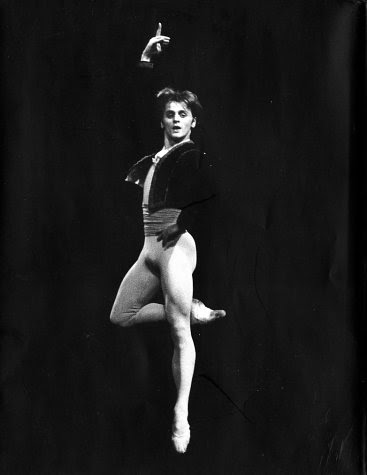
He's Good, but He's No Baryshnikov.


After spending four days last week performing my duties as chaperone to the senior band students of my kids' high school on their intensive trip to Calgary, Alberta, I have spent part of every day of this week allowing myself some recovery time. Yesterday afternoon I decided to relax by watching a DVD I had taken out of the library two weeks ago and which was due the day before yesterday. The DVD was a 2010 production of the Provokiev ballet, Cinderella, performed by the Birmingham Royal Ballet. I enjoyed it and agreed with the critic quoted on the back: "As a ballet, this performance of Cinderella was good. As theatre, it was great!" The costumes and stage sets were fantastic, and the characters often comical and extremely dramatic. My son took the DVD back to the library for me immediately after I had finished watching it -so I wouldn't accumulate any more fines - and I can't remember the names of the dancers. Cinderella herself was danced by someone who could present the character with all the grace and sweetness we can imagine Cinderella to own. The prince was danced by a tall, male, heroic looking figure, and while I appreciated his performance I heard my mind saying Well, he's good, but he's no Baryshnikov.

Mikhail Baryshnikov is my favourite male dancer of all time. He is a lot of people's favourite male dancer of all time. After watching Cinderella, I spent a few minutes on Youtube watching videos of Baryshnikov, which only confirmed by long-held belief in his unparalled gift. I don't follow ballet much now. It is not because I don't want to, it's just that I really do not have the opportunity to do so. Perhaps there are some male dancers out there who are every bit as good as Baryshnikov, and perhaps one day when I have both the time and money I will see them perform. An elderly lady I knew on Vancouver Island held season's tickets to the ballet in Vancouver and would go over to the Mainland to see every performance. She would tell me about the performance she was going to see, and I would sigh and think how I would like to spend my old age doing just that.

I once bought a large poster of Baryshnikov and pinned it up with the other dance pictures on my bedroom wall. Those posters represented a lot of dreams for me at the time. I used to lie in bed at night and pray, "Please make me a dancer. Please make me a dancer. Please can I be a dancer?" I was with a small studio at the time. My Granny had died and left me and my siblings a little money, and I used mine to pay for dance lessons at a small studio which was a fifteen minute drive from my home. I had taken lessons when I was six, and again, with another excellent teacher who had come from the Royal Winnipeg Ballet when I was ten and eleven. I loved her and her teaching style (as did my mom who encouraged her to stay in our town), but she struggled to make a living and left after a year or two for the city. It was not until I was fifteen that I decided to take lessons again, and although I had the right attitude for dance and plenty of musicality I did not have the years of steady technical training that the other girls had, and I had to work very hard to catch up. The experience was good for me, and the other girls were surprisingly welcoming and encouraging. I had a wonderful four years with the company. I thoroughly enjoyed rehearsing for shows, and was chosen to play Snow White in our production of the same name - 'for your expressive face, Rebecca,' said the head teacher/choreographer. Even though our company embraced jazz and modern dance, my first love was ballet and I immersed myself in its world. I read books about ballet, saw films about dance, watched televised ballets, particularly with the National Ballet of Canada, bought pictures of dance, painted pictures of dancers, received ballet themed gifts, etc. A friend and I went to the States for a night to see the Pacific Northwest Ballets' Nutcracker (Ultimately I was disappointed - the calibre of dance was not anywhere near what I'd seen on TV).

I remember during my last year with the studio I asked for a meeting with the director and main teacher, Lynette. I wanted her honest opinion: did she think I had what it took to become a dancer professionally? I had thoughts of auditioning for a university dance program. I had taken a couple of intensive summer programs with other teachers and had felt encouraged by them. Lynette was kind. She began to point out all the areas in the dance world I could study: dance history, dance theory, dance administration...everything but dancing itself. "You're an intellectual, Rebecca. There is so much you could do." I was too much of an optomist to allow myself to be crushed entirely, but of course I was terribly disappointed. I didn't want to be an intellectual. I wanted to be a dancer so badly, it ached. I did audition for that university dance program and did not get accepted. I was called into a room with several other dancers who were all told we showed promise but needed some more training before we could join the full time program. Perhaps, looking back, I should have stuck with it, pushed forward, but I was beginning to realize that perhaps I just didn't have what it would take.

Sometimes, things don't work out the way we want them to, no matter how much we will them to. That's the seeming cruelty of life, and often, timing is everything. I remember when I worked for a dance company for a short time in Vancouver when I was first married. A wonderful flamenco dancer who had taught me during a week-long intensive course a couple of years before, came into the office. He gave me a hug and invited me to come dance with his company downtown. 'You are good!' he said. I could have cried, I felt so validated. However, I had also just found out I was pregnant and new dreams were beginning to flutter in my soul. Over the years other things came into my life and gave me joy. I became a runner, which gives me a bit of that sense of flight dancers have. I practise yoga, which gives me the strength and stretch I used to enjoy at the studio barre. I began to write, which allows me an outlet for my creative expression. I had children, which meant more to me than anything. Still, when I watch a ballerina, I can feel every move they make. In a sense I dance with them in my heart and in my mind.

And Baryshnikov? Well, he is beyond a dancer. He is a bird in flight, a lion in strength, and a unicorn in unusual grace. At least he is in the videos which captured him in his prime, and in films like The Turning Point and White Nights. He is older now of course. Aren't we all? I understand that now he is a generous and gifted teacher.

Here he is, the great Misha in his younger days. I chose this video to show what an amazing dancer, actor and athlete he is. So inspiring.


I am adding another video featuring Canada's extraordinary Evelyn Hart and Rex Harrington. I once spotted Evelyn on the streets of Winnipeg when I was visiting my sister. She was just a teeny tiny thing.


I am behind in both my posting and my reading of posts. I promise to catch up soon. Wishing everyone a Happy St. Patty's Day tomorrow, and a Happy St. Joseph's Day on Monday - he's the patron saint of Canada, eh?