March 23, 2012

Happy Thoughts for Spring


Daffodils

I fell in love -
Taken by the innocence of
Child-face daffodils:

Their perky April fanfares -
Clarion calls from yellow-ochre brass bands
Presaging, rejoicing, calling us:

'Here we are! Here we are!'

Mark R. Slaughter


Technically, the 'daffodils' in the photo are the baby narcissus presently blooming in our front garden (and it is still only March), but they are close enough to the taller, bolder version that is popping out in all its bright yellow glory in the south facing gardens around town. I am always surprised by the early presence of daffodils. I think they must be the bravest of flowers considering they are often pummelled by rain, or what we commonly have here in March: 'snain', hail, wind, and other assorted confused symptoms of a season somewhere in between winter and spring, and don't seem to mind at all. For me, daffodils, crocus, and snowdrops symbolize the hope I begin to feel after enduring a long, dreary, wet West Coast winter. Some snow may still fall and chilly winds may still blow, but if the daffodil can persist then so can I.

My plan for today was to walk around the neighbourhood in the oh-so-very-welcome sunshine with my youngest daughter, snapping photos of the evidence of spring. I took about five photos before my camera's battery died. Besides a few scenes similar to the one above, I managed to capture a little junco, one of my favourite birds, in the silver maple in our front yard:


 Spring in the Bronx

Spring has sprung, the grass is ris.
I wonders where the birdies is.
They say the bird in on the wing.
Ain't that absurd?
I always thought the wing was on the bird.

Anonymous


I have noticed lately that few birds are feeding at our birdfeeder, which hangs from this same silver maple, so I took a closer look. The moisture of late winter has turned the birdseed into porridge, which has begun to bloom with mold. Yuck. I wouldn't want to eat that if I were a bird, so I will be taking the feeder down, emptying it of it's mush and giving it a good spring cleaning before re-filling it to the brim with fresh seed. One of the joys of spring and summer mornings is to see what visitors we have at the feeder, and look up any new ones in the Peterson's Field Guide to Western Birds which sits, ever ready, on the small side table by the living room picture window. My husband doesn't actually agree with the idea of bird feeders. He believes we should let nature take its course and not encourage wildlife to rely on humans for food. Part of me agrees with him, but it is such a pleasure to invite birds into the yard, I cannot seem to give up the idea. So, we agree to disagree, and he continues to help me hang the feeder up and take it down for cleaning. We humans continue to take so much of the birds' habitat away, we should at least give them some food to make up for it - at least that is my rationale concerning birdlife. I do not feel this way about other forms of wildlife such as raccoons, coyotes, or the squirrels that steal our best walnuts, so I admit to being inconsistent on that score.

Another sign of spring is the fact that my son has been called in to work this weekend at the ice cream/coffee shop in the nearby resort village. It is Spring Break in our school district, so with the good weather, families are pouring into the village for a day or two by the lake. We may see temperatures this weekend of 15 degrees Celsius - most likely at 1:00 pm and for about five minutes - but that will be enough to bring people out of their houses in search of something resembling a summer day.

One thing I love to do in spring is go for a drive with music blaring on our quite good car stereo. A particular song which came to mind the other day when I found out I have a couple of cavities that need filling. I was quite disgusted because I really do look after my teeth and asked the dentist what I should do to prevent further decay. She advised me to wean myself off sugar in my coffee and tea, as she was pretty certain that was doing it. On our way home I started to sing this song to my daughter, and I think I'll search out the recording for our next car trip. It really is two songs in one, and the second sort of fits with the spring theme, so...enjoy. And Happy Spring!



March 16, 2012

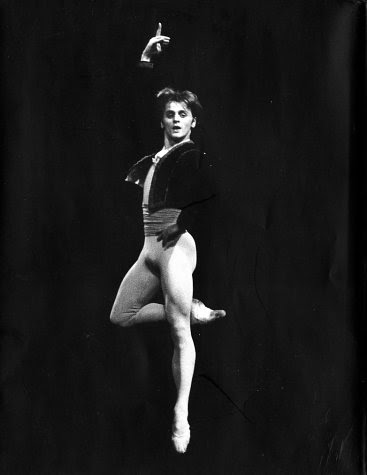
He's Good, but He's No Baryshnikov.


After spending four days last week performing my duties as chaperone to the senior band students of my kids' high school on their intensive trip to Calgary, Alberta, I have spent part of every day of this week allowing myself some recovery time. Yesterday afternoon I decided to relax by watching a DVD I had taken out of the library two weeks ago and which was due the day before yesterday. The DVD was a 2010 production of the Provokiev ballet, Cinderella, performed by the Birmingham Royal Ballet. I enjoyed it and agreed with the critic quoted on the back: "As a ballet, this performance of Cinderella was good. As theatre, it was great!" The costumes and stage sets were fantastic, and the characters often comical and extremely dramatic. My son took the DVD back to the library for me immediately after I had finished watching it -so I wouldn't accumulate any more fines - and I can't remember the names of the dancers. Cinderella herself was danced by someone who could present the character with all the grace and sweetness we can imagine Cinderella to own. The prince was danced by a tall, male, heroic looking figure, and while I appreciated his performance I heard my mind saying Well, he's good, but he's no Baryshnikov.

Mikhail Baryshnikov is my favourite male dancer of all time. He is a lot of people's favourite male dancer of all time. After watching Cinderella, I spent a few minutes on Youtube watching videos of Baryshnikov, which only confirmed by long-held belief in his unparalled gift. I don't follow ballet much now. It is not because I don't want to, it's just that I really do not have the opportunity to do so. Perhaps there are some male dancers out there who are every bit as good as Baryshnikov, and perhaps one day when I have both the time and money I will see them perform. An elderly lady I knew on Vancouver Island held season's tickets to the ballet in Vancouver and would go over to the Mainland to see every performance. She would tell me about the performance she was going to see, and I would sigh and think how I would like to spend my old age doing just that.

I once bought a large poster of Baryshnikov and pinned it up with the other dance pictures on my bedroom wall. Those posters represented a lot of dreams for me at the time. I used to lie in bed at night and pray, "Please make me a dancer. Please make me a dancer. Please can I be a dancer?" I was with a small studio at the time. My Granny had died and left me and my siblings a little money, and I used mine to pay for dance lessons at a small studio which was a fifteen minute drive from my home. I had taken lessons when I was six, and again, with another excellent teacher who had come from the Royal Winnipeg Ballet when I was ten and eleven. I loved her and her teaching style (as did my mom who encouraged her to stay in our town), but she struggled to make a living and left after a year or two for the city. It was not until I was fifteen that I decided to take lessons again, and although I had the right attitude for dance and plenty of musicality I did not have the years of steady technical training that the other girls had, and I had to work very hard to catch up. The experience was good for me, and the other girls were surprisingly welcoming and encouraging. I had a wonderful four years with the company. I thoroughly enjoyed rehearsing for shows, and was chosen to play Snow White in our production of the same name - 'for your expressive face, Rebecca,' said the head teacher/choreographer. Even though our company embraced jazz and modern dance, my first love was ballet and I immersed myself in its world. I read books about ballet, saw films about dance, watched televised ballets, particularly with the National Ballet of Canada, bought pictures of dance, painted pictures of dancers, received ballet themed gifts, etc. A friend and I went to the States for a night to see the Pacific Northwest Ballets' Nutcracker (Ultimately I was disappointed - the calibre of dance was not anywhere near what I'd seen on TV).

I remember during my last year with the studio I asked for a meeting with the director and main teacher, Lynette. I wanted her honest opinion: did she think I had what it took to become a dancer professionally? I had thoughts of auditioning for a university dance program. I had taken a couple of intensive summer programs with other teachers and had felt encouraged by them. Lynette was kind. She began to point out all the areas in the dance world I could study: dance history, dance theory, dance administration...everything but dancing itself. "You're an intellectual, Rebecca. There is so much you could do." I was too much of an optomist to allow myself to be crushed entirely, but of course I was terribly disappointed. I didn't want to be an intellectual. I wanted to be a dancer so badly, it ached. I did audition for that university dance program and did not get accepted. I was called into a room with several other dancers who were all told we showed promise but needed some more training before we could join the full time program. Perhaps, looking back, I should have stuck with it, pushed forward, but I was beginning to realize that perhaps I just didn't have what it would take.

Sometimes, things don't work out the way we want them to, no matter how much we will them to. That's the seeming cruelty of life, and often, timing is everything. I remember when I worked for a dance company for a short time in Vancouver when I was first married. A wonderful flamenco dancer who had taught me during a week-long intensive course a couple of years before, came into the office. He gave me a hug and invited me to come dance with his company downtown. 'You are good!' he said. I could have cried, I felt so validated. However, I had also just found out I was pregnant and new dreams were beginning to flutter in my soul. Over the years other things came into my life and gave me joy. I became a runner, which gives me a bit of that sense of flight dancers have. I practise yoga, which gives me the strength and stretch I used to enjoy at the studio barre. I began to write, which allows me an outlet for my creative expression. I had children, which meant more to me than anything. Still, when I watch a ballerina, I can feel every move they make. In a sense I dance with them in my heart and in my mind.

And Baryshnikov? Well, he is beyond a dancer. He is a bird in flight, a lion in strength, and a unicorn in unusual grace. At least he is in the videos which captured him in his prime, and in films like The Turning Point and White Nights. He is older now of course. Aren't we all? I understand that now he is a generous and gifted teacher.

Here he is, the great Misha in his younger days. I chose this video to show what an amazing dancer, actor and athlete he is. So inspiring.


I am adding another video featuring Canada's extraordinary Evelyn Hart and Rex Harrington. I once spotted Evelyn on the streets of Winnipeg when I was visiting my sister. She was just a teeny tiny thing.


I am behind in both my posting and my reading of posts. I promise to catch up soon. Wishing everyone a Happy St. Patty's Day tomorrow, and a Happy St. Joseph's Day on Monday - he's the patron saint of Canada, eh?

March 3, 2012

For the Love of Poetry


I  thank you God for this most amazing day, for the leaping greenly spirits of trees, and for the blue dream of sky and for everything which is natural, which is infinite, which is yes. ~e.e. cummings
A fellow blogger posted the above bit of poetry on his blog recently, and it perfectly epitomizes what I have been feeling about this time of year. Despite the weather being a bit confused lately, the earth really is pushing forth with the idea of spring. The crocuses and snowdrops are blooming, choice shrubs are greening and leaf buds on the trees are beginning to swell, needing just a bit of steady encouragement from the sun to gain the confidence to open up.

I suppose the beauty of poetry is that the poet succeeds, with a few well-chosen and intuitive words, in expressing what we lesser mortals cannot. I can't say that I read a lot of poetry, but I do read enough to know its power.

I have been so busy lately, preparing for this weekend's events which I have helped to organize for the community, and my husband is just winding down a few weeks of work in which he, literally, spent more time on the job than he spent at home. The other day I had so much to do, yet in my tiredness I could not find my rhythm, nor create any real flow to the day. Another blogger expressed in one of his new poems exactly what I had been experiencing that day, and I was comforted by the fact that someone out there had been able to put form to my feelings, simply because he had felt the same way.

the day is passing too fast, forward, but jerky, stop motion clay-mation in the hands of an amateur. ~Brian Miller

When I was a child, I read plenty of junior poetry: A.A. Milne, Robert Louis Stevenson, Dennis Lee, Shel Silverstein, nursery rhymes galore, and various illustrated collections, but it was not until I was introduced to adult poetry in my English Literature class in high school that I began to appreciate and understand poetry as an art form (although I am sure all that children's literature paved the way). Our teacher, Mr. Stephani walked us through Shakespeare, Pope, some Milton, Hardy, Wordsworth, Blake and Byron. I found I could understand and often relate to what these poets were saying about the world around them, and I was encouraged to carry on with my studies, which included Canadian and American literature, in college and university. 

I'm not sure if all college kids go through the same poetic phase, but I know I did. I remember another very romantic e.e. cummings poem which I had heard quoted in a movie. I was in the beginning stages of my first long-term relationship at the time, and after hearing the poem, I rushed to the college library, looked it up, copied it out and gave it to my boyfriend. I won’t quote the entire poem here, but the last stanza still takes my breath away, in a laughing, slightly cringing 'I can’t believe I gave him that poem' kind of way. In all honesty, I'm sure the poem described not how I felt about him, but rather, how I wished to feel at the time.

(I do not know what it is about you that closes
And opens; only something in me understands
The voice of your eyes is deeper than all roses)
Nobody, not even the rain, has such small hands

I never did find a poem that fit 'us' until after we had broken up. Perhaps that was a sign.

When I met and fell in love with my husband, I wrote him a poem. It had one line in it that I remember:
Our love is as light and unusual as feathers on the moon
My husband, a practical and steady sort of man (thankfully) was impressed that I had even written him a poem at all, and was deeply touched. Finally, for me, poetry and reality had met. I was happy.
Our lives read more like a to-do list now than a love sonnet, much of the time, but that's only natural after nearly twenty years of marriage. The important thing is that we write those lists together. As for poetry, well, it will keep popping up to help give shape and to make sense and beauty of this human experience. That is its special magical gift to those who are tuned to hear it.

Shall I compare thee to a summer's day?
Thou art more lovely and more temperate.
Rough winds do shake the darling buds of May,
And summer's lease hath all too short a date.
Sometime too hot the eye of heaven shines,
And often is his gold complexion dimm'd;
And every fair from fair sometime declines,
By chance or nature's changing course untrimm'd;
But thy eternal summer shall not fade
Nor lose possession of that fair thou ow'st;
Nor shall Death brag thou wander'st in his shade,
When in eternal lines to time thou grow'st:
So long as men can breathe or eyes can see,
So long lives this, and this gives life to thee.
~Shakespeare~

The photo is of the walnut tree in our back yard.

February 24, 2012

The Season of Giving (up)


Some time in February, when the Nelson snow was old and gritty with sand, my brother and I, my funny teasing brother who was two years older and beat me at every game of Rummy we ever played, would ask each other the annual question, "What are you giving up for Lent?" We'd first answer the question with our annual answers. "I'm giving up porridge!" I would cry. "I'm giving up liver," my brother would say. And then we'd laugh at our joke before getting down to the serious business of making our real pledge for the Season of Giving-up.

I almost always gave up buying candy when I was little, junk food when I was older. We had a jar on the dining room table with a 'Share Lent' label. This jar was for depositing the coins we didn't spend on candy bars and potato chips. When Lent was over, the jar of coins would be given to the Canadian Catholic Agency for Development and Peace to help fund their programs in developing nations.

It was hard, this giving up of sweets (which I always craved) and this giving over of my precious few coins when I was little, but I felt the importance of it even then. Children are naturally generous, just as they are naturally selfish, so generosity needs regular opportunity just as selfishness needs regular curtailment.

I remember having an argument with my closest friend at the time. Her family was Anglican and also practised Lent. In my family's faith, Sundays were not included in Lent, as every Sunday of the year is considered a celebration of the Paschal mystery. Therefore, whatever we had given up, we could enjoy on Sundays. My friend thought this was cheating. When I told my dad of her opinion later (I was worried he would agree with her) he said, "She can do Lent her way, and we'll do Lent our way." And so we did. The Sunday breaks from Lenten deprivations made the season, which felt very, very long when I was a child, less daunting, but I admit I privately wondered if my friend was that much better of a person for sticking with her solid, unrelenting 40 days trek through the desert of discipline.

At our school, St. Joseph's, we were shown Development and Peace films throughout Lent, so we would know where our coins were going. Children with flies in their eyes and distended tummies lined up to receive rations of powdered milk and rice from kind looking men and women in these reel-to-reel movies, and the images stayed with me always. I tried to be grateful for all I had, I tried, but I could not seem to stop wishing for more.

That same brother and I held secret conversations in the bedroom we shared until my eldest sister moved out, leaving room for me in the girls' bedroom. "What would you do if you had a million dollars?" we'd ask each other. My brother wished for a new house with a recreation room downstairs with a pool table and a big TV, where he and his friends could hang out and eat endless bowls of chips and Cheezies. I wished for fancy outfits and toys I'd seen in the Sears Catalogue, for my parents to own a car, and for my dad to publish the novel he was working on - I prayed hard for that. We knew our family was different from many of the families we knew, that our parents had some different priorities.

Many years passed before I truly appreciated the effect of those priorities which instilled in we children the values that have carried us through the ups and downs of life. By being who they are, our parents taught us to share with each other, to be creative, to be open minded and generous, to wear the many hats of love. To appreciate the arts and literature, to tread softly on God's earth and take time for silence. To work smarter, not necessarily harder, and to enjoy fully the good things of life. To find one's calling and live it wholeheartedly - find where you can give what you have to offer and you will be truly happy.

The annual giving up of some thing in order to share with others was good training; it helped me to be able to tell the difference between my needs and my wants, and it still serves as a good reminder of the fact that I am indeed very blessed to be in a position to do so.

My appreciation of Lent has expanded exponentially as I have gotten older. I now welcome the opportunity to live for a time more or less in solidarity with the greater part of the world that struggles to obtain the very basics of life. That being said, it is still not easy to give up any of my creature comforts, so by the time Easter comes I greet it much like I did as a child, with equal parts joy and immense relief. I'm only human after all.

The photo is one I took of a pathway at Kokanee Provincial Park near my hometown of Nelson. Wishing you a good weekend.

February 17, 2012

Restoring Photographic Memory


"Imagine life with no photographs. No smiling faces. No family snapshots. No record of your past. Welcome to Liberia... When Canadian brothers Jeff and Andrew Topham return to the war-torn West African country of their childhood to re-shoot their father's photos from the 70's, they find a nation whose own photographic history was destroyed by war. Suddenly their tattered envelope of family photos takes on a significance they never could have imagined. Liberia '77 shows how despite time, war, distance and culture, photography connects us all."

Such was the blurb, accompanied by a black and white photo of two young boys and a pet chimpanzee in our Nov/Dec Knowledge Network program guide, enticing me to tune in to the brand new documentary commissioned by the Vancouver-based public access channel.

The documentary first intrigued me because I have had a genuine interest in Africa since I grew up with a friend whose family had immigrated from Zambia. Their stories over the years had woven their way into my subconscious in a way I was not aware of at the time. The connection they had with their homeland was deep and intense, but what I could not have realized was the sense of responsibility they felt towards the troubled country, even after they had moved thousands of miles away from it. Their English grandparents had put down roots there, and the roots had apparently held fast through the family line.

The story also intrigued me due to the fact that the Topham brothers - Jeff is a filmmaker and Andrew is a photographer - are from Vancouver and the elder brother is about my age. The black and white photo of the two brothers (minus the chimp) looked very much like photos of my siblings and I from the same era. Similar hairstyles, similar t-shirts, similar looks of health in the cheeks from a childhood spent outdoors and free.

My husband and eldest son joined me to watch Liberia '77 and it proved to be a riveting two hours for the three of us. As the story unfolded, we moved from a position of reclined comfort to one of perching on the edge of our seats, elbows on knees, fists under our chins. As Jeff and Andrew visited the site of the former compound where their family and the families of the other employees of the Canadian company which made explosives for the mining industry had lived, they interviewed Liberian workers who had worked with their father and asked about their former houseboy James with whom they had been very close as boys. Having left the country in 1979, the Tophams had escaped the effects of the two civil wars. The Liberians they met filled them in with horrific stories about what had happened to the country and its people during the war. In one interview, one of the former company employees describes having to bury his company identity card, a common practise, since having photo i.d. was proof of some kind of wealth to the soldiers and was therefore dangerous to an individual's existence.

The boys do find out what happened to James, and it is not good news. Jeff meets James' wife and thirteen year old son, whose widowed mother is not only too poor to send him to school, but has high hopes that Jeff will help them.

"Some of the events that unfolded were a lot heavier than I was prepared for," says Jeff. "I expected the emotion to come more from seeing the state of the country and my memories being dismantled. What caught me off guard was the sense of responsibility that came with being there."

That sense of responsibility has led to the Liberia '77 Photo Repatriation Project. After a request from the Nobel Peace Prize-winning Liberian President, whom they had the opportunity to meet, the Topham brothers have put out a call to the public to send them images of pre-war Liberia. Many, many important images, images that help to tell the story of a country, were destroyed during the war. Do date, over seven hundred images have been gathered from donors so far, and the brothers plan to return the photos to the National Museum in Monrovia. They are also raising funds to transport themselves and the photos back to Liberia.

"During the filming, we also discovered that much of the country’s photographic record had been destroyed by war.  Historical events, significant people and places, were all but forgotten by many we met, overwhelmed by memories of violence.  We met a whole generation of Liberians who had grown up in a time of conflict, knowing nothing but violence and destruction.  And we learned that many who had photographs of their happy, healthy families were marked for death by rebel soldiers.  To save their lives, people actually burned their own photos, even threw their cameras away. The National Museum was looted - its contents destroyed.  We found it closed and dilapidated, a small remaining collection of the country’s photographs randomly piled and rapidly deteriorating in a corner closet.
We also realized that the envelope of our dad’s photos we carried was more than just a collection of family snapshots of our idyllic ex-pat childhood.  For many Liberians we showed them to, they were rare proof of a once peaceful country – and hope for a brighter future for a country working hard to heal. 
Sando Moore, a Liberian photojournalist who lost all his archives said to us:  "If you don’t know where you came from, how can you know where you are going?”
One more reason I found the documentary so compelling was that it married some very important things: historical identity, artistic integrity, compassion and personal responsibility. It wasn't just 'another sad story' about Africa. I have chosen to support the project by making a small donation. If you are interested in reading (and seeing) more about the Liberia '77 Photo Repatriation Project please visit the website.

My Zambian-born friends return to Africa every winter to help coordinate many worthy projects there, particularly for women caring for Aids orphans. You can find their website here. I have sometimes wondered what it is that compels them so strongly to give so much of themselves to the people of their former homeland. After experiencing Liberia '77, I think I have a bit more understanding of their desire to give back.

The photo is of the Topham brothers with Evelyn, their pet chimpanzee.

February 9, 2012

Knopfler and Me


I grew up in a house where music was as important as what's for dinner. As a baby, I could be found rocking back and forth in my bed to the amplified sounds of the Rolling Stones' Let it Bleed album. The songs of Bob Dylan, Joan Baez, J.J. Cale, The Band and several others, including Classical, Jazz, Folk, and Bluegrass artists entered the hearts and minds of we six children, rocking us through good times and bad and nurturing us into young men and women with varying tastes but equal love for music. My eldest brother Francis, when he was working at his well-paying job at Overwaitea Foods would buy records every payday. My sisters began buying albums on a regular basis, too, and soon our collection was expanded to include Pink Floyd, Van Halen, The Police, The Scorpions, The Cars, an Abba album or two, Billy Idol, U2, The Pretenders, Red Rider, The Who, and a band called Dire Straits.

I remember wiling away the hours listening to music in the living room. Listening, dancing, drawing, sewing, reading and doing homework with music playing. Sometimes my brother would even ask me what I would like to listen to. The answer was often "Dire Straits". Something about their sound moved me, comforted me. I felt at home in it. I didn't understand what they were singing about and frankly, wasn't interested in lyrics at that age, and I liked a lot of the other albums my siblings and parents brought home, but the singer and lead guitarist of Dire Straits, Mark Knopfler, seemed to sing to me - or something in me.

As I grew older I began my own record collection, and I will admit it was greatly rooted in what I had been fed, musically, since I was knee-high to a grasshopper. As my eldest brother's tastes began to lean more toward blues, rockabilly, jazz and folk, music he made his living playing, I traded babysitting his little boy for records from his older collection - although he never gave up any Dire Straits albums. In 1985 Dire Straits released their phenomenal hit record Brothers in Arms. I can't remember who in my family bought the album, but I believe we listened to it every single day for a year. During the 80's music videos were the portal into the music world for many people, as well as a way for artists to express their songs visually. I remember the animated 'Money For Nothing' video: working class delivery truck drivers complaining about the 'easy lives' of musicians.

Look at them yoyo's, that's the way you do it,
You play the guitar on the MTV.
That ain't workin' that's the way you do it
Money for nothin' and chicks for free

That song made a great impact on me. It was satirical. It was a statement. It had Sting singing at the beginning. Remember? "I want my, I want my, I want my MTV....." and then that great gritty Knopfler guitar lick took over from there. Pure magic. And then there was the last song on the album, 'Brothers in Arms', which is, essentially, a genuine folk song. Haunting and lyrical, with a message for the ages steeped in centuries of history, 'Brothers in Arms' was a sign of what was to often come from Mark's pen from then on:

Now the sun's gone to hell
And the moon's riding high
Let me bid you farewell
Every man has to die
But it's written in the starlight
And every line on your palm
We're fools to make war
On our brothers in arms

Since Brothers in Arms, I have bought ever Dire Straits album and every Mark Knopfler solo album. In the lonely depths of winter, on car trips in summer, Mark Knopfler is there as a soundtrack to our lives. His voice cuts through my worries and his guitar playing knows no bounds. Back in 2005 I began a brand new journal, a gift from a dear friend, with a paragraph about Knopfler and me:

"I'm listening to my new Mark Knopfler CD - Ragpicker's Dream. I love him. His music and voice are so soothing. I think, too, he is like me, or his music is - lots of words and stories, a thinker and satirist, and observer of human nature. He's mellow, but ocasionally rocks out."

One day I played 'Sultans of Swing' for my son, Ian who was working hard at learning the guitar. While I only intended to inspire Ian, he became determined to learn the song from start to finish. Learn it he did, note for note. I found this video of Dire Straits playing their first hit single from 1978, 'Sultans of Swing,' the song that hooked me in the beginning and has, I know, inspired a couple of generations of guitarists including my dad, my brothers and my son.


And here's a more recent one of Mark, playing another of my favourites.


Have a great weekend, friends! And if you're out there, Mark, thank-you. If it is possible to have a friend you've never met, then you are a good one.

The photo appears courtesy of The Guardian

February 4, 2012

Tomorrow is Another Day, Thankfully.


So it was Groundhog Day here on Thursday. I don't put much faith in the shadow of a rodent to predict the length of winter, but I do like an excuse for my annual viewing of the only film I know of with 'Groundhog Day' as both its theme and its title. Our one and only movie channel was showing the film that night which stars the beautiful Andie McDowell and one of my favourite funny-men of all time, Bill Murray, so I hunkered down last night, after the kitchen was tidied, to watch it.

I had had a tough day. The kind of day that makes you so world weary you want to crawl down below the earth into Mole's hole and stay there in front of the glowing fire for a good long while. Since Mole and I are not on quite those familiar terms, apart from in my imagination, I had to settle instead for an evening in front of the glowing television. The TV is capable of supplying its own kind of tonic, however, and Groundhog Day ended up being exactly what the proverbial doctor ordered.

In the film, Bill Murray plays Pittsburgh TV weather man, Phil Connors, who is reluctantly sent to cover a story in Punxsutawney, Pennsylvania about a weather forecasting groundhog. This is his fourth year on the story, and he makes no effort to hide his frustration. After he and his crew, the lovely and kind producer Rita and the amiably goofy cameraman Larry, are prevented from leaving Punxsutawney due to the weather they must stay the night. On awaking the 'following' day in his bed and breakfast Phil discovers that it's Groundhog Day again, and again, and again. He is the only person in the town who is aware of the day being the same again and again; everyone else believes it is February 2nd for the first time. First he uses this to his advantage, then comes to the realisation that he is doomed to spend the rest of eternity in the same place, seeing the same people do the same thing every single day. I don't want to give away too much of the story, but suffice it to say, Phil will go on living the same day until he gets it right. Finally, he wakes up on February 3rd a changed man, but it has taken months or years of tries (we never know how long it has really been) to live Groundhog Day in a way that allows him to escape his massive time trap and carry on with his life. The film manages to tell its cautionary tale with intelligence, great warmth, and the caustic wit of the inimitable Bill Murray.

When I woke up to my alarm clock yesterday, February 3rd, it was not playing 'I've Got You Babe' like the clock in the film, but it was playing, just as it was on Groundhog Day when the digits read 6:30, Leonard Cohen's 'Hallelujah'. The coincidence was a bit staggering and I woke up quickly. Was I also to be doomed to live the same day again? No, of course not, but the idea of it made me think...

For the past few months, I've been getting up in the morning, and after making sure my youngest is ready for school I fire up the computer, check my email and log into Facebook. Facebook has its up side: funny photos of cats in impossible poses, posts by my family members inviting me into their day, a comment or two on my own sharings, links to new music or video, invitations to events, etc. Facebook also has its down side. For each person this downside is different. Maybe it involves gossip or slander involving a friend, or those all too common photos of mistreated animals or a starving child paired with a photo of someone with an iphone, or even insults to one's ideology. I know very well that most people on Facebook do not intend to hurt their Facebook contacts. However, there is a great deal of indiscriminate leaping onto various bandwagons from which are flung various declarations and images which, when they hit the innocent (and dare I say it, sensitive) bystander, can be as a dart to the heart. A couple of these darts hit me on Thursday, and although I tried not to take them as personal attacks, I could not help the wounds they most certainly inflicted. I limped around with them all day long.

I came to realize, as the day progressed, that Facebook had somehow become my own personal version of Groundhog Day. Every day I got up, got on, and experienced the same type of highs, the same type of lows, but what I didn't realize was how my habitual ride on this emotional teeter-totter was affecting me. By Thursday, I suppose I had reached my saturation point. I felt dizzy and overwhelmed, and in order to move on I had to make a decision about my relationship with that form of social media. In order to regain perpective I have decided to go on a Facebook fast. As someone wise said, "Fasting is not about denial but about freedom...freeing ourselves from the things that bind us and keep us from good relationships with ourselves, with others, and with creation."

Here's to the freedom of a brand new day.

And here's Leonard Cohen's 'Hallelujah' performed by John Cale.